Finasteride & Minoxidil FAQ in Illinois
Illinois patients frequently ask about finasteride and minoxidil for hair loss. Get expert answers on how they work, side effects, combining them, and more.
Frequently Asked Questions About Finasteride and Minoxidil
Finasteride and minoxidil are the two most widely used medications for treating hair loss. If you are considering either or both, you likely have questions. Here are the most common questions Illinois patients ask, answered by hair loss specialists.
What Does Finasteride Do vs. Minoxidil?
These two medications work through completely different mechanisms:
Finasteride:
- Blocks the enzyme 5-alpha reductase, which converts testosterone to DHT (dihydrotestosterone)
- Reduces DHT levels by approximately 70%
- Slows or stops the miniaturization of hair follicles caused by DHT
- Works systemically (affects DHT levels throughout the body)
- Available as a daily oral tablet (typically 1mg)
Minoxidil:
- A vasodilator that increases blood flow to hair follicles
- Stimulates follicles to enter and extend the growth (anagen) phase
- Promotes thicker, longer hair growth
- Works topically (applied directly to the scalp) or orally (low-dose prescription)
- Available over the counter in 2% and 5% topical formulations
In simple terms: finasteride protects hair you have by reducing the hormone that causes loss, while minoxidil stimulates new and existing follicles to grow more actively.
How Long Before I See Results?
Both medications require patience:
- Finasteride — Most patients notice reduced shedding within 3–6 months. Visible improvement in density may take 6–12 months of consistent use
- Minoxidil — Early results may appear at 3–4 months, with more significant improvement at 6–12 months
Important: Early shedding is normal with both medications. When you start finasteride or minoxidil, you may notice increased shedding in the first 2–8 weeks. This happens because weaker hairs are being pushed out to make room for stronger growth. It is a sign the medication is working, not failing.
Can I Combine Finasteride and Minoxidil?
Yes — and combining them is often more effective than using either alone.
- Finasteride addresses the hormonal cause of hair loss (DHT)
- Minoxidil directly stimulates growth
- Together, they attack hair loss from two different angles
- Studies consistently show that combination therapy produces better outcomes than monotherapy
Many hair restoration specialists recommend starting with one medication and adding the second if needed, while others prescribe both from the beginning depending on the severity of hair loss.
What Are the Side Effects?
Finasteride side effects (uncommon, typically mild):
- Decreased libido (reported in 1–2% of users)
- Erectile changes (reported in 1–2% of users)
- Breast tenderness (rare)
- Most side effects resolve after stopping the medication
- Regular monitoring with your prescribing physician is recommended
Minoxidil side effects (topical):
- Scalp irritation, dryness, or flaking
- Unwanted facial hair growth (more common in women)
- Initial shedding phase
- Rarely: dizziness or lightheadedness
Minoxidil side effects (oral, low-dose):
- Increased body hair (hypertrichosis) — the most common side effect
- Fluid retention (rare at low doses)
- Requires monitoring, especially in patients with heart conditions
Your prescribing physician will discuss the specific risk profile based on your health history.
How Do I Use Minoxidil Correctly?
Topical minoxidil:
- Apply to a dry or towel-dried scalp
- Use the dropper or foam applicator to cover the thinning area
- Apply once daily (5% solution) or twice daily (2% solution), as directed
- Allow to dry completely before styling or going to bed
- Wash hands thoroughly after application
- Be consistent — missed applications reduce effectiveness
Topical vs. oral minoxidil:
- Topical is applied directly to the scalp and is available over the counter
- Oral minoxidil (low-dose, typically 0.625mg–2.5mg) is a prescription option gaining popularity for its convenience and consistent absorption
- Oral minoxidil may cause more systemic effects (body hair growth, fluid retention) but avoids scalp irritation
- Your specialist can help determine which form is best for your situation
Can Women Use Finasteride and Minoxidil?
Minoxidil: Yes — minoxidil is approved for use in women. The 2% topical solution is most commonly recommended for women, though some specialists prescribe the 5% solution or low-dose oral minoxidil.
Finasteride: Finasteride is not FDA-approved for women and is contraindicated in women who are or may become pregnant due to the risk of birth defects. However, some specialists prescribe finasteride off-label for post-menopausal women with androgenetic alopecia. This should only be done under close medical supervision.
Application Tips for Best Results
- Be consistent — Daily use is essential. Skipping doses reduces effectiveness
- Apply to the right area — Focus on thinning zones, not areas with full density
- Give it time — Commit to at least 6–12 months before evaluating results
- Take progress photos — Monthly photos in consistent lighting help you track changes that are hard to see day to day
- Do not double up — If you miss a dose, simply resume the next day. Do not apply extra
What Happens If I Stop?
Both medications require ongoing use to maintain results:
- Finasteride — If you stop, DHT levels return to baseline and hair loss resumes. Any hair maintained by finasteride will gradually thin over the following months
- Minoxidil — If you stop, the follicles it was stimulating will return to their previous state. Shedding may occur within 2–4 months, and gains will be lost over 6–12 months
This is one of the most important things to understand: these are maintenance medications, not cures. They work as long as you use them.
Before and After Hair Transplant
Finasteride and minoxidil play important roles in the hair transplant journey:
- Before transplant — Starting medication can stabilize hair loss and improve the quality of native hair before surgery
- After transplant — Continuing medication protects non-transplanted native hair from ongoing DHT-driven thinning, preserving the overall result
- Long-term — Most hair restoration specialists recommend ongoing medical therapy after transplant to maintain the best possible outcome
When Medications Are Not Enough
If finasteride and minoxidil are not producing the results you want, additional options include:
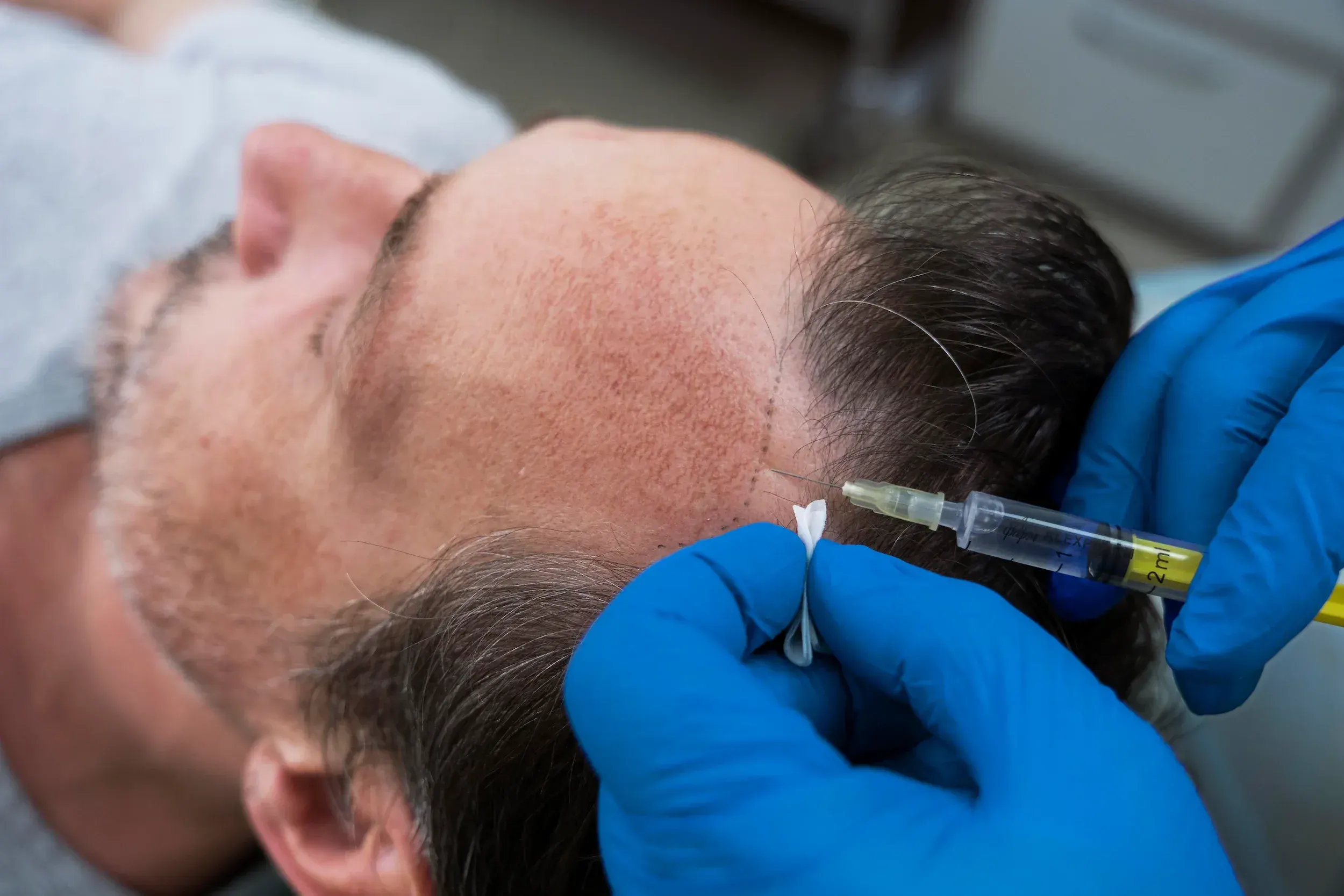
- PRP (Platelet-Rich Plasma) — Growth factor injections that can boost follicle health and density
- Low-Level Laser Therapy (LLLT) — Non-invasive light therapy that supports hair growth
- Hair transplant surgery — For areas where follicles are no longer responding to medical therapy
- Combination approaches — Many patients achieve their best results with a multi-treatment strategy
A board-certified hair restoration specialist can evaluate your response to medication and recommend next steps tailored to your specific pattern and goals.