
Ozempic and Hair Loss: Does GLP-1 Medication Cause Thinning?
GLP-1 medications like Ozempic and Wegovy are linked to hair thinning in some patients. DSI Hair dermatologists in Algonquin, IL explain why it happens, who is most at risk, and what can be done about it.
Introduction
GLP-1 receptor agonist medications — including semaglutide (Ozempic, Wegovy) and tirzepatide (Mounjaro, Zepbound) — have become among the most widely prescribed medications in the United States over the past two years. Their effectiveness for type 2 diabetes management and weight loss is well documented. But as millions of patients have started these medications, a consistent pattern has emerged: a meaningful number are experiencing noticeable hair thinning several months after beginning treatment.
At DSI Hair in Algonquin, Illinois, we have been seeing more patients from across McHenry County, Lake County, and the Chicago northwest suburbs who are asking this question. This article explains what the research says, why hair loss after GLP-1 therapy happens, who is most at risk, and what can be done about it.
Does Ozempic Directly Cause Hair Loss?
The answer is nuanced. Ozempic and other GLP-1 medications are not directly toxic to hair follicles. The hair loss most patients experience after starting these medications is not a direct pharmacological effect of semaglutide on the follicle itself.
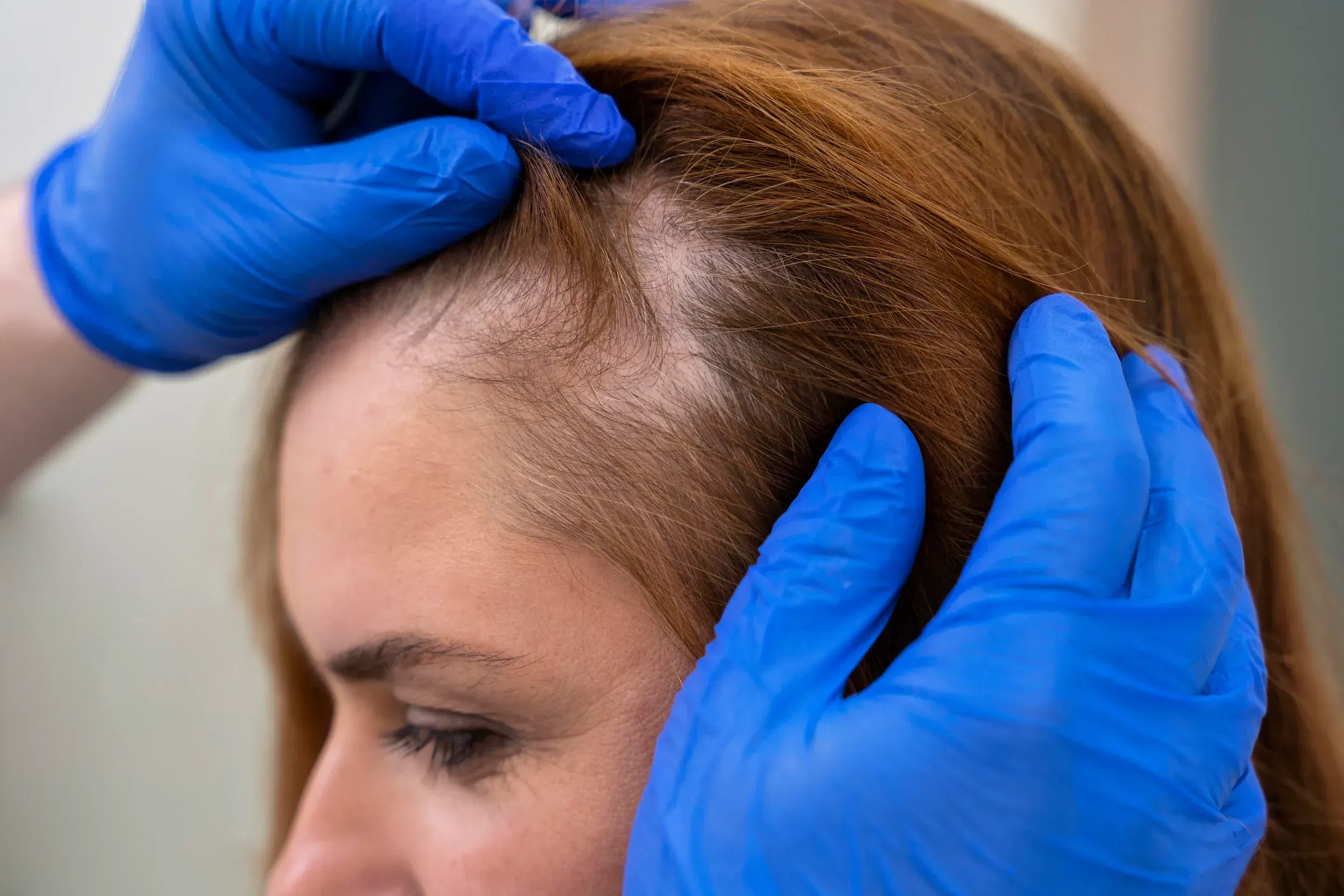
Instead, the hair thinning is most commonly attributed to telogen effluvium — a well-characterized form of diffuse hair shedding triggered by physiological stress on the body. GLP-1 medications create the conditions for telogen effluvium primarily through rapid weight loss and the caloric restriction that typically accompanies it.
What Is Telogen Effluvium and Why Does Rapid Weight Loss Trigger It?
To understand why weight loss causes hair shedding, it helps to understand the hair growth cycle. At any given time, roughly 85–90% of your hair follicles are in the anagen (active growth) phase, while 10–15% are in the telogen (resting) phase, preparing to shed. Hair normally sheds at about 50–100 strands per day as part of this natural cycling.
When the body experiences significant physiological stress — including rapid caloric deficit, major weight loss, surgery, serious illness, or crash dieting — a larger than normal percentage of follicles simultaneously shift from the anagen phase to the telogen phase. The result is a surge of hair shedding that typically begins 2–4 months after the triggering event.
This delayed onset is one reason patients on GLP-1 medications are often confused about the cause. They have been on the medication for several months, things seem to be going well, and then the shedding starts. The hair that is falling out was actually set on course for shedding back when the caloric restriction began.
How Common Is Hair Loss on Ozempic and Other GLP-1 Medications?
In the clinical trials for semaglutide (Wegovy) for weight management, approximately 3% of participants reported hair loss as an adverse effect compared to 1% in the placebo group. However, real-world reporting and patient communities suggest the prevalence may be higher, particularly among patients who lose weight rapidly or who were already predisposed to hair thinning.
Hair loss was listed as a known side effect in the Wegovy label following clinical trials. For Ozempic (the diabetes indication), the labeling is less specific, but hair loss reports have been consistent in post-market surveillance data.
The risk appears to correlate most strongly with the rate and magnitude of weight loss rather than with the medication itself — which explains why the same pattern of hair thinning is seen in patients after bariatric surgery, prolonged fasting, or any other method of achieving rapid significant weight reduction.
Who Is Most at Risk for Hair Loss on GLP-1 Medications?
Not everyone who takes Ozempic or Wegovy will experience significant hair thinning. Patients at higher risk include:
- Those losing weight rapidly — faster rates of loss (more than 1–1.5 lbs per week sustained) increase the physiological stress on the body.
- Patients who are already in the early stages of androgenetic alopecia (male or female pattern hair loss) — telogen effluvium can dramatically accelerate what might otherwise have been gradual thinning.
- Women, particularly those approaching or in perimenopause, who are already experiencing hormonally mediated hair changes.
- Patients with nutritional deficiencies — the appetite suppression of GLP-1 medications can reduce intake of protein, iron, zinc, and other nutrients critical for hair follicle health.
- Those with a family history of significant hair loss, as genetic sensitivity to follicular stress is heritable.
Nutritional Deficiency: The Hidden Driver
One of the most clinically significant contributors to GLP-1-related hair loss that is often under-discussed is nutritional deficiency. GLP-1 receptor agonists are highly effective at reducing appetite and slowing gastric emptying, which is precisely what makes them effective for weight loss. But this same mechanism means patients are consuming significantly less food — and often, significantly less protein and key micronutrients.
Hair follicles are among the most metabolically active cells in the body and are highly sensitive to nutritional availability. Protein is the primary building block of the hair shaft itself. Iron deficiency is one of the most well-documented triggers of diffuse hair shedding. Zinc, biotin, and various B vitamins also play supporting roles in follicle cycling and shaft production.
Patients on GLP-1 medications who are not intentionally maintaining adequate protein intake (typically 70–100g+ per day) and who have not had their ferritin, iron, and key vitamin levels checked may be experiencing hair loss that is as much nutritional as it is weight-loss related. This is an addressable, modifiable factor — which is an important distinction.
Is the Hair Loss Permanent?
In most cases, no. Telogen effluvium triggered by rapid weight loss is generally self-limiting. Once the body adjusts to the new weight and caloric intake stabilizes, the follicles return to their normal cycling pattern and hair begins to regrow. Most patients see the shedding slow and new growth emerge within 3–6 months after the triggering stress resolves.
However, there are important caveats. For patients who were already in the early stages of androgenetic alopecia before starting GLP-1 therapy, the telogen effluvium can permanently accelerate the pattern of thinning by pushing follicles that were already miniaturizing into an early final shed. In these cases, what starts as temporary shedding may reveal permanent underlying thinning that would have become apparent eventually anyway, just sooner.
This is one of the key reasons to seek evaluation from a hair specialist when shedding occurs on GLP-1 medications — to determine whether you are dealing with pure telogen effluvium or whether it is uncovering underlying androgenetic alopecia that warrants treatment in its own right.
What Can DSI Hair Do for Patients Experiencing GLP-1-Related Hair Loss?
At DSI Hair in Algonquin, our board-certified dermatologists Dr. Vic Khanna and Dr. Lauren Boshnick evaluate GLP-1-related hair loss with a comprehensive approach.
1. Differential Diagnosis
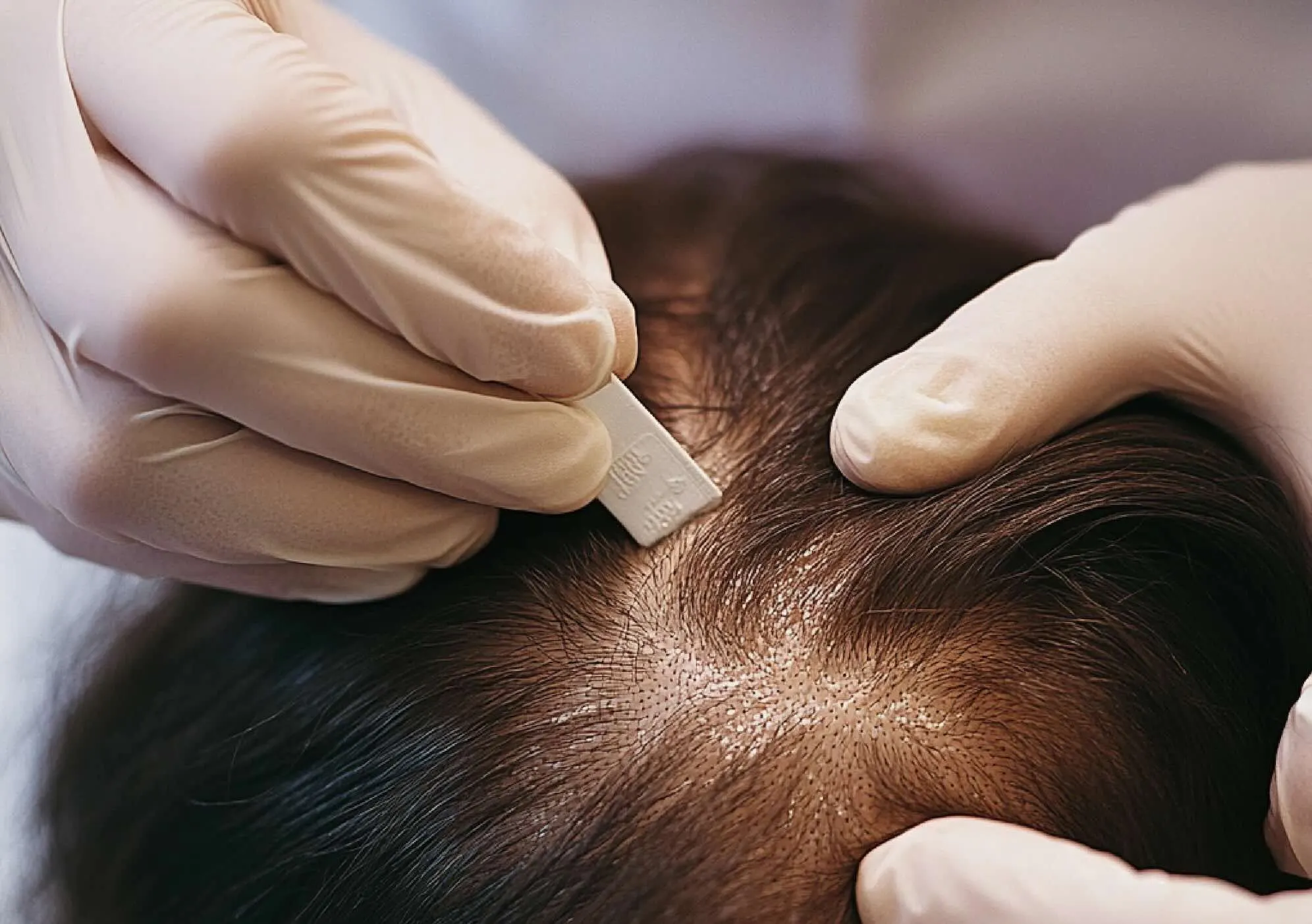
First, we determine whether the hair loss is purely telogen effluvium, whether there is an underlying androgenetic alopecia being unmasked, or whether nutritional deficiencies are playing a significant role. This distinction shapes the entire treatment strategy.
2. Nutritional Assessment and Correction
We review dietary protein intake, order appropriate labs (ferritin, iron studies, thyroid panel, zinc, vitamin D, B12), and address any deficiencies identified. For some patients, nutritional correction alone is sufficient to significantly slow or reverse the shedding.
3. PRP Hair Restoration
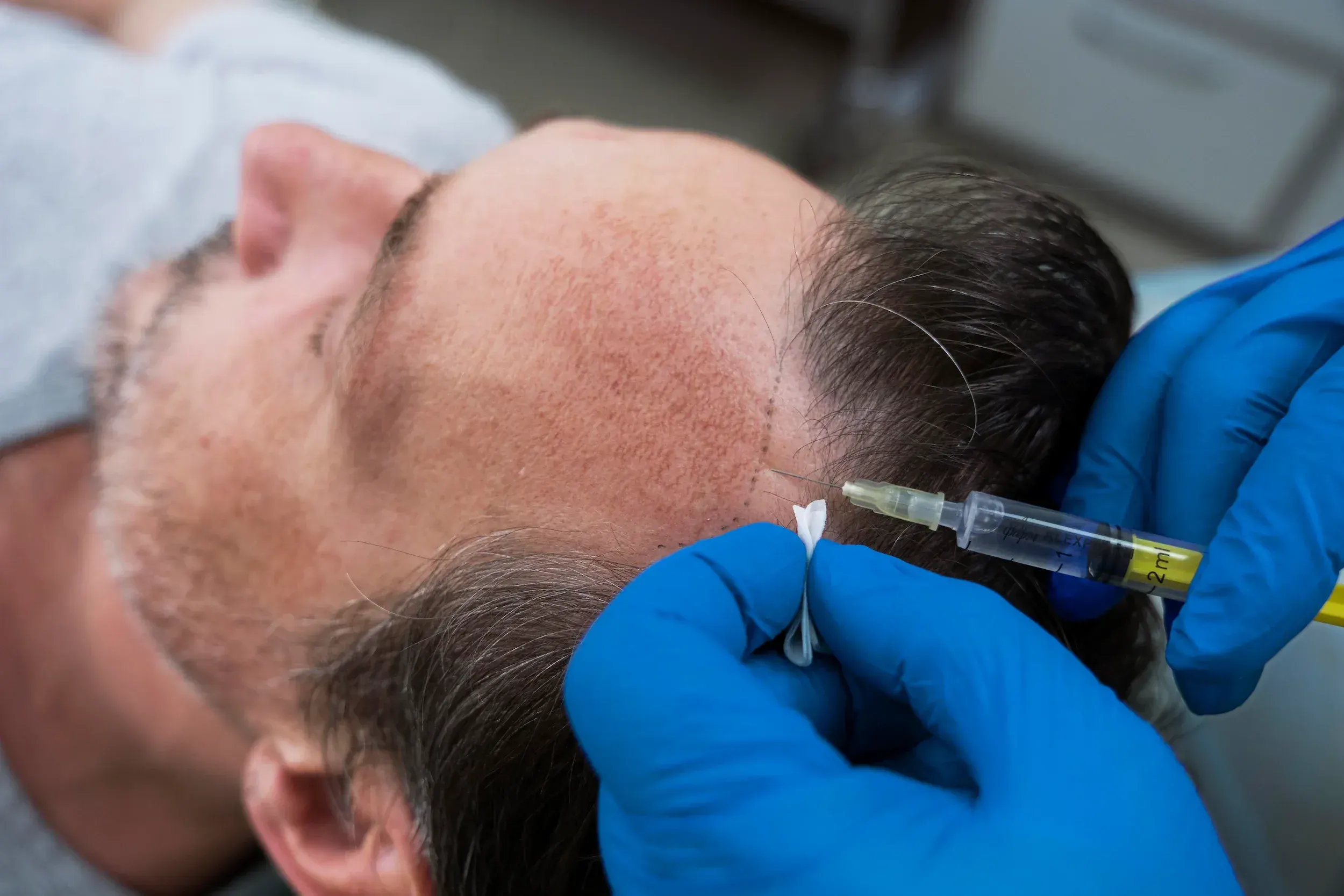
For patients who are actively shedding or who want to support follicle recovery, PRP Hair Restoration at DSI Hair offers a highly effective intervention. PRP delivers concentrated growth factors directly to the scalp, extending the anagen phase of existing follicles, improving hair shaft diameter, and creating a supportive environment for regrowth. It is particularly useful during the recovery phase following telogen effluvium, as it accelerates the return to normal follicle cycling.
4. Medications Where Appropriate
For patients in whom androgenetic alopecia has been unmasked or accelerated, DHT-blocking medications such as Finasteride (for men) or Spironolactone (for women) may be appropriate to halt the androgenetic component. Both topical Minoxidil and Oral Minoxidil can also be used to support regrowth regardless of the underlying cause.
5. Low Light Laser Therapy
The Revian Cap — DSI Hair's at-home low level laser therapy device — supports scalp health and follicle activity between clinic visits. For patients managing GLP-1-related shedding while continuing their weight loss program, LLLT is a convenient, non-invasive adjunct that can be used daily without disrupting normal activities.
Should You Stop Ozempic to Prevent Hair Loss?
In most cases, no. The decision to continue or modify GLP-1 therapy should be made in consultation with the prescribing physician based on the metabolic and health benefits of the medication, not primarily on hair loss concerns. The hair loss associated with GLP-1 medications is, for most patients, temporary and manageable.
A more effective approach is to address the hair loss directly while continuing the medication: optimizing protein and nutrient intake, supporting follicle health with PRP or LLLT, and seeking evaluation from a hair specialist who can determine whether underlying androgenetic alopecia is also present.
Frequently Asked Questions
How long after starting Ozempic does hair loss begin?
Most patients experiencing GLP-1-related hair thinning notice it 2–4 months after beginning the medication or after a period of significant rapid weight loss. The delay reflects the natural lag between a follicular trigger and the visible shedding phase of telogen effluvium.
Will my hair grow back after stopping or adjusting Ozempic?
For pure telogen effluvium, yes — hair typically regrows once the body stabilizes. For patients who were already developing androgenetic alopecia, some of the hair lost may not return without treatment. This is why early evaluation and intervention is important.
What blood tests should I ask for if I'm losing hair on a GLP-1 medication?
Useful labs include ferritin (the most sensitive marker of iron storage), complete blood count, thyroid stimulating hormone (TSH), free T4, zinc, vitamin D, vitamin B12, and a basic metabolic panel. Your prescribing physician or a DSI Hair dermatologist can order an appropriate panel.
Can I get PRP while on Ozempic?
Yes. There are no known contraindications between PRP therapy and GLP-1 medications. In fact, the combination — managing weight with the medication while actively supporting scalp health with PRP — is exactly the approach we recommend for patients experiencing significant shedding.
See a DSI Hair Dermatologist in Algonquin, IL
If you are on Ozempic, Wegovy, Mounjaro, or another GLP-1 medication and have noticed increased hair shedding or thinning, you do not have to simply wait it out. There are specific, evidence-based interventions that can make a meaningful difference in how your hair responds — both in the short term and for your long-term density.
DSI Hair serves patients from Algonquin, Crystal Lake, Lake in the Hills, Barrington, Huntley, Woodstock, and across northern Illinois. Call DSI Hair today at (844) 307-7546 or book a consultation with Dr. Khanna or Dr. Boshnick to get a clear picture of what is driving your hair loss and what can be done about it.