Evaluation
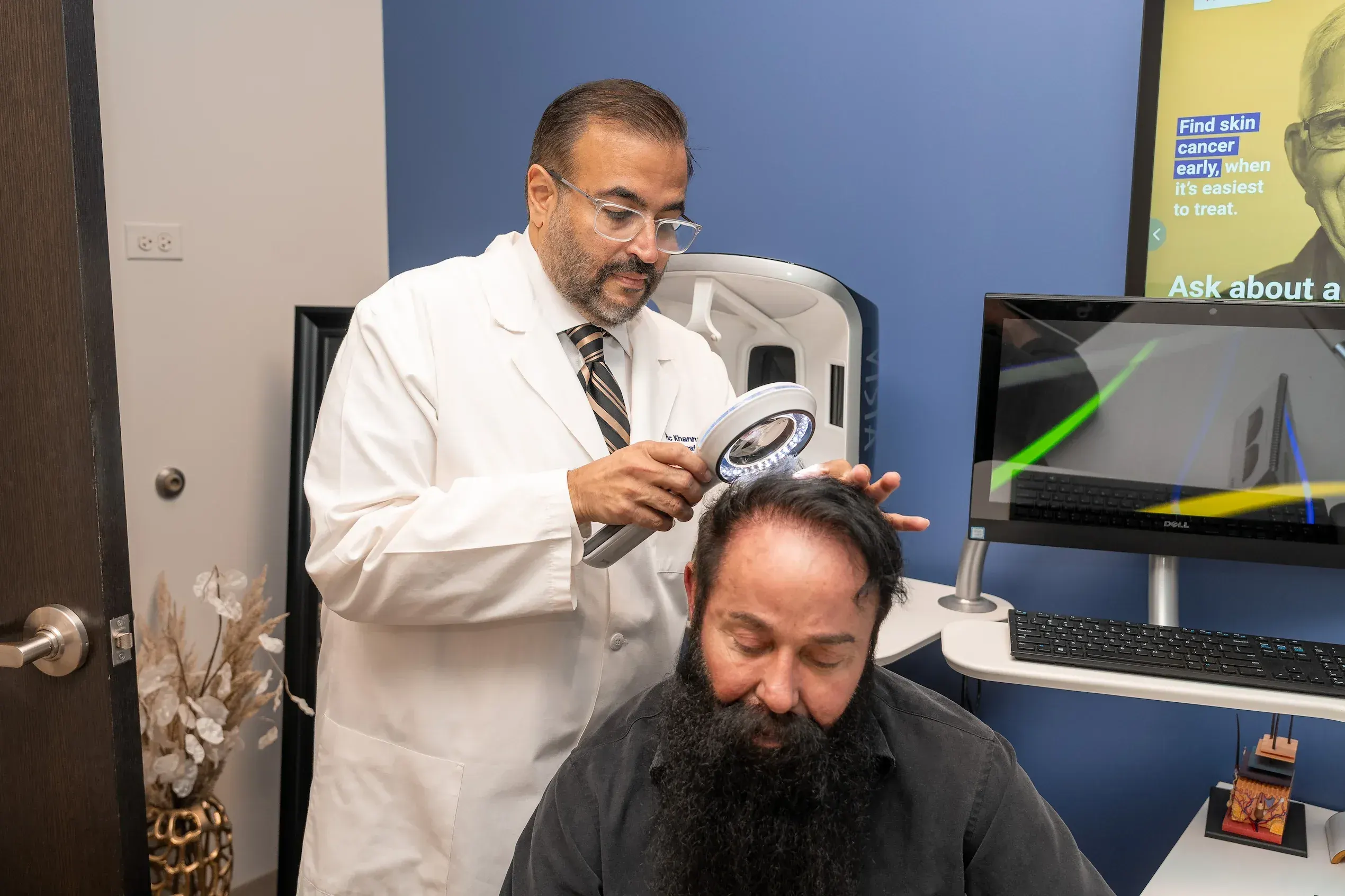
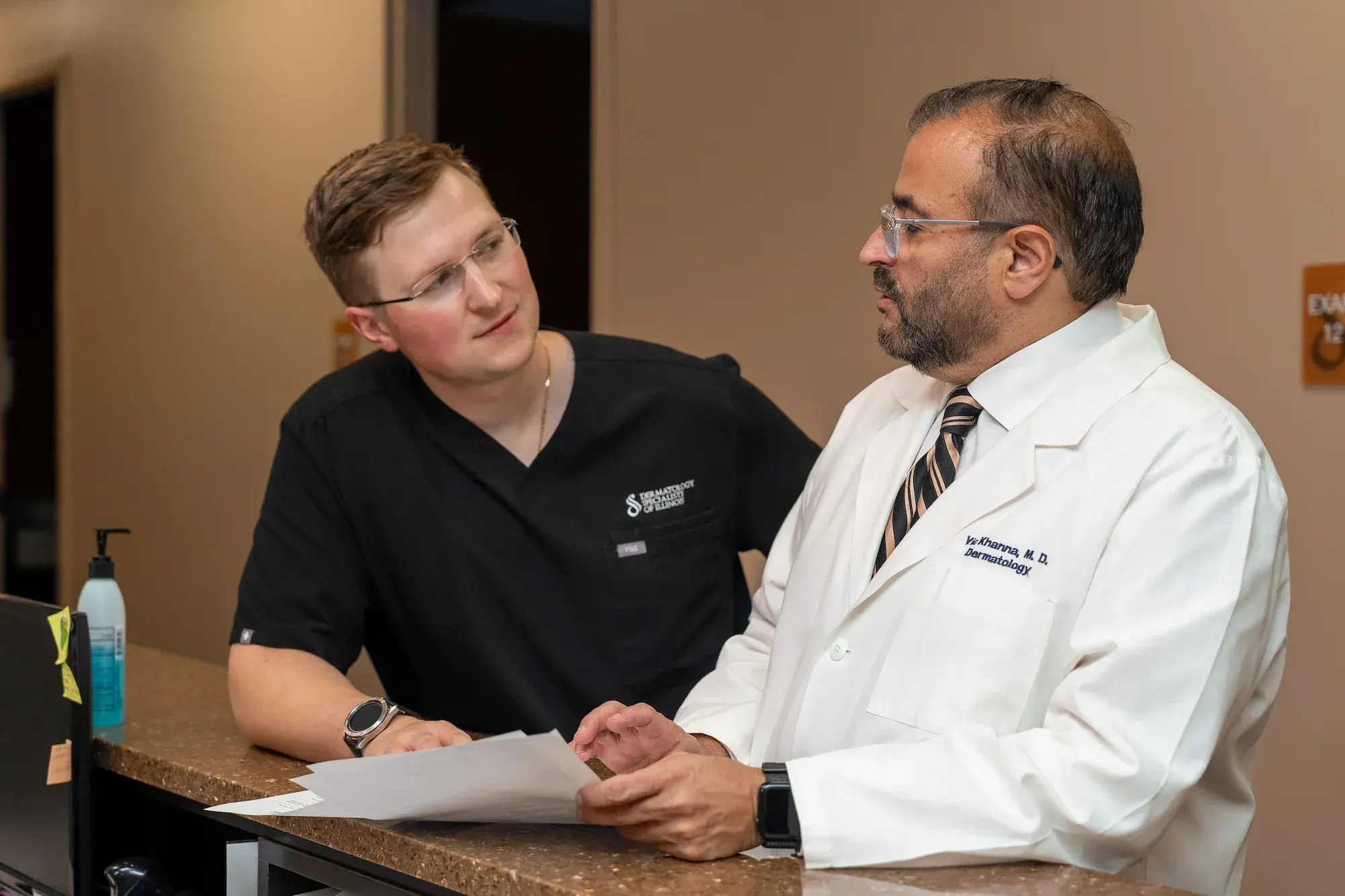
Dr. Khanna or Dr. Boshnick reviews your hair loss history, performs scalp analysis, and orders baseline ECG and bloodwork to assess cardiovascular safety.


Dermatologist-Prescribed Systemic Hair Regrowth
Compliance Is the Real Barrier
Many patients begin their hair restoration journey with topical minoxidil, only to abandon it within months. The twice-daily application is time-consuming, leaves residue on the scalp, and can cause irritation or flaking that discourages consistent use. Studies show that fewer than 40% of patients maintain topical minoxidil adherence beyond one year. For those with diffuse thinning or female pattern hair loss, this compliance gap means losing ground on regrowth potential every missed application.
Low-dose oral minoxidil eliminates the compliance barrier entirely. A single daily pill delivers the same vasodilatory mechanism systemically, reaching every follicle on the scalp without topical irritation or greasy residue. Clinical research shows oral minoxidil at doses as low as 0.625mg produces measurable improvements in hair density. At DSI Hair, Dr. Khanna and Dr. Boshnick prescribe oral minoxidil as part of a comprehensive hair loss treatment plan, with cardiac monitoring to ensure your safety throughout the process.

The Science of Systemic Hair Regrowth
Oral minoxidil is a low-dose prescription medication originally developed as an antihypertensive agent. At sub-therapeutic blood pressure doses (typically 0.625mg to 5mg daily), minoxidil acts as a potent vasodilator that increases blood flow to hair follicles, prolongs the anagen (growth) phase, and stimulates miniaturized follicles to produce thicker, terminal hairs. The medication works through potassium channel opening, which relaxes vascular smooth muscle and enhances nutrient delivery to the dermal papilla cells that drive hair growth.
Unlike its topical counterpart, oral minoxidil bypasses the scalp's absorption barrier entirely. A 2022 systematic review in the Journal of the American Academy of Dermatology found that low-dose oral minoxidil (LDOM) produced significant hair regrowth in both androgenetic alopecia and other forms of hair loss, with efficacy comparable to or exceeding topical 5% minoxidil. While prescribed off-label for hair loss, the growing body of clinical evidence has made LDOM a mainstream option among dermatologists for patients who cannot tolerate or adhere to topical therapy.
Systemic Regrowth for Multiple Patterns
Systemic delivery reaches all follicles evenly, ideal for widespread density loss across the scalp
FDA-recognized minoxidil mechanism supports regrowth along the central part and crown in women
Counteracts follicular miniaturization by enhancing blood flow and prolonging anagen phase
Stimulates dormant follicles to re-enter active growth, increasing overall hair count and thickness
Provides an alternative pathway for patients who did not respond adequately to topical minoxidil alone
Helps reduce excessive shedding and promotes quicker return to the growth phase through consistent systemic follicle stimulation
Why Patients Prefer It

One daily pill replaces twice-daily topical application, dramatically improving long-term adherence
Eliminates contact dermatitis, flaking, and greasy residue common with topical formulations
Systemic absorption treats all follicles simultaneously, including areas difficult to reach topically
Studies show comparable or superior hair density gains versus topical minoxidil at low doses
Safely pairs with finasteride, PRP therapy, or laser cap treatment for enhanced results
Treatment Comparison
| Treatment | Mechanism | Time | Results | Duration | Downtime | Best For |
|---|---|---|---|---|---|---|
| Oral Minoxidil | Systemic vasodilation via potassium channel opening | Once daily pill | Comparable to topical 5%; improved density in 6-12 months | Ongoing daily use | None | Patients intolerant of topical; diffuse thinning; women |
| Topical Minoxidil | Local vasodilation at application site | Twice daily application | Moderate regrowth; ~35% increase in hair count | Ongoing twice daily | None | Mild to moderate thinning; first-line OTC option |
| Finasteride | DHT blocker (5-alpha reductase inhibitor) | Once daily pill | Slows loss + regrowth in 60-70% of men | Ongoing daily use | None | Male androgenetic alopecia; vertex and midscalp |

Candidacy and Safety Considerations
Low-dose oral minoxidil is an excellent option for patients who have struggled with topical treatments or need whole-scalp coverage for diffuse thinning. Your dermatologist at DSI Hair will evaluate your medical history, current medications, and cardiovascular health before prescribing.
All oral minoxidil prescriptions at DSI Hair include baseline cardiac screening and ongoing monitoring to ensure your safety. Dr. Khanna and Dr. Boshnick adjust dosing carefully based on your response and tolerance.
From Consultation to Results
Dr. Khanna or Dr. Boshnick reviews your hair loss history, performs scalp analysis, and orders baseline ECG and bloodwork to assess cardiovascular safety.
Based on your evaluation, your dermatologist prescribes a starting dose (typically 0.625mg-2.5mg daily) and discusses expected timeline and potential side effects.
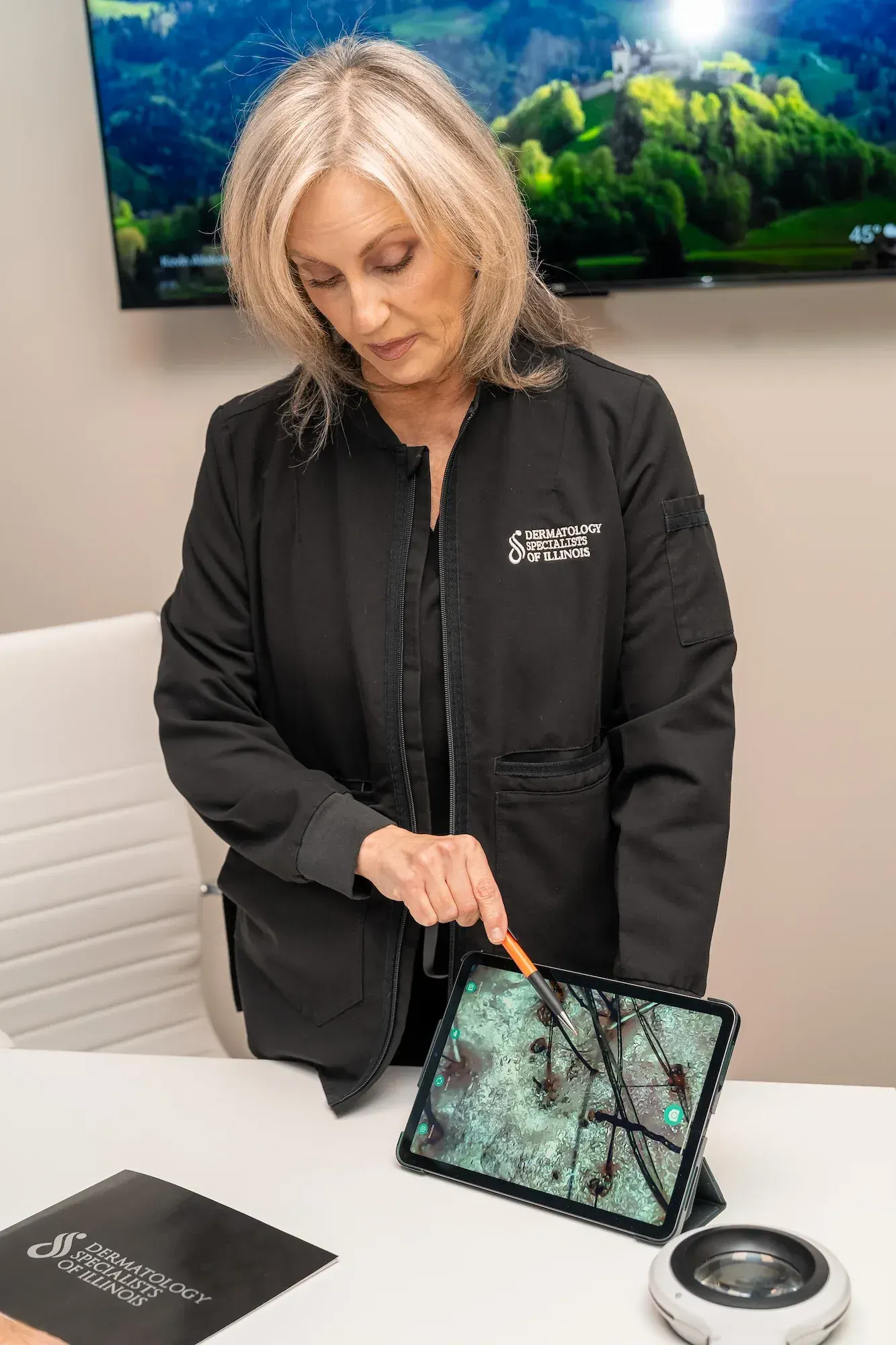
Follow-up appointments at 4-6 weeks and then every 3-6 months include blood pressure checks, lab work, and hair density photography to track progress.
Dr. Khanna or Dr. Boshnick adjusts your dosage based on response and tolerability, and may recommend combining with finasteride or PRP therapy for enhanced results.
Low-dose oral minoxidil is generally well-tolerated when prescribed and monitored by a dermatologist. The most common side effect is hypertrichosis (increased body or facial hair), reported in 15-25% of patients, which is typically mild and manageable. Some patients experience mild peripheral edema (fluid retention), lightheadedness, or a slight decrease in blood pressure, particularly during the first few weeks of treatment.
Less common but important considerations include tachycardia (elevated heart rate) and pericardial effusion, which is why DSI Hair requires baseline cardiovascular screening and periodic monitoring. Studies of low-dose oral minoxidil (0.625mg-5mg) for hair loss show a favorable safety profile distinct from the higher doses (10-40mg) used historically for hypertension. A 2020 review in the International Journal of Dermatology found that serious adverse events were rare at dermatologic doses.
Your dermatologist at DSI Hair will discuss all potential oral minoxidil side effects during your consultation and establish a monitoring schedule to promptly address any concerns. Immediately report chest pain, rapid heartbeat, sudden weight gain, or difficulty breathing.
Low-dose oral minoxidil is one of the most cost-effective medical hair loss treatments available. Because minoxidil is a generic medication, monthly prescription costs are typically very affordable compared to brand-name hair loss therapies or procedural treatments.
Many patients find that oral minoxidil combined with finasteride offers excellent value as a dual medical therapy approach. DSI Hair also offers combination treatment plans that incorporate PRP hair restoration or laser cap therapy for patients seeking accelerated results.
Contact DSI Hair at (844) 307-7546 to schedule your oral minoxidil consultation and receive a personalized treatment plan with transparent pricing.
Board-Certified Dermatology Expertise
Board-certified dermatologists evaluate your candidacy and customize dosing from 0.625mg to 5mg
Baseline ECG and periodic lab work ensure your heart health throughout treatment
Oral minoxidil integrates with PRP, finasteride, and laser therapy for multi-modal results
Dosing guided by latest clinical research and individualized to your hair loss severity
Complement your oral minoxidil regimen with these proven treatments.
View allAnswers from Our Dermatologists
For many patients, yes. A 2022 systematic review found that low-dose oral minoxidil produced comparable or superior hair density improvements versus topical 5% minoxidil, with significantly better patient compliance. Oral delivery also eliminates scalp irritation and ensures whole-scalp coverage. However, topical minoxidil may be preferred for patients who want to avoid systemic effects. Dr. Khanna and Dr. Boshnick at DSI Hair can help determine which form is best for your specific hair loss pattern.
The most common side effect is hypertrichosis (increased body or facial hair growth), affecting roughly 15-25% of patients at low doses. Some patients experience mild fluid retention, lightheadedness, or slight blood pressure changes during the initial weeks. Serious cardiovascular side effects are rare at the low doses (0.625mg-5mg) used for hair loss but are the reason DSI Hair requires baseline ECG screening and periodic monitoring visits.
Oral minoxidil dosage for hair loss is typically 0.625mg to 5mg daily, determined by your dermatologist based on your gender, hair loss severity, and cardiovascular health. Women usually start at 0.625mg-1.25mg, while men may begin at 1.25mg-2.5mg. Your dermatologist at DSI Hair will start conservatively and adjust based on your response and tolerance at follow-up appointments.
Current clinical evidence supports the long-term safety of low-dose oral minoxidil when prescribed and monitored by a dermatologist. Published studies with follow-up periods of 1-3+ years show a favorable safety profile at doses under 5mg daily. DSI Hair's monitoring protocol includes periodic ECG, blood pressure, and lab checks to ensure ongoing safety. The key difference from historical concerns is that hair loss doses are 5-20x lower than the doses used for blood pressure management.
Oral minoxidil can cause mild fluid retention in some patients, which may register as a small weight increase (typically 1-3 lbs) during the first few weeks of treatment. This is distinct from fat gain and usually stabilizes. If you notice sudden or significant weight gain, swelling in ankles or feet, or shortness of breath, contact DSI Hair immediately as these may indicate fluid retention requiring dosage adjustment or additional evaluation.
Most patients begin seeing initial signs of reduced shedding and early regrowth at 8-12 weeks, with more noticeable density improvements between 4-6 months. Full results typically develop over 6-12 months of consistent daily use. An initial shedding phase in weeks 2-6 is normal and actually indicates the medication is shifting follicles into a new growth cycle. Dr. Khanna and Dr. Boshnick track your progress with clinical photography at each follow-up visit.