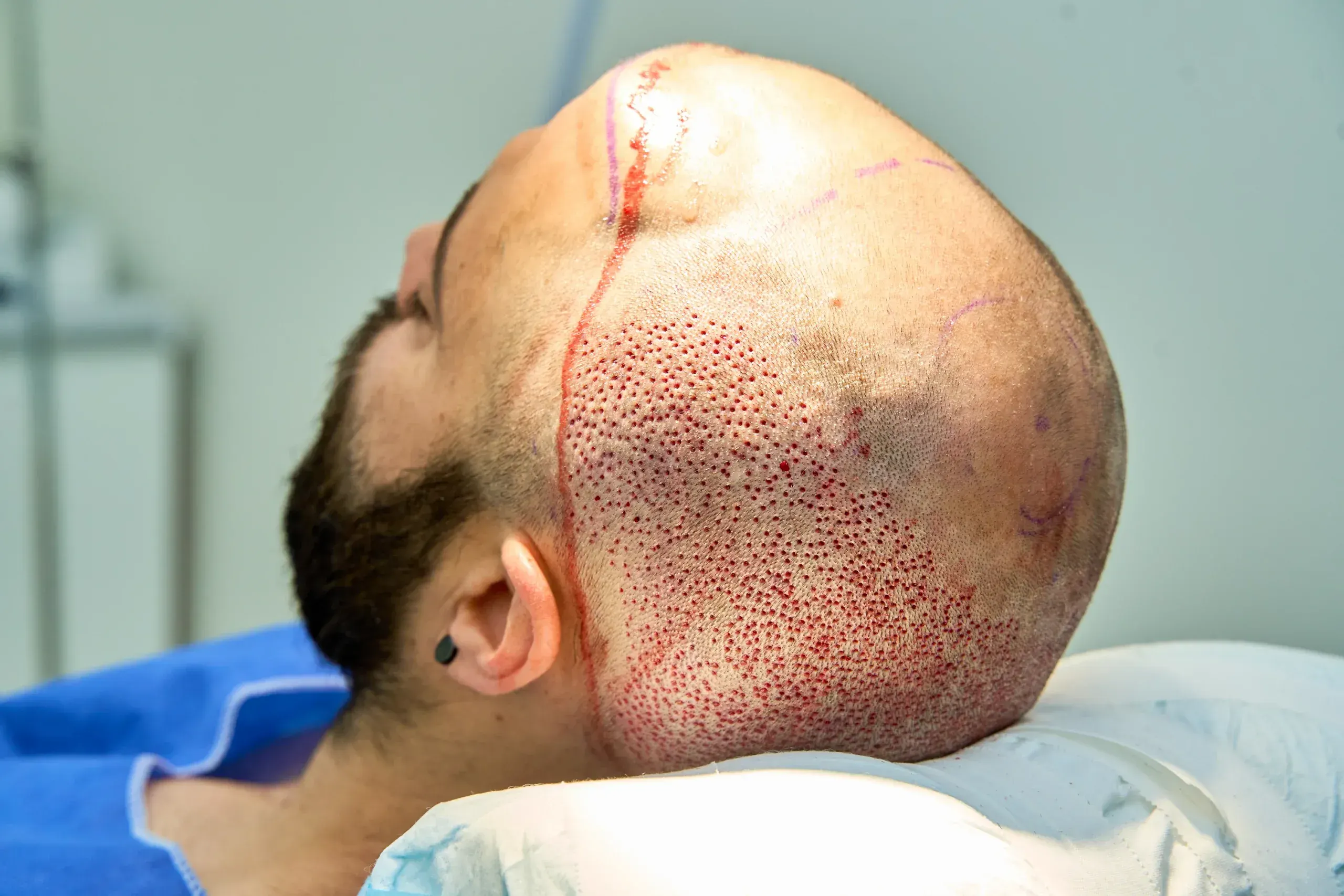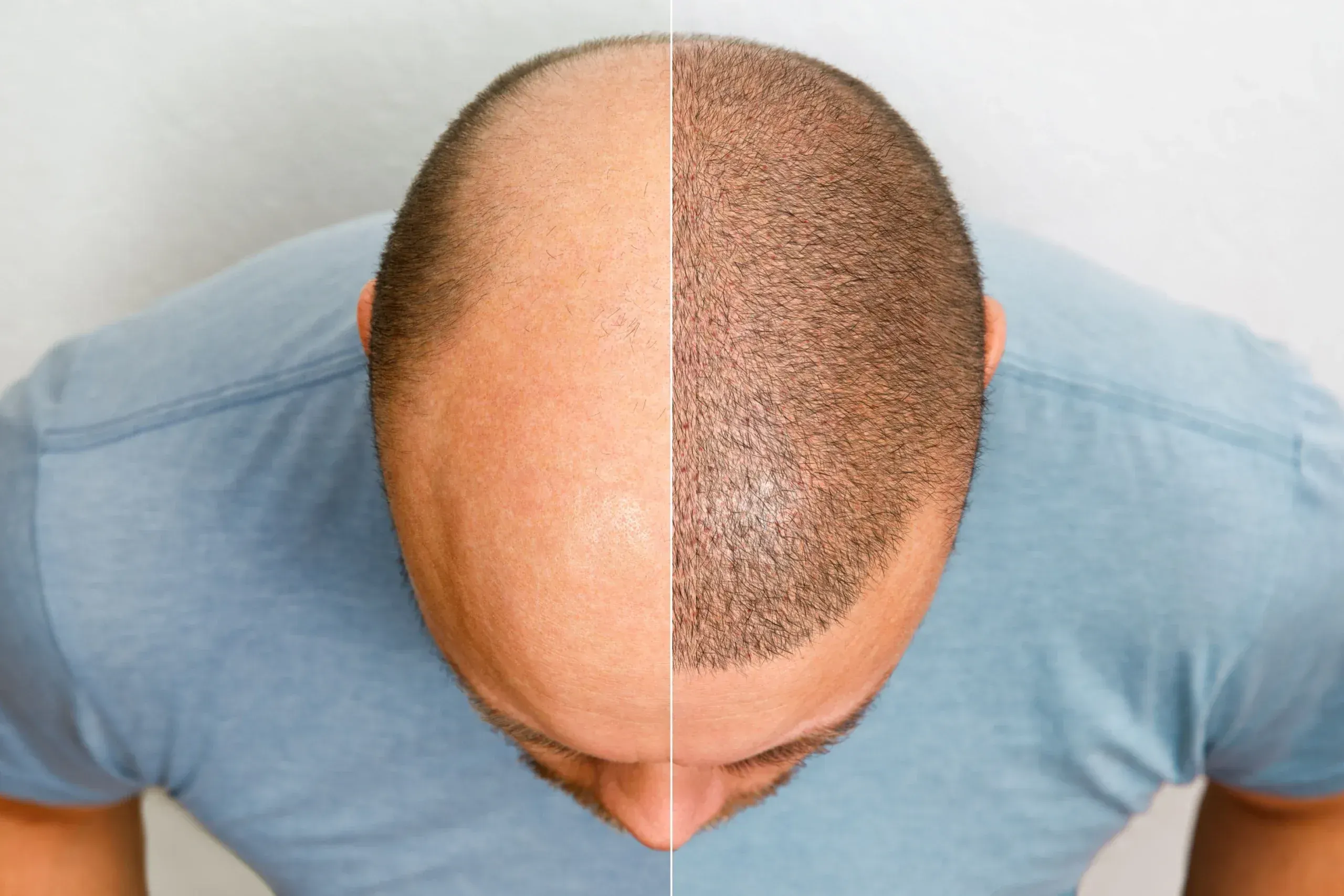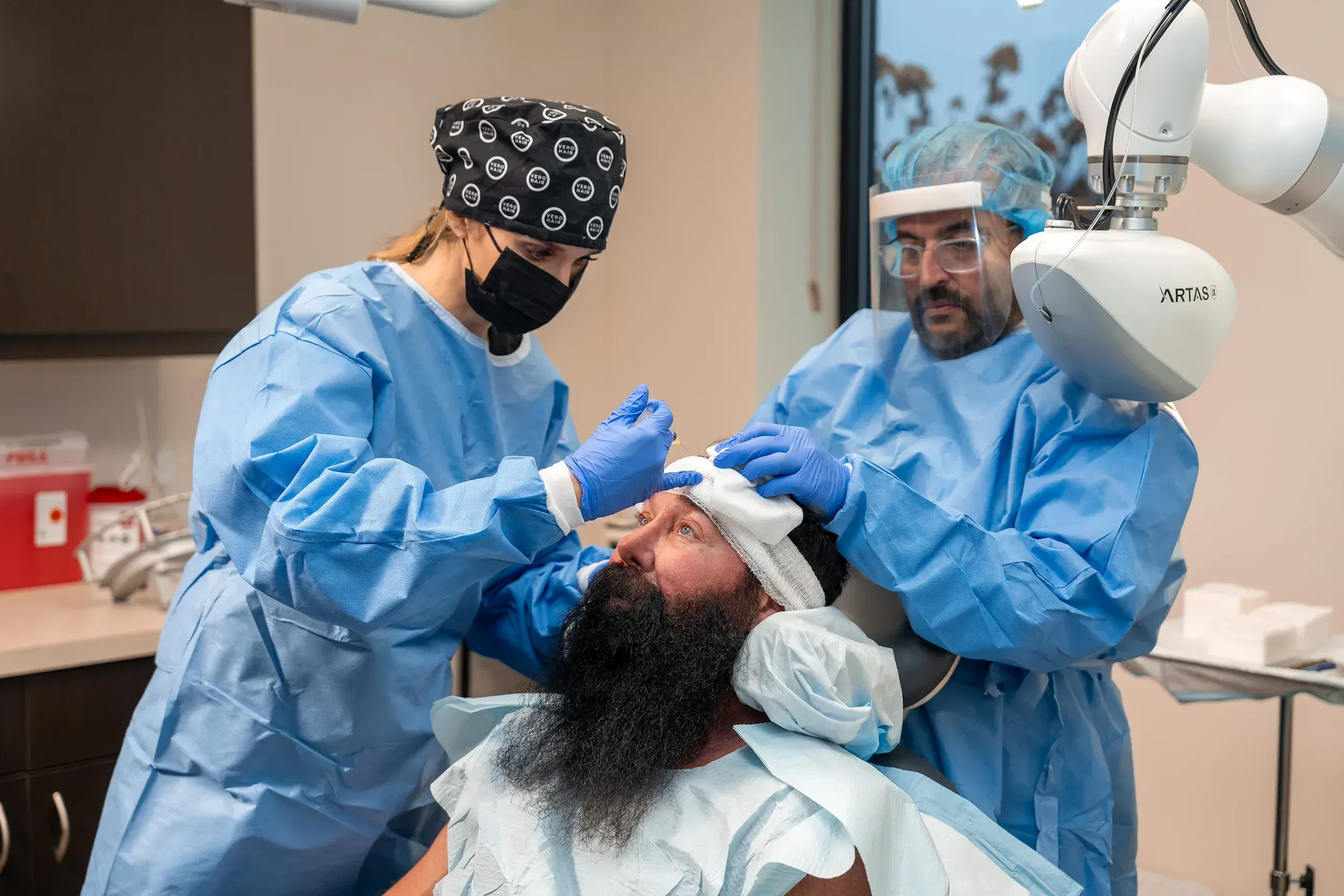
Hair transplant scars form as part of the body's natural wound-healing response. When tissue is disrupted during graft harvesting, the body produces collagen fibers to repair the area—but these fibers align differently than surrounding tissue, creating visible scar tissue. The extent and visibility of scarring depend on several interconnected factors.
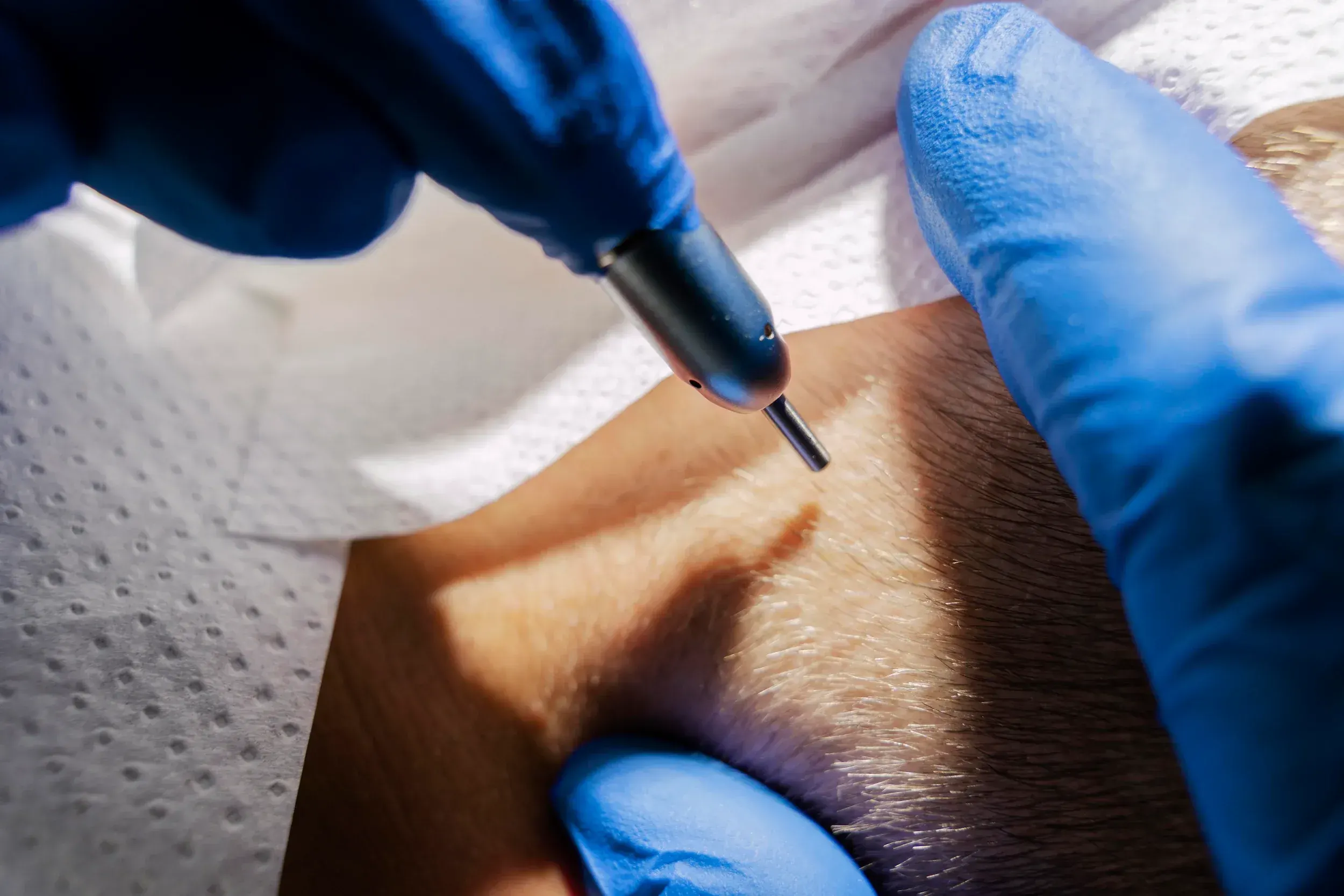
The surgical technique is the single most important variable. FUT strip surgery requires a scalpel incision across the back of the scalp, and the resulting wound is closed with sutures or staples. This linear closure inherently produces a scar that can widen over time due to scalp tension, sometimes becoming a noticeable band across the donor area. In contrast, FUE uses sub-millimeter punch tools to extract individual follicles, leaving only tiny circular wounds that heal to near-invisible pinpoint marks.
Patient-specific factors also play a significant role. Skin type, healing biology, collagen production patterns, and scalp laxity all influence how scars mature. Patients with thicker skin or those prone to keloid formation may experience more prominent scarring. Post-operative care—including wound management, sun protection, and activity restriction—directly impacts final scar appearance. Poor aftercare can lead to wound dehiscence, infection, or hypertrophic scarring that would not otherwise occur.