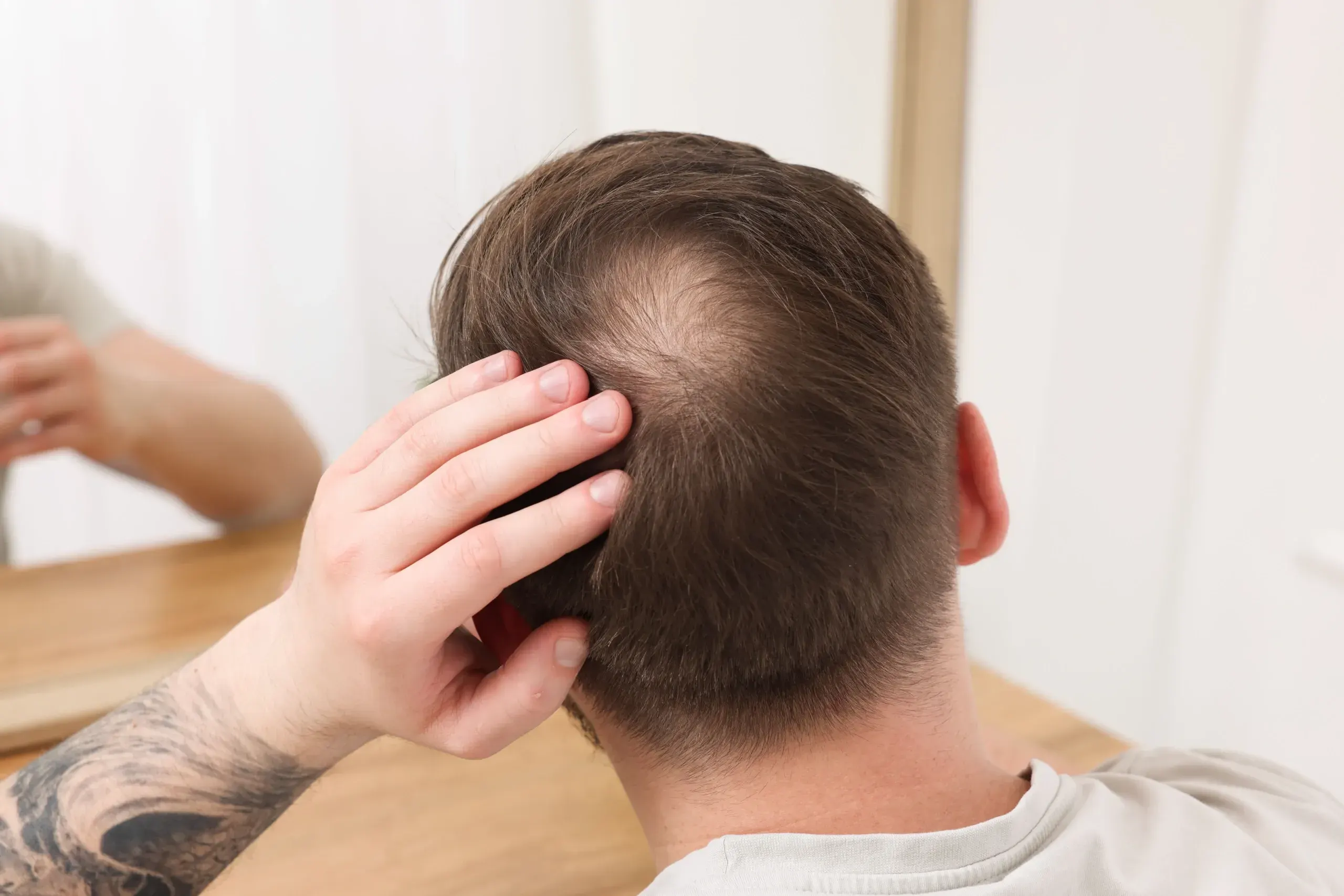
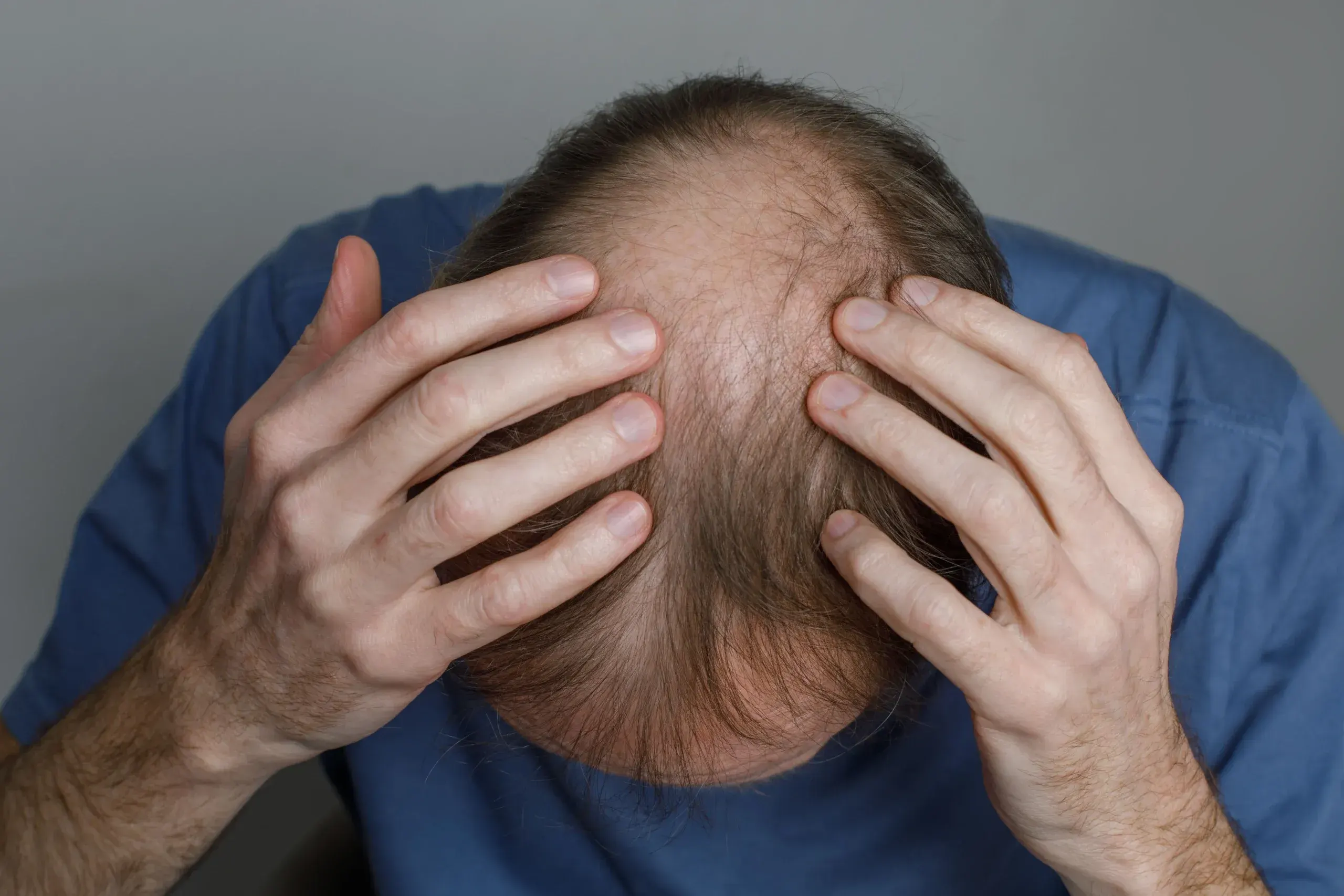
The primary driver of hair loss in men is androgenetic alopecia, a hereditary condition where hair follicles become increasingly sensitive to dihydrotestosterone (DHT). DHT is a byproduct of testosterone converted by the enzyme 5-alpha reductase. When DHT binds to androgen receptors in genetically susceptible follicles, it triggers a process called follicular miniaturization -- each growth cycle produces thinner, shorter, and less pigmented hairs until the follicle eventually stops producing visible hair altogether.
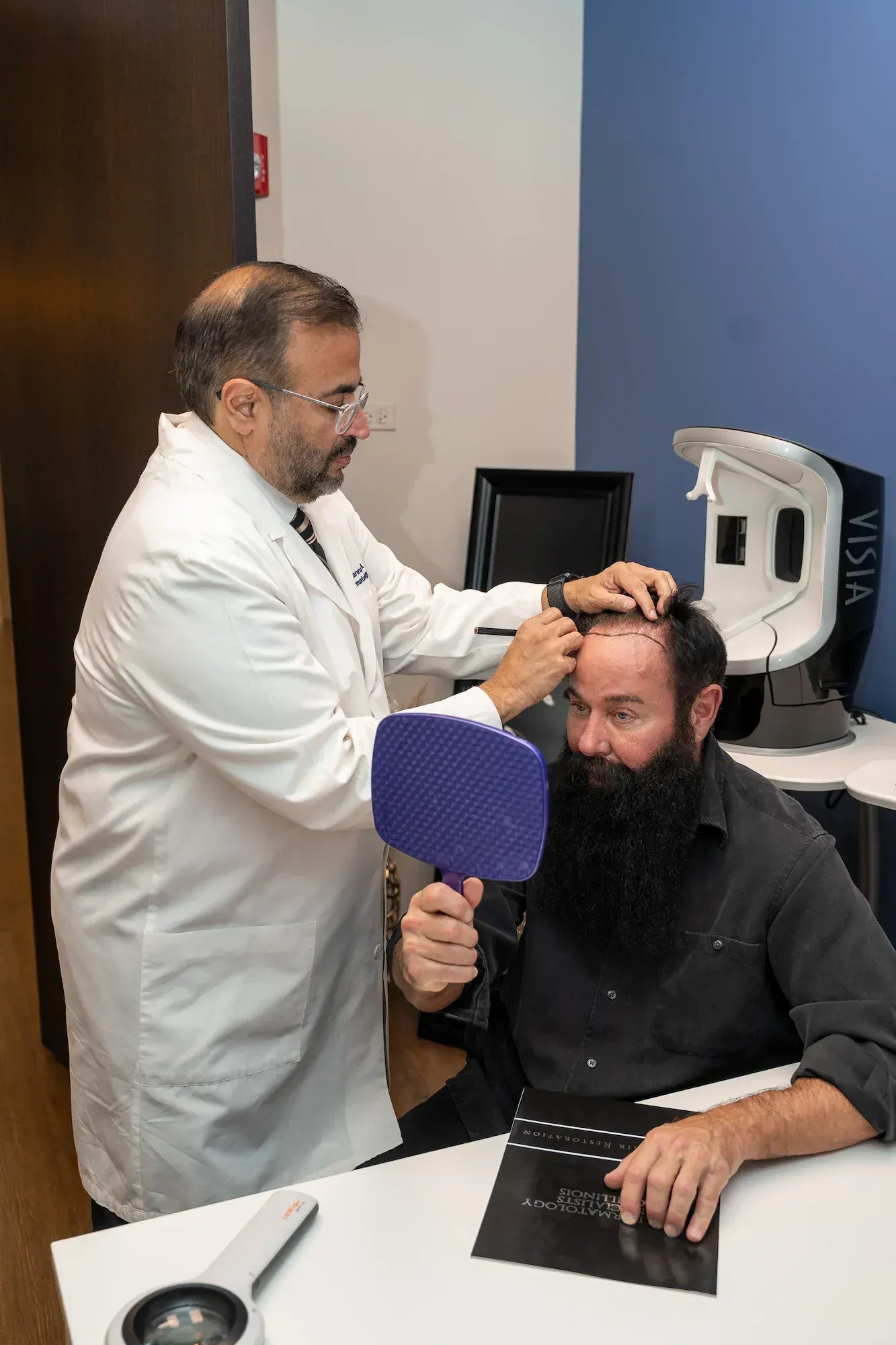
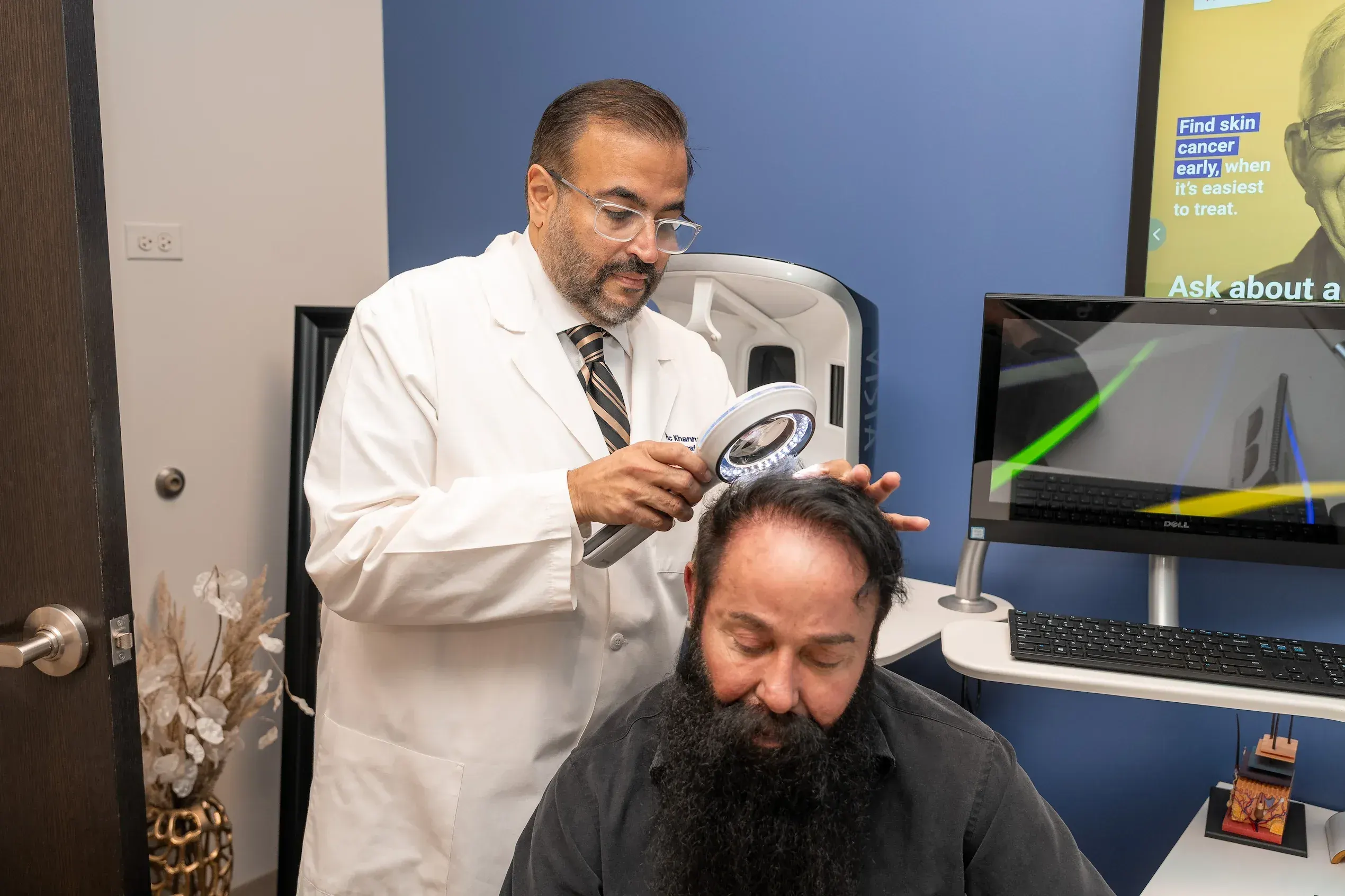
While genetics account for approximately 80% of male pattern baldness susceptibility, other factors can accelerate or worsen hair loss. Chronic stress elevates cortisol levels, which can push hair follicles into the telogen (resting) phase prematurely. Nutritional deficiencies -- particularly iron, zinc, biotin, and vitamin D -- compromise the hair growth cycle. Medical conditions including thyroid disorders, autoimmune diseases, and scalp infections also contribute. Lifestyle factors such as smoking, which restricts blood flow to follicles, and certain medications including blood thinners and antidepressants can exacerbate thinning. A board-certified dermatologist can help determine which combination of factors is contributing to your specific pattern of loss and recommend a targeted treatment plan, which may include finasteride prescription for male hair loss or other interventions.