Consultation
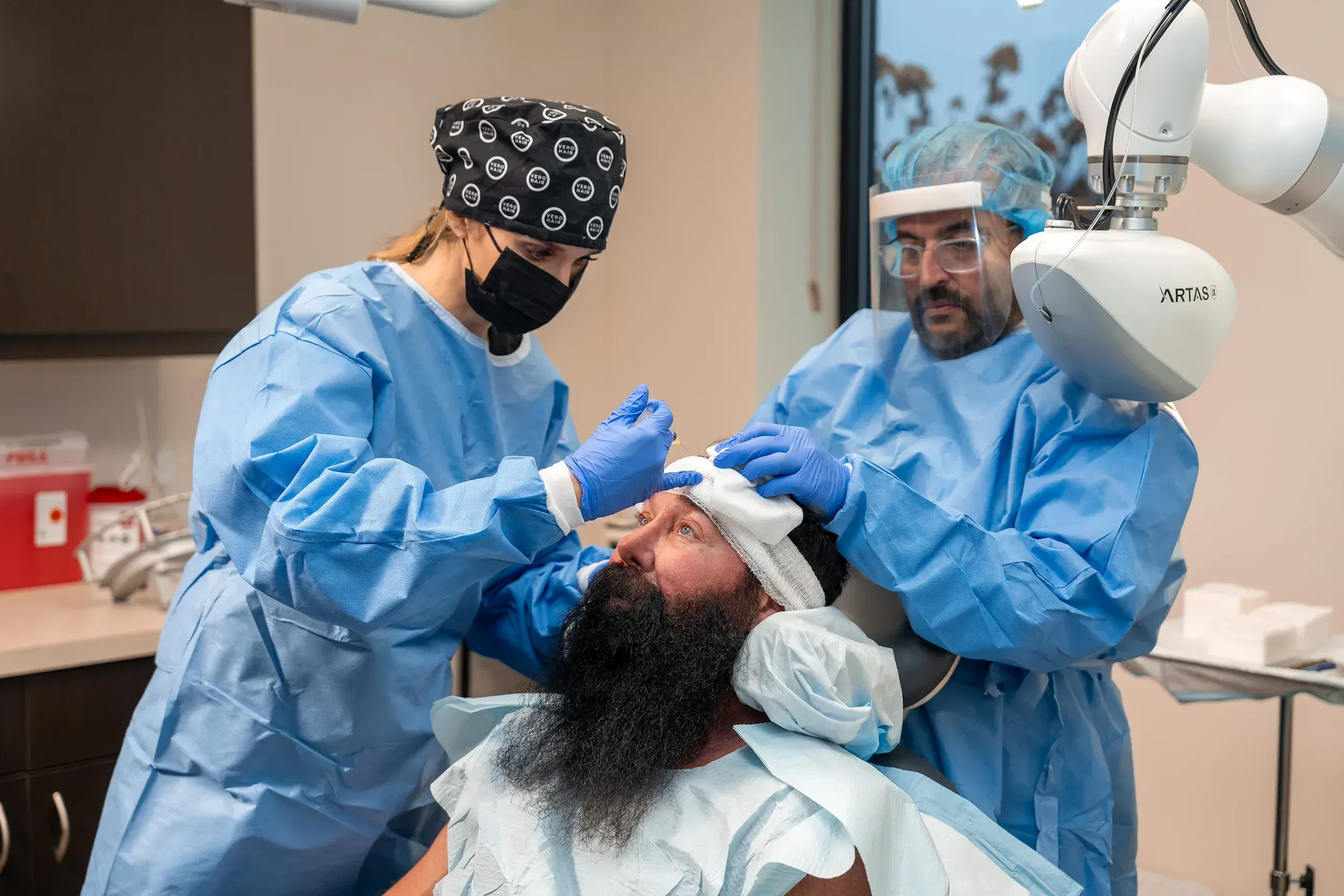
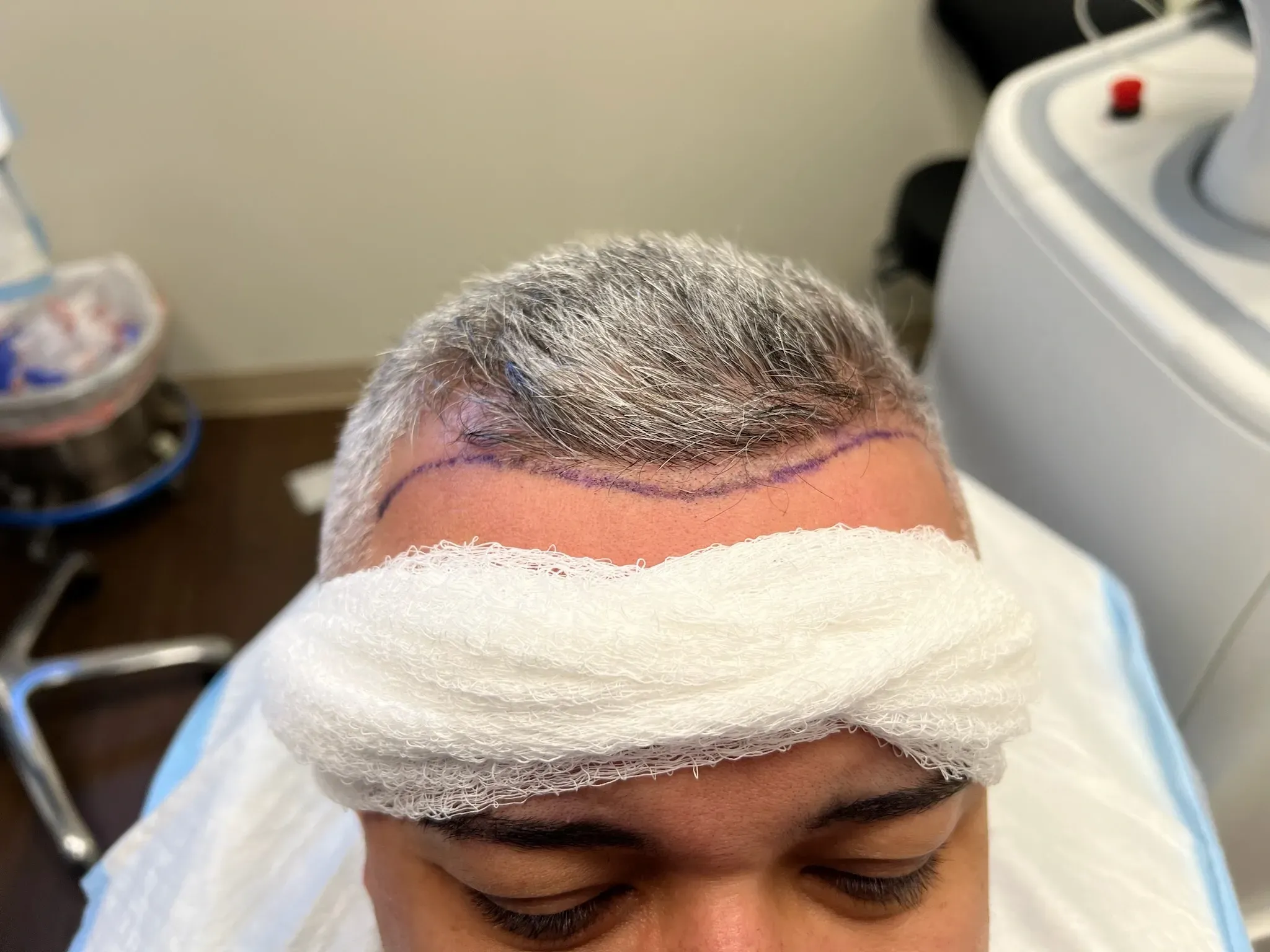
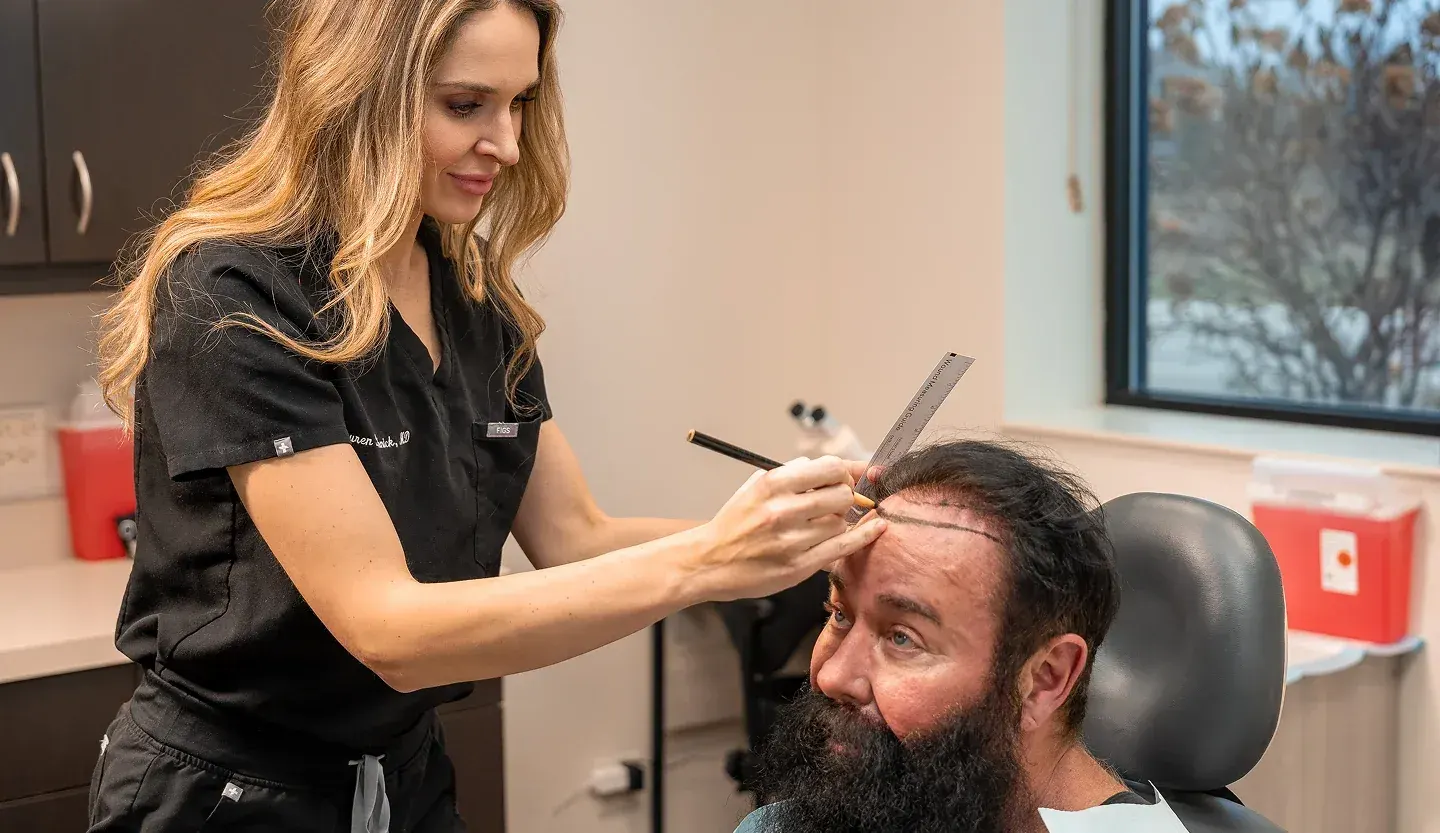
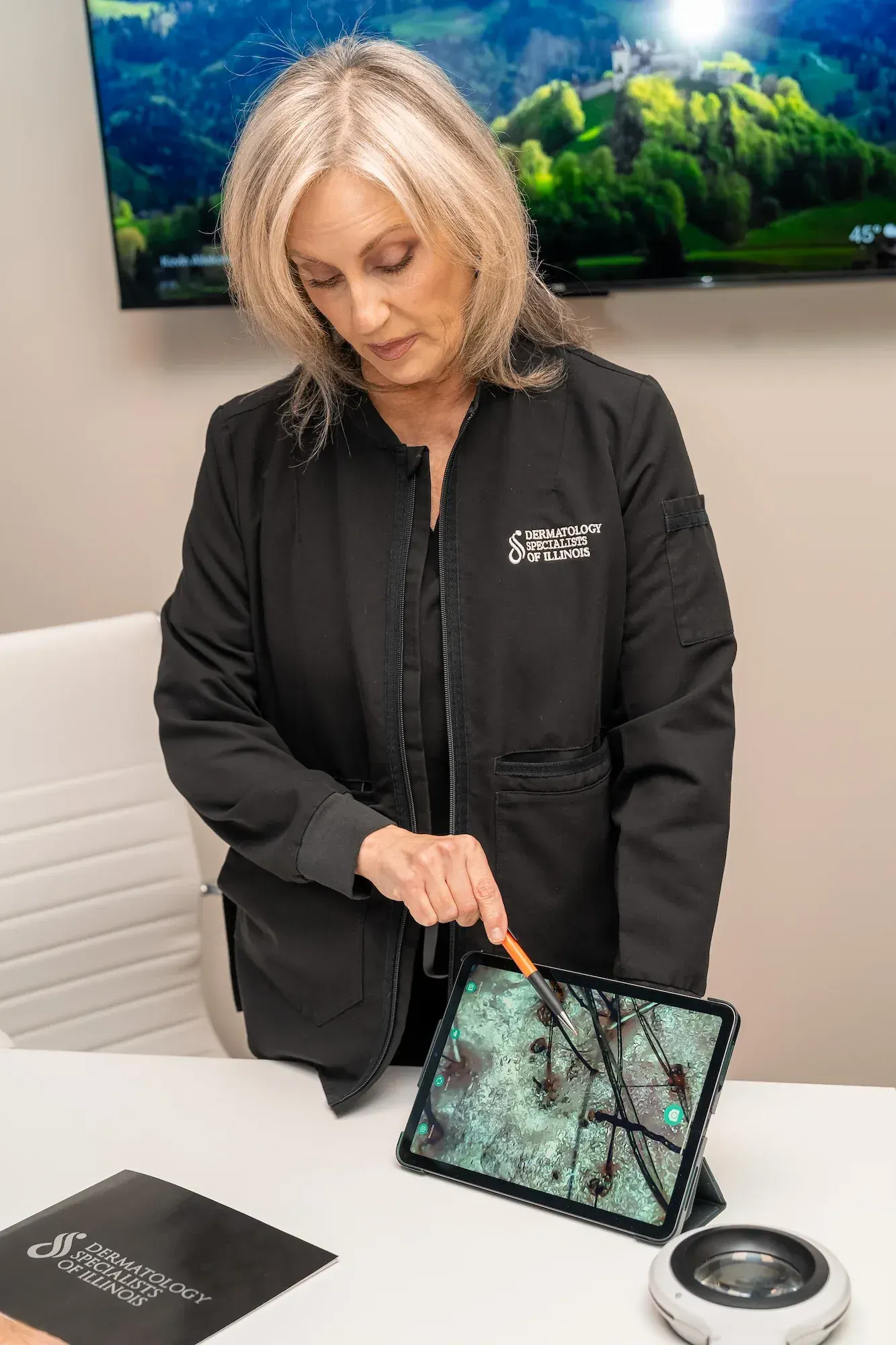
Dr. Khanna evaluates your scalp with the ARTAS iXi imaging system, mapping donor density and designing your new hairline.

Board-Certified Dermatologists
Understanding the Emotional Toll
Hair loss affects over 80 million Americans, and for many, the emotional impact is as significant as the physical change. Thinning hair, a widening part, or a retreating hairline can erode self-confidence and change how you present yourself to the world. Over-the-counter products often fall short, delivering minimal results that leave patients frustrated. For those experiencing male pattern baldness or female pattern hair loss, the progressive nature of the condition means the sooner you act, the more options you have.
Hair transplant surgery at DSI Hair provides a permanent, one-time solution that works with your own biology. Unlike topical treatments or medications that require lifelong use, a hair transplant relocates healthy, DHT-resistant follicles from the donor area to thinning or balding zones. Our ARTAS robotic hair transplant system ensures graft selection and placement with sub-millimeter precision, producing density and directionality that mirror your natural growth pattern. The result is hair that is truly yours, growing on its own for the rest of your life.
Follicular Relocation for Permanent Growth
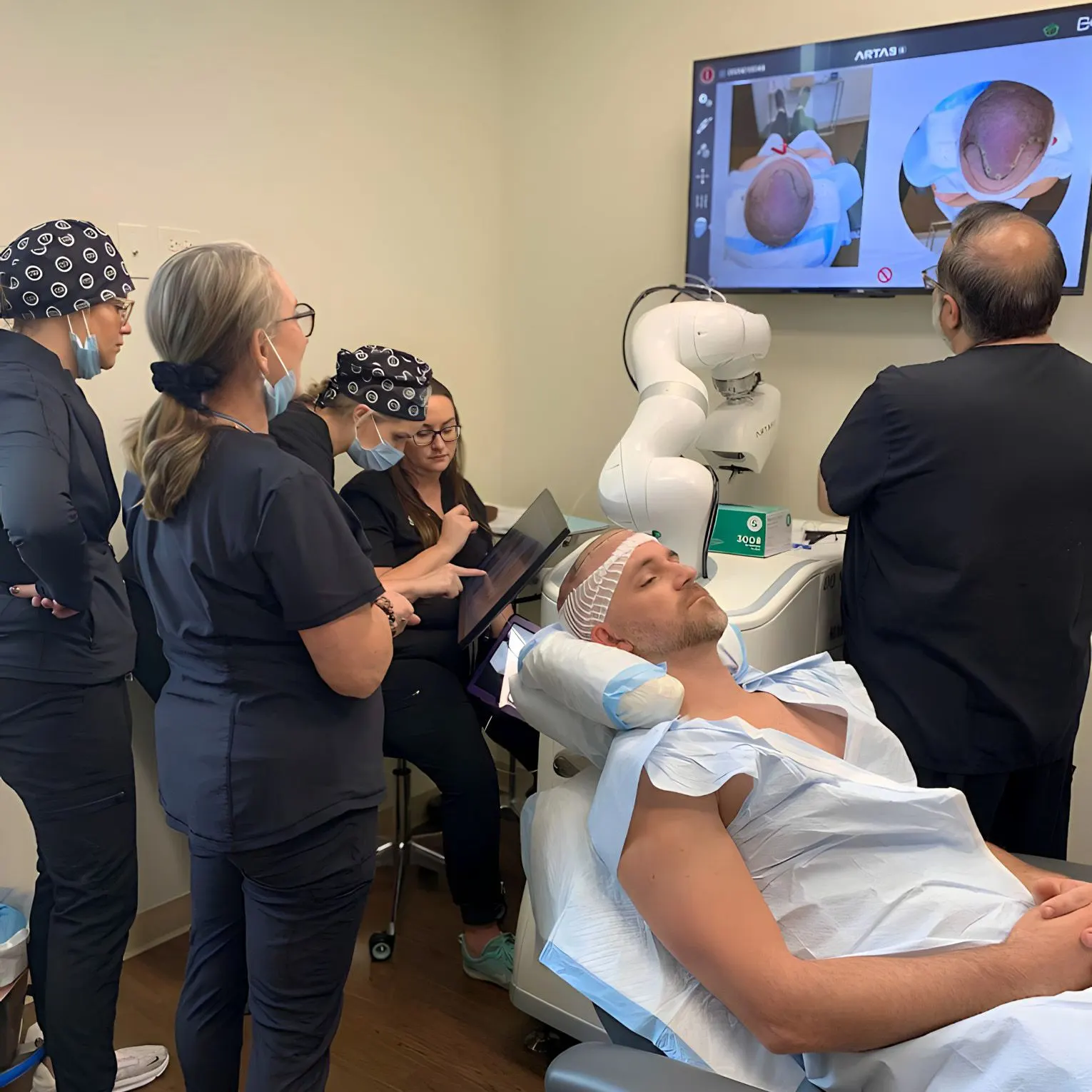
A hair transplant is a surgical procedure that moves individual hair follicles from a dense donor area, typically the back and sides of the scalp, to regions affected by thinning or baldness. Because these donor follicles are genetically resistant to dihydrotestosterone (DHT), the hormone responsible for androgenetic alopecia, transplanted hair continues to grow permanently in its new location. At DSI Hair in Algonquin, IL, Dr. Khanna performs hair transplant procedures using the ARTAS iXi robotic system, which uses artificial intelligence and advanced imaging to identify and harvest optimal grafts with precision that manual techniques cannot consistently replicate.
The procedure works by leveraging the principle of donor dominance: hair follicles retain the characteristics of their origin site regardless of where they are placed. During a follicular unit extraction (FUE) session, individual follicular units containing 1 to 4 hairs are extracted without a linear incision, leaving no strip scar. The ARTAS system maps the scalp in real time, calculating density, angle, and direction to ensure a natural distribution. To understand the differences between extraction methods, visit our FUE vs FUT comparison page. For patients exploring all restoration avenues, DSI Hair also offers comprehensive non-surgical hair loss treatment options including PRP, finasteride, and laser therapy.
Comprehensive Hair Restoration Solutions
Restores density to crown and frontal scalp affected by androgenetic alopecia
Rebuilds a natural, age-appropriate frontal hairline with precise graft placement
Fills the vertex area where circular thinning patterns commonly develop
Addresses widening parts and diffuse thinning in carefully selected female candidates
Conceals linear scars from prior FUT strip surgeries with targeted FUE grafting
Recreates natural brow shape and density using fine single-hair follicular units
Permanent, Natural Results
Transplanted follicles are DHT-resistant and continue growing for life
ARTAS robotic precision matches your existing hair angle, direction, and density
FUE extraction leaves tiny dot scars invisible even with short hairstyles
Local anesthesia only, no general sedation or overnight hospital stay required
Unlike medications or topicals, no ongoing daily treatment regimen needed
Compare Your Options
| Treatment | Mechanism | Time | Results | Duration | Downtime | Best For |
|---|---|---|---|---|---|---|
| Hair Transplant (FUE) | Follicle relocation | 4-8 hours | Natural regrowth | Permanent | 7-10 days | Moderate to advanced hair loss |
| PRP Hair Restoration | Platelet growth factors | 30-60 min | Thicker existing hair | 6-12 months per session | None | Early thinning, transplant enhancement |
| Finasteride (Oral) | DHT blocker | Daily pill | Slows or stops loss | Ongoing use required | None | Male pattern baldness prevention |
Determining Your Eligibility
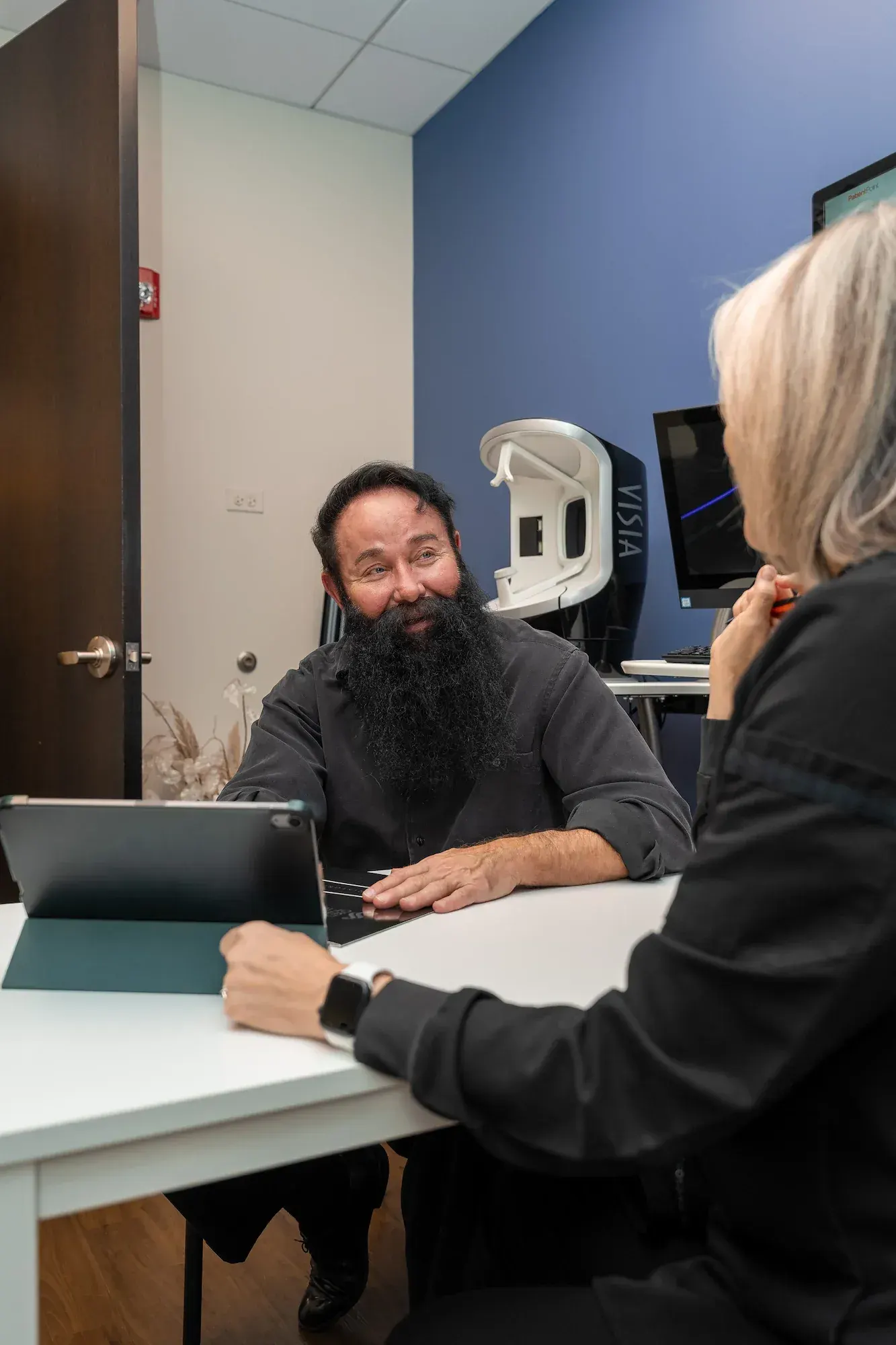
The best hair transplant candidates have stable hair loss patterns and sufficient donor hair density to achieve meaningful coverage. During your consultation at DSI Hair, Dr. Khanna or Dr. Boshnick will evaluate your scalp using the ARTAS iXi imaging system to map donor availability and plan graft distribution.
During your consultation, our dermatologists will discuss whether surgical intervention, a non-surgical protocol, or a combined approach is most appropriate for your specific hair loss pattern.
Step-by-Step at DSI Hair
Dr. Khanna evaluates your scalp with the ARTAS iXi imaging system, mapping donor density and designing your new hairline.
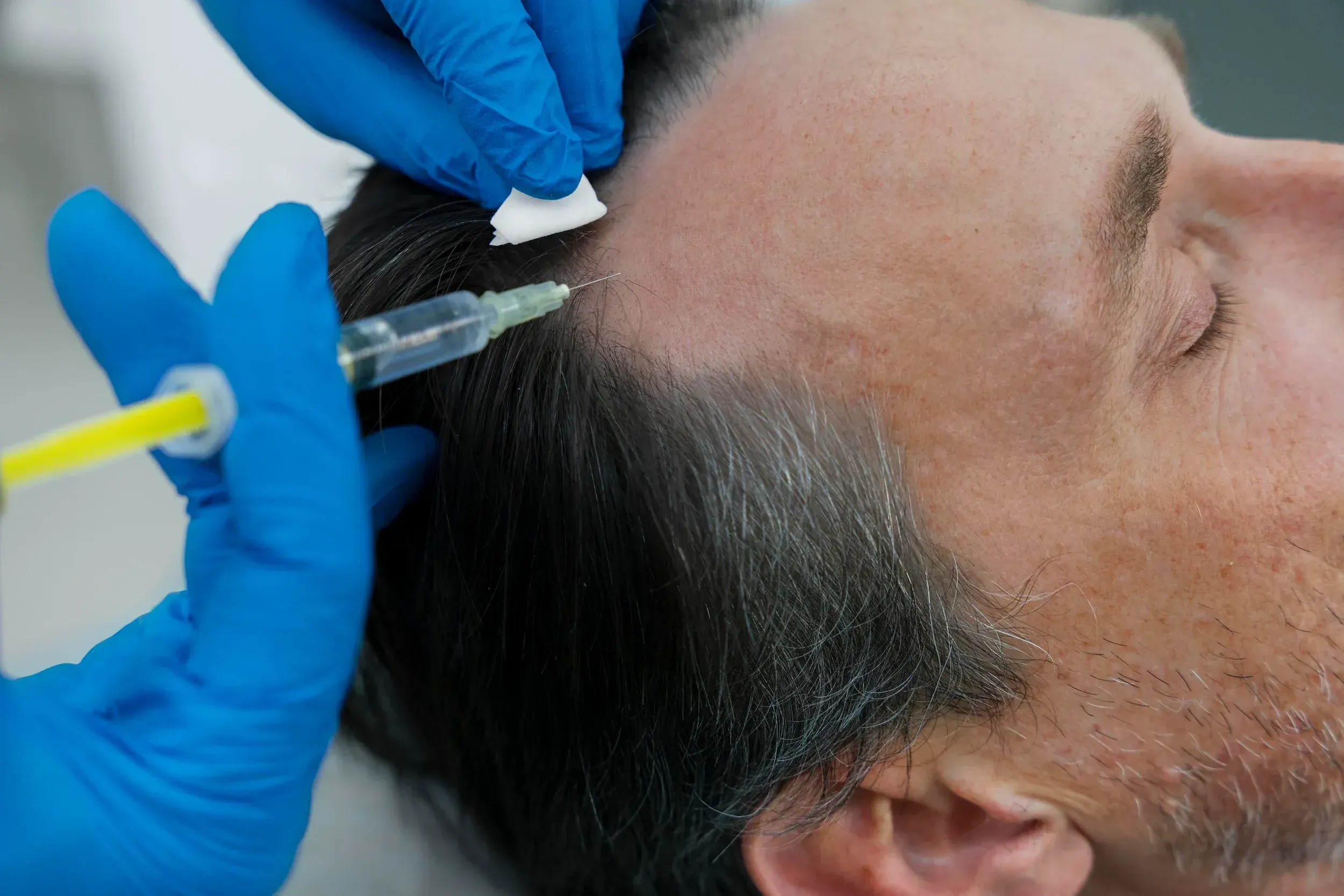
Dr. Khanna administers local anesthesia to the donor and recipient areas, ensuring complete comfort throughout the procedure.
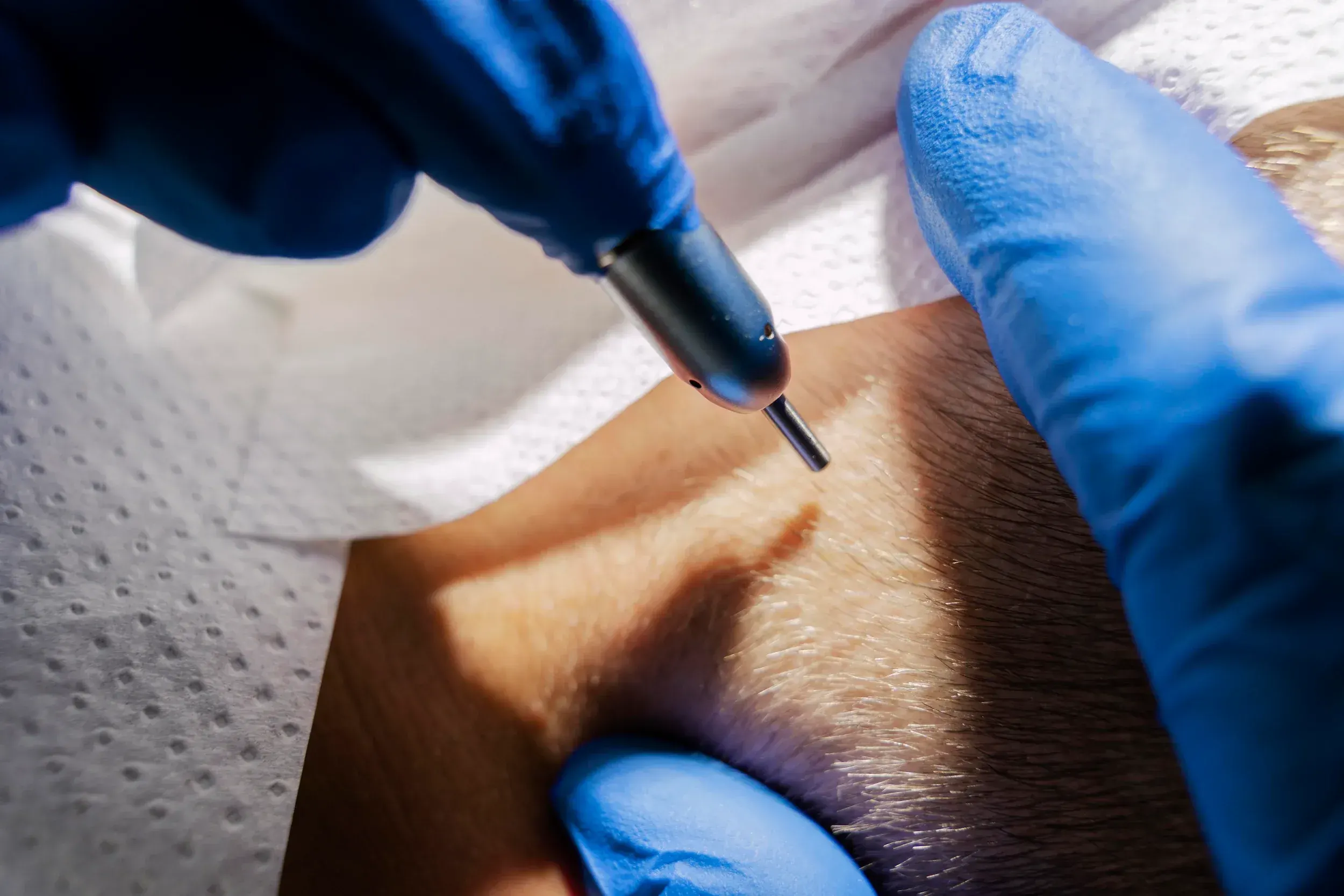
The ARTAS iXi robot identifies and extracts optimal follicular units under Dr. Khanna's direct supervision and real-time guidance.
Dr. Khanna creates recipient sites at precise angles and depths, following your natural hair growth pattern for seamless integration.
Dr. Khanna and the clinical team place each graft individually, maximizing survival rates and ensuring natural density distribution.
Hair transplant surgery is a well-established procedure with an excellent safety profile when performed by board-certified dermatologists. At DSI Hair, Dr. Khanna and Dr. Boshnick follow strict surgical protocols to minimize risk and optimize healing.
Common side effects include mild swelling of the forehead and around the eyes for 3 to 5 days, temporary numbness in the donor or recipient area, minor scabbing at graft sites that resolves within 7 to 10 days, and temporary shedding of transplanted hairs (shock loss) at 2 to 4 weeks post-procedure. These are normal parts of the healing process.
Rare complications may include infection at extraction or placement sites, poor graft survival due to non-compliance with aftercare instructions, and cobblestoning or pitting if grafts are placed at incorrect depths. The ARTAS iXi robotic system significantly reduces the risk of human error during harvesting, and our detailed post-operative care protocol is designed to maximize graft survival rates above 95%.
Hair transplant cost varies based on the number of grafts needed, the complexity of your hair loss pattern, and the technique used. At DSI Hair, we provide detailed pricing during your consultation after Dr. Khanna or Dr. Boshnick assesses your donor availability and restoration goals.
Hair transplant is a long-term investment. Unlike medications or topical treatments that require ongoing monthly costs, a hair transplant is a one-time procedure with permanent results. Many patients find the cumulative cost of years of non-surgical treatments exceeds the investment of a single transplant.
Call (844) 307-7546 to schedule a consultation and receive a personalized treatment plan with transparent pricing.
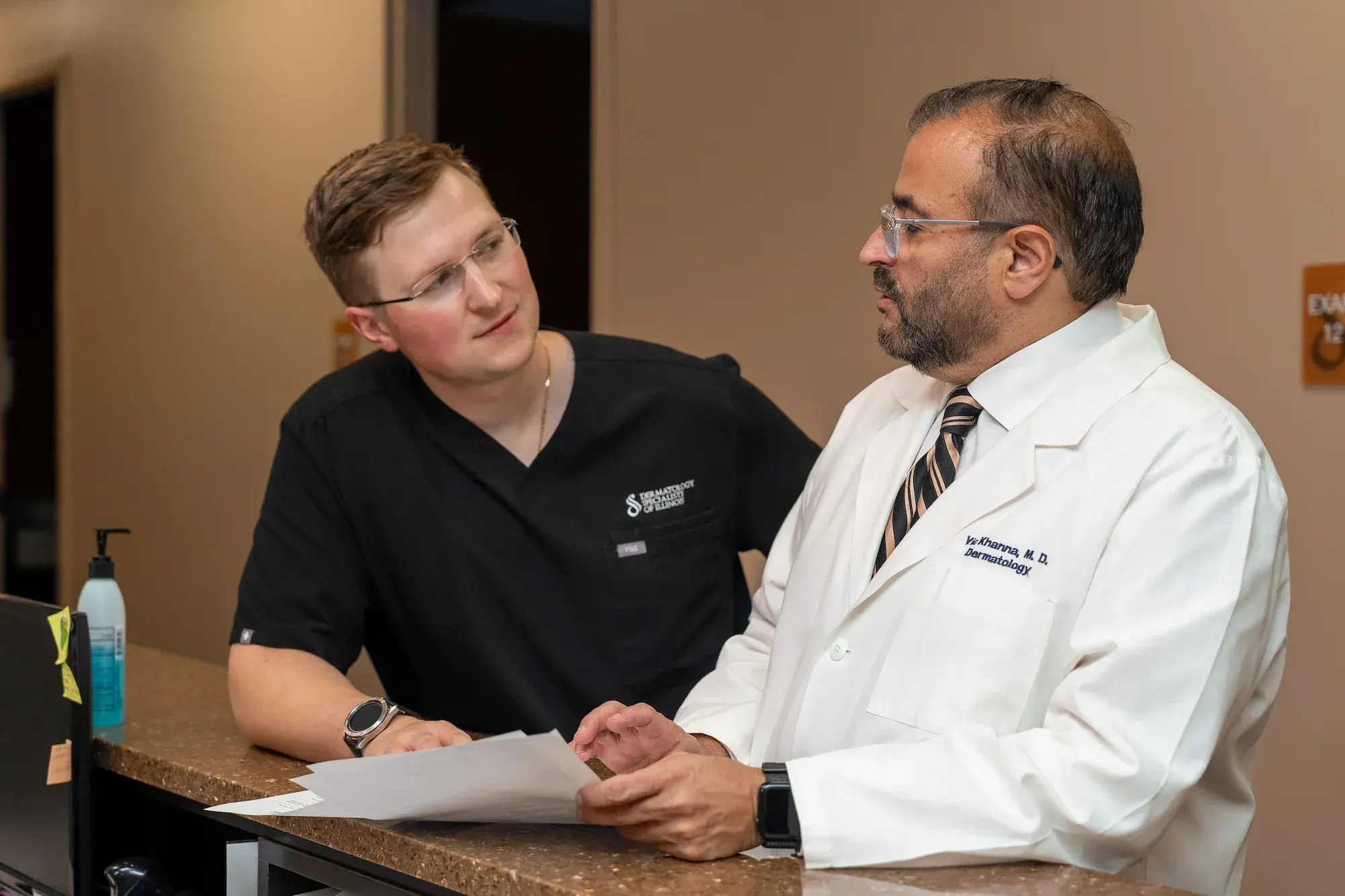
Algonquin's Hair Restoration Experts
Hair restoration performed by fellowship-trained skin and hair specialists, not general surgeons
AI-guided graft selection and harvesting for consistently superior precision and survival rates
4.8/5 Google rating reflects our commitment to natural results and exceptional patient care
Surgical and non-surgical options under one roof for a personalized multi-modal approach
Explore treatments that complement or enhance hair transplant results.
View allAnswers From Our Dermatologists
Hair transplant cost depends on the number of grafts required, your hair loss pattern, and the technique used. At DSI Hair, we provide a detailed cost breakdown during your consultation after evaluating your donor density and coverage goals. Call (844) 307-7546 for a personalized quote.
Hair transplant results are permanent. Transplanted follicles are genetically resistant to DHT, the hormone that causes pattern baldness, so they continue growing for life. While surrounding native hair may continue to thin over time, transplanted grafts retain their permanent growth characteristics.
Hair transplant at DSI Hair is performed under local anesthesia, so patients feel no pain during the procedure. Most patients describe mild soreness in the donor area for 2 to 3 days post-procedure, manageable with over-the-counter pain medication. The ARTAS robotic system minimizes tissue trauma compared to manual extraction.
Most patients return to desk work within 3 to 5 days and resume exercise after 2 weeks. Tiny scabs at graft sites fall off within 7 to 10 days. Transplanted hairs shed at 2 to 4 weeks (this is normal), and new permanent growth begins at 3 to 4 months with full results visible at 12 to 18 months.
Good candidates are adults over 25 with stable hair loss and adequate donor density. During your consultation, Dr. Khanna uses the ARTAS iXi imaging system to map your scalp and determine whether surgical restoration, non-surgical treatment, or a combination is best for your specific pattern.
Yes. While hair transplant is more common in men, carefully selected women with patterned hair loss and sufficient donor density can achieve excellent results. Dr. Khanna and Dr. Boshnick evaluate each female patient individually to determine the most effective treatment approach, which may include transplant, PRP, or medical therapy.