
Spironolactone For Hair Loss
Spironolactone is an antiandrogen medication increasingly used to treat female pattern hair loss. Learn how it works, who benefits, side effects, and what to expect.
What Is Spironolactone?
Spironolactone (brand name Aldactone) is a medication originally developed as a potassium-sparing diuretic to treat high blood pressure and heart failure. However, it also has significant antiandrogen properties, which has made it an increasingly important tool in the treatment of female pattern hair loss.
Spironolactone is prescribed off-label for hair loss — meaning it is not FDA-approved specifically for this purpose, but is widely used by dermatologists and hair specialists based on clinical evidence and experience.
How Spironolactone Helps Hair Loss
Spironolactone works through its antiandrogen mechanism:
- Blocks androgen receptors — Prevents androgens (including testosterone and DHT) from binding to receptors in the hair follicle
- Reduces DHT activity — By blocking the receptor, it reduces the effect of DHT on susceptible follicles, even though DHT levels may remain the same in the blood
- Slows follicle miniaturization — By reducing androgen activity at the follicle level, spironolactone can slow or halt the progressive thinning of androgenetic alopecia
- May support regrowth — Some patients experience improvement in hair density and thickness over time
Unlike finasteride (which blocks DHT production), spironolactone blocks the androgen receptor itself — offering a different approach to the same underlying problem.
Who Can Benefit
Female Pattern Hair Loss (FPHL)
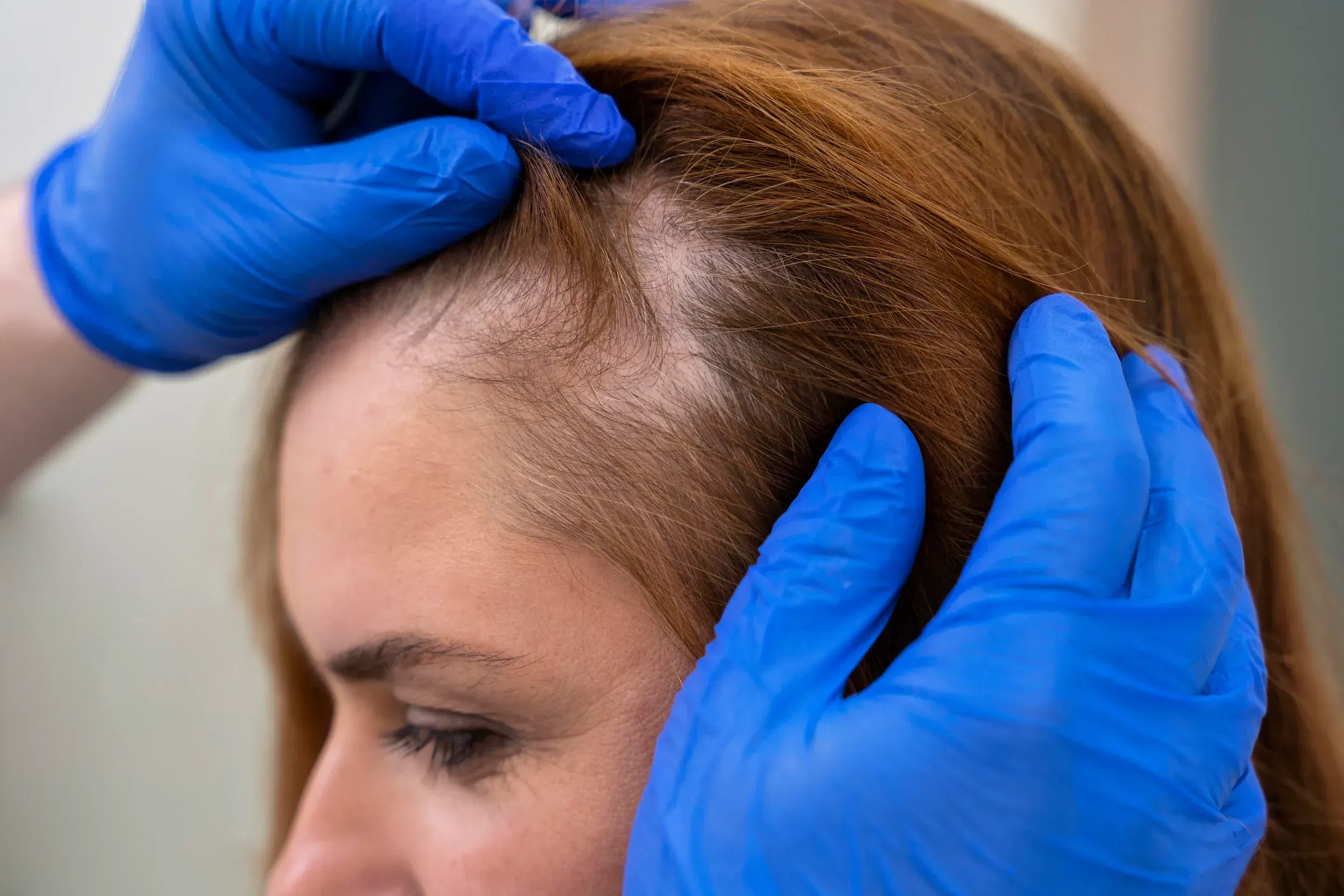
Spironolactone is most commonly prescribed for women with androgenetic alopecia (female pattern hair loss), characterized by:
- Diffuse thinning across the top of the scalp
- Widening of the part line
- Preserved frontal hairline (in most cases)
- Gradual progression over months to years
PCOS (Polycystic Ovary Syndrome)
Women with PCOS often have elevated androgen levels, which can contribute to both hair loss and other symptoms (acne, hirsutism). Spironolactone addresses the androgen excess, helping with multiple symptoms simultaneously.
Other Androgen-Related Hair Loss
Spironolactone may be considered for women with hair loss linked to elevated androgens from other causes, as part of a comprehensive treatment plan.
Important: Spironolactone is not recommended for men due to its feminizing side effects (breast development, hormonal changes).
How to Use Spironolactone
Dosage
- Treatment typically starts at a low dose (25–50 mg daily) and may be increased to 100–200 mg daily based on response and tolerability
- Your physician will determine the appropriate starting dose and adjust over time
- Higher doses tend to be more effective for hair loss but also carry a higher risk of side effects
Timeline
- It takes time to see results — most patients need 6–12 months of consistent use before noticeable improvement
- Some patients experience reduced shedding within the first 3–6 months
- Maximum benefit is typically seen at 12–18 months
- Like all hair loss medications, spironolactone must be used continuously to maintain results
Oral vs. Topical
- Oral spironolactone is the most common form used for hair loss
- Topical spironolactone formulations are being studied and are available through some compounding pharmacies. Topical application may reduce systemic side effects while delivering the medication directly to the scalp
- Your specialist can advise on which form is best for your situation
Monitoring
- Blood work (including potassium levels and kidney function) should be checked before starting and periodically during treatment
- Blood pressure monitoring is recommended, especially at higher doses
- Regular follow-up appointments allow your physician to adjust dosing and monitor for side effects
Side Effects
Spironolactone is generally well-tolerated, but side effects can occur:
Menstrual Irregularities
- Changes in menstrual cycle timing or flow are common, especially in the first few months
- Spotting between periods may occur
- These effects often stabilize over time
Lightheadedness
- As a diuretic, spironolactone can lower blood pressure
- Some patients experience lightheadedness, especially when standing up quickly
- Staying well-hydrated helps mitigate this effect
Breast Tenderness
- Mild breast tenderness or enlargement can occur due to the hormonal effects
- This side effect is usually mild and may resolve over time
Potassium Levels
- Spironolactone is a potassium-sparing diuretic, meaning it can raise potassium levels
- Elevated potassium (hyperkalemia) can be serious, which is why blood monitoring is important
- Avoid excessive potassium-rich foods and supplements while taking spironolactone
- Your physician will monitor your levels
Other Possible Effects
- Fatigue or drowsiness
- Dry skin
- Increased thirst or urination
- Stomach upset (taking with food can help)
Spironolactone vs. Other Treatments
| Treatment | Mechanism | Gender | Form | Key Benefit |
|---|---|---|---|---|
| Spironolactone | Androgen receptor blocker | Women only | Oral/topical | Blocks androgen effects at follicle |
| Finasteride | 5-alpha reductase inhibitor | Primarily men | Oral | Reduces DHT production |
| Minoxidil | Vasodilator | Men and women | Topical/oral | Stimulates growth directly |
| PRP | Growth factors | Men and women | Injection | Stimulates follicle health |
| LLLT | Light therapy | Men and women | Device | Improves circulation |
Spironolactone is often used in combination with minoxidil and/or PRP for enhanced results.
Real Results: What to Expect
- Months 1–3 — Reduced shedding may be the first sign of improvement
- Months 3–6 — Hair may feel stronger and thicker. Some early regrowth may be visible
- Months 6–12 — Noticeable improvement in density and coverage for responsive patients
- Month 12+ — Maximum benefit is typically achieved. Ongoing use maintains results
Not every patient responds to spironolactone. Factors that influence response include the severity of hair loss, androgen levels, genetic factors, and consistency of use. Your specialist can help set realistic expectations.
Consultation and Prescription Process
Spironolactone requires a prescription and medical supervision:
- Evaluation — A thorough hair loss evaluation including medical history, scalp examination, and often blood work
- Diagnosis — Confirmation of androgenetic alopecia or androgen-related hair loss
- Prescription — Your physician prescribes the appropriate dose based on your specific situation
- Monitoring — Regular follow-up visits with blood work to ensure safety and assess response
- Adjustments — Dosing may be adjusted based on results and tolerability
Critical safety note: Spironolactone is contraindicated in pregnancy and can cause birth defects. Women of childbearing age must use reliable contraception while taking this medication.
If you are a woman experiencing hair thinning and want to explore whether spironolactone is right for you, a consultation with a hair restoration specialist is the best first step. A thorough evaluation will determine whether this medication — alone or in combination with other treatments — can help you achieve your hair goals.