Dutasteride vs Finasteride for Hair Loss: Which Is Better?
Compare dutasteride and finasteride for treating hair loss. Learn how each drug works, efficacy data, side effects, and which 5-alpha reductase inhibitor may be right for your hair restoration goals.
Introduction
If you're researching medication options for hair loss, you've likely encountered two names: finasteride and dutasteride. Both belong to a class of drugs called 5-alpha reductase inhibitors (5-ARIs), and both work by reducing dihydrotestosterone (DHT) — the hormone primarily responsible for androgenetic alopecia in men. But they are not identical, and choosing between them involves understanding real differences in mechanism, efficacy, and risk profile.
At DSI Hair in Algonquin, IL, patients frequently ask Dr. Vic Khanna how these two medications compare — and whether switching from one to the other could improve their results. This article breaks down the clinical evidence so you can have an informed conversation with your dermatologist.
We'll cover how DHT drives hair loss, how each drug works at the enzymatic level, head-to-head efficacy data, side effect profiles, and practical guidance on when dutasteride may be worth considering.
How DHT Causes Hair Loss
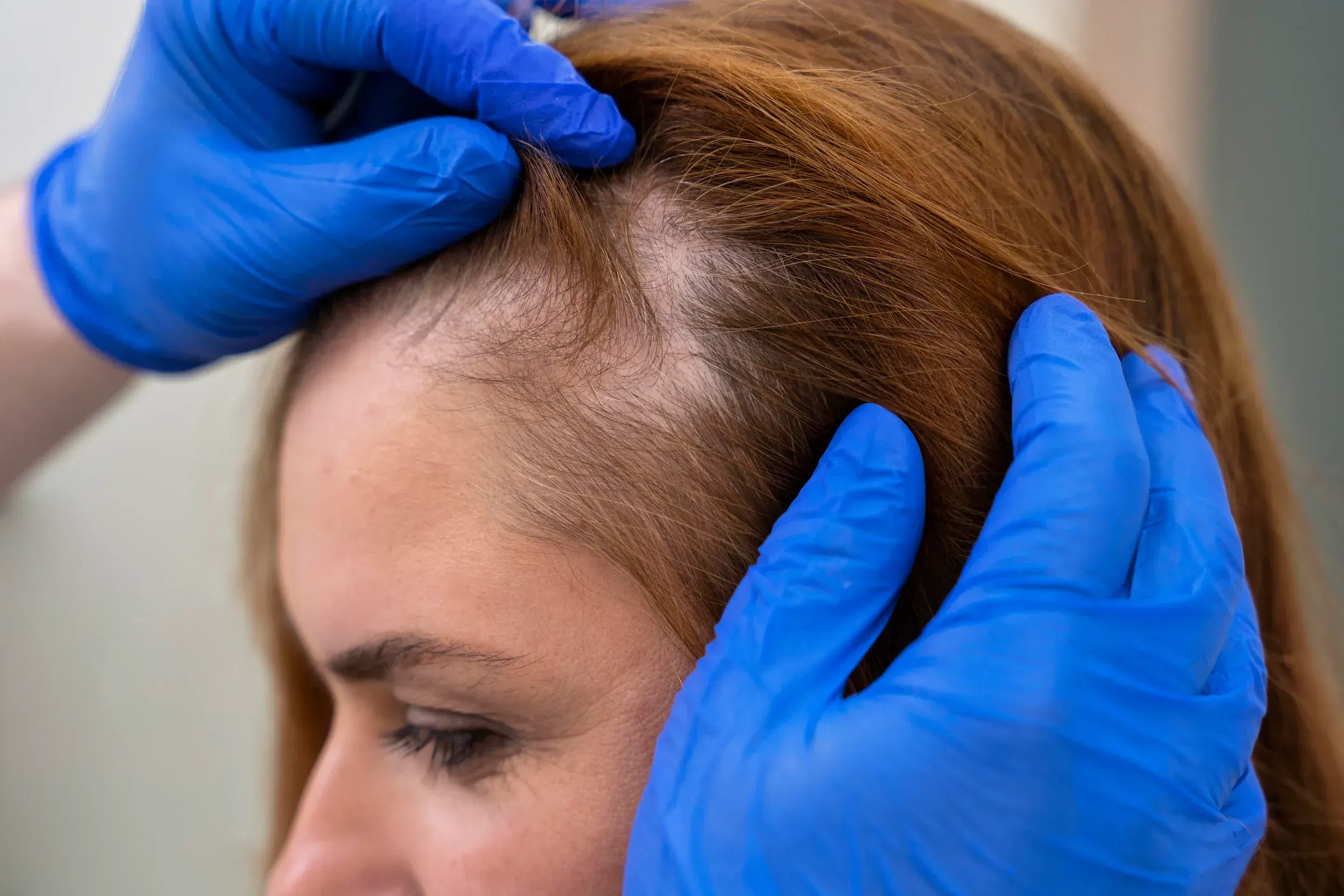
Androgenetic alopecia — commonly called male pattern baldness — is driven by a genetically mediated sensitivity to dihydrotestosterone (DHT). DHT is an androgen derived from testosterone through the action of the enzyme 5-alpha reductase. While DHT plays important roles during puberty and fetal development, in adults with genetic susceptibility it binds to androgen receptors in hair follicles on the scalp and initiates a process called follicular miniaturization.
During miniaturization, the anagen (growth) phase of the hair cycle progressively shortens while the telogen (resting) phase lengthens. Terminal hairs — thick, pigmented strands — gradually transform into vellus hairs: thin, short, and nearly invisible. Over successive cycles, the follicle eventually stops producing visible hair entirely.
There are two isoenzymes of 5-alpha reductase relevant to hair loss:
- Type 1 5-alpha reductase: Found primarily in sebaceous glands, liver, and skin. It contributes to systemic DHT levels and is expressed in scalp tissue.
- Type 2 5-alpha reductase: Found predominantly in the prostate, seminal vesicles, epididymides, and hair follicles. This is the primary enzyme responsible for converting testosterone to DHT in the scalp.
Both finasteride and dutasteride reduce DHT levels, but they differ in which isoenzymes they inhibit — and that difference has measurable clinical consequences.
What Is Finasteride?
Finasteride is a selective inhibitor of type 2 5-alpha reductase. It was originally developed to treat benign prostatic hyperplasia (BPH) at a dose of 5 mg (marketed as Proscar). In 1997, the FDA approved a 1 mg formulation (Propecia) specifically for the treatment of androgenetic alopecia in men.
Mechanism of Action
At the 1 mg dose, finasteride reduces serum DHT levels by approximately 70% (Kaufman et al., Journal of the American Academy of Dermatology, 1998). By selectively blocking the type 2 isoenzyme, it significantly reduces DHT production in hair follicles and the prostate while leaving the type 1 pathway intact.
Clinical Efficacy
The pivotal clinical trials for finasteride for hair loss at DSI Hair demonstrated meaningful improvements over placebo:
- In a 2-year randomized controlled trial of 1,553 men (ages 18–41), finasteride 1 mg increased hair count by a mean of 83 hairs per cm² on the vertex scalp compared to baseline, while the placebo group lost an average of 31 hairs per cm² (Kaufman et al., 1998).
- At 5 years, approximately 90% of men taking finasteride either maintained or improved their hair count, compared to 25% in the placebo group (Shapiro & Kaufman, European Journal of Dermatology, 2003).
- Finasteride is most effective at the vertex and mid-scalp, with more modest results at the frontal hairline.
FDA Status
Finasteride 1 mg is FDA-approved for the treatment of male androgenetic alopecia. It remains the most widely prescribed oral medication for hair loss worldwide.
What Is Dutasteride?
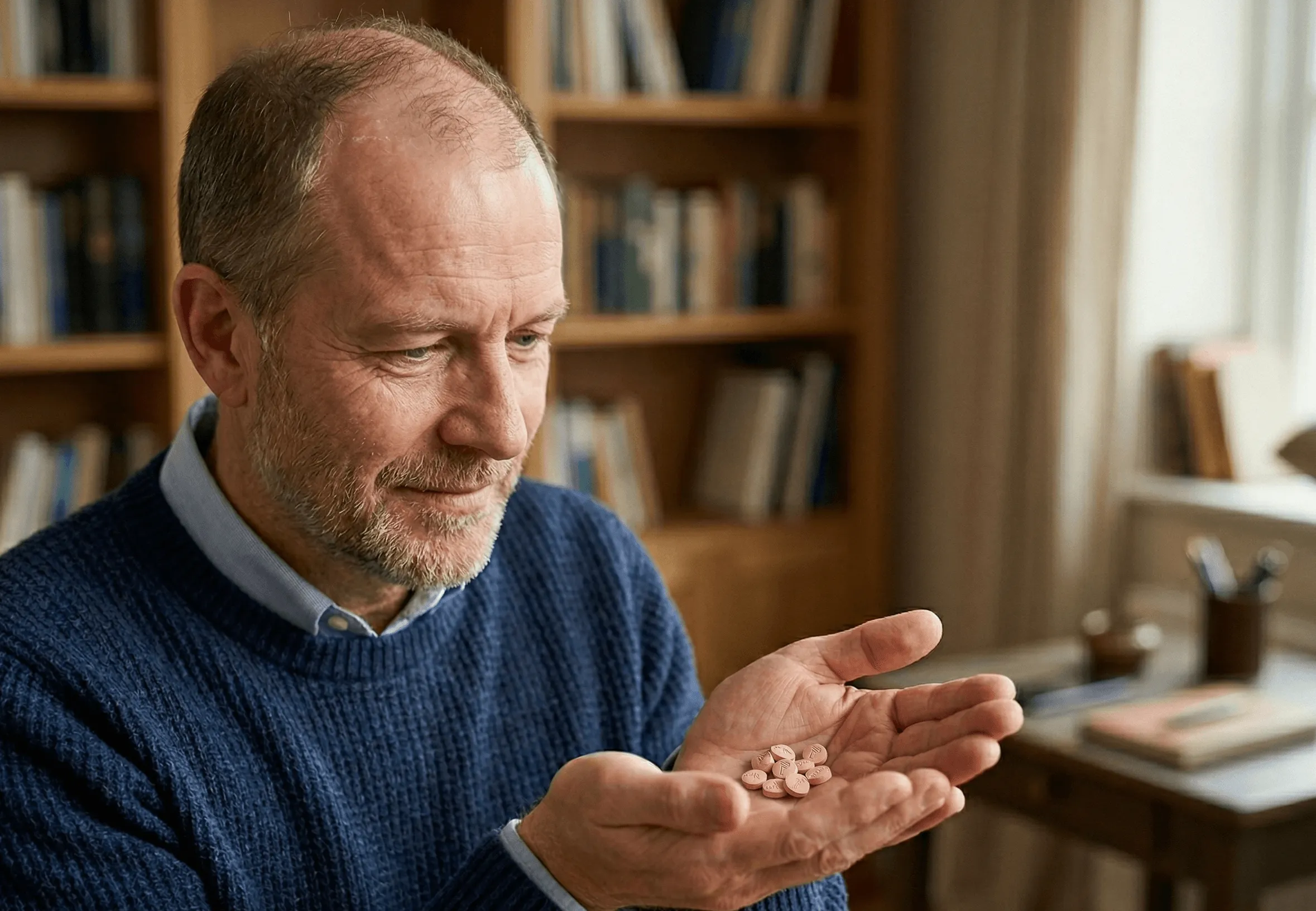
Dutasteride is a dual inhibitor of both type 1 and type 2 5-alpha reductase. It was FDA-approved in 2001 under the brand name Avodart for the treatment of BPH at 0.5 mg daily. It has not been FDA-approved for hair loss in the United States, though it is approved for androgenetic alopecia in South Korea and Japan.
Mechanism of Action
By blocking both isoenzymes, dutasteride achieves a more comprehensive reduction in DHT. At the 0.5 mg dose, dutasteride reduces serum DHT by approximately 90% or greater — compared to approximately 70% with finasteride 1 mg (Clark et al., Journal of Clinical Endocrinology & Metabolism, 2004). This near-complete suppression of DHT is the pharmacological basis for its potentially superior efficacy in hair regrowth.
Off-Label Use for Hair Loss
Despite lacking FDA approval for alopecia, dutasteride is prescribed off-label for hair loss by dermatologists worldwide. Its use is supported by a growing body of clinical evidence, including randomized controlled trials. Physicians who prescribe dutasteride for hair loss do so based on this evidence and their clinical judgment, with appropriate informed consent.
Pharmacokinetics
One important difference: dutasteride has a significantly longer half-life than finasteride. While finasteride's half-life is approximately 6–8 hours, dutasteride's is approximately 4–5 weeks. This means dutasteride remains in the body much longer after discontinuation, which affects both the persistence of benefits and the duration of any side effects.
Dutasteride vs Finasteride: Efficacy Comparison
The most clinically relevant question is whether dutasteride's greater DHT suppression translates into meaningfully better hair outcomes. Several studies have addressed this directly.
Head-to-Head Clinical Trials
The largest randomized controlled trial comparing these two drugs was conducted by Olsen et al. and published in the Journal of the American Academy of Dermatology in 2006. This 24-week study enrolled 416 men with androgenetic alopecia and compared dutasteride 0.5 mg, finasteride 1 mg, and placebo:
- Dutasteride 0.5 mg increased target area hair count by a mean of 12.2 hairs per cm² at 24 weeks.
- Finasteride 1 mg increased hair count by a mean of 9.4 hairs per cm².
- Placebo showed a decrease of 4.7 hairs per cm².
Dutasteride showed a statistically significant advantage over finasteride in hair count improvement, though both drugs significantly outperformed placebo.
Long-Term Data
A Korean randomized trial by Jung et al. (Journal of Dermatology, 2014) compared dutasteride 0.5 mg to finasteride 1 mg over 6 months in 90 men with androgenetic alopecia. Results showed:
- Dutasteride produced greater improvement in hair thickness and hair count at the vertex.
- Investigator-assessed global photography ratings favored dutasteride, with 58% of dutasteride patients rated as improved versus 42% of finasteride patients.
A 2019 systematic review and meta-analysis by Zhou et al. (International Journal of Dermatology) pooled data from multiple trials and concluded that dutasteride 0.5 mg was statistically superior to finasteride 1 mg for increasing total hair count in men with androgenetic alopecia.
Key Efficacy Takeaways
| Parameter | Finasteride 1 mg | Dutasteride 0.5 mg |
|---|---|---|
| 5-AR Isoenzyme Inhibition | Type 2 only | Type 1 and Type 2 |
| Serum DHT Reduction | ~70% | ~90%+ |
| Hair Count Increase (24 wk) | +9.4 hairs/cm² | +12.2 hairs/cm² |
| Long-term Maintenance (5 yr) | ~90% maintain/improve | Data limited; likely comparable or better |
| FDA-Approved for Hair Loss | Yes (1 mg) | No (off-label in US) |
Dutasteride vs Finasteride: Side Effect Profile
Both medications carry similar potential side effects because they share the same fundamental mechanism: reducing DHT. However, because dutasteride suppresses DHT more completely, there is a theoretical and partially supported concern that side effects may be somewhat more frequent or pronounced.
Common Side Effects
The side effects reported in clinical trials for both drugs include:
- Decreased libido: Reported in approximately 1.5–3% of finasteride users and 1.5–4% of dutasteride users in clinical trials.
- Erectile dysfunction: Reported in approximately 1–2% of users of either drug.
- Ejaculatory disorders: Including decreased ejaculate volume, reported in approximately 1–2% of users.
- Breast tenderness or enlargement (gynecomastia): Rare, occurring in less than 1% of users.
What the Data Shows
In the Olsen et al. (2006) head-to-head trial, sexual adverse events occurred at similar rates between dutasteride and finasteride groups, and the differences were not statistically significant. Both drugs had adverse event profiles comparable to placebo for most parameters.
The Zhou et al. (2019) meta-analysis similarly found no statistically significant difference in the rate of sexual side effects between dutasteride 0.5 mg and finasteride 1 mg.
Post-Finasteride Syndrome
Some patients and advocacy groups have described persistent sexual, neurological, and psychological symptoms that continue after discontinuing finasteride — termed "post-finasteride syndrome" (PFS). As of 2026, PFS lacks a universally accepted clinical definition and its mechanism remains under investigation. It is important to note that similar persistent symptoms have also been reported with dutasteride discontinuation. Patients considering either medication should discuss their complete medical history and concerns with their prescribing physician.
Half-Life Considerations
Dutasteride's long half-life (4–5 weeks vs. 6–8 hours for finasteride) is clinically relevant for side effect management. If a patient experiences an adverse effect on finasteride and stops, the drug clears the system within days. With dutasteride, meaningful DHT suppression can persist for months after the last dose. This is an important factor in the risk-benefit discussion.
Who Should Consider Dutasteride?
Dutasteride is not typically a first-line treatment for androgenetic alopecia. For most men experiencing early to moderate hair loss, finasteride 1 mg remains the standard starting point due to its established efficacy, favorable safety profile, and FDA approval.
However, certain clinical scenarios may warrant considering dutasteride:
- Plateau on finasteride: Patients who initially responded to finasteride but whose hair loss has resumed or stabilized despite consistent use may benefit from the more complete DHT suppression dutasteride provides.
- Insufficient response to finasteride: Some men show minimal improvement after 12–18 months on finasteride 1 mg. Switching to dutasteride offers a pharmacologically logical next step.
- Aggressive or rapidly progressing hair loss: Younger patients with significant family history and rapid progression may be candidates for more aggressive DHT suppression early on, though this should be weighed carefully against the longer duration of potential side effects.
- Vertex-predominant loss: Some clinicians observe that dutasteride may offer particular benefit for vertex thinning, consistent with the trial data showing greatest improvements at the crown.
The decision to use dutasteride should always involve a thorough consultation. At DSI Hair, Dr. Vic Khanna evaluates each patient's hair loss pattern, progression rate, previous treatment response, and medical history before recommending dutasteride.
Switching from Finasteride to Dutasteride
If you and your dermatologist decide to transition from finasteride to dutasteride, here's what to expect:
The Transition Process
Most dermatologists recommend a straightforward switch: stop finasteride and begin dutasteride 0.5 mg daily the following day. There is no need for a washout period, and doing so would expose you to a temporary gap in DHT suppression that could trigger a shedding episode.
Timeline of Results
- Weeks 1–4: Dutasteride begins building up in the system. Because of its long half-life, it takes several weeks to reach steady-state blood levels (approximately 3–6 months for full steady state).
- Months 1–3: Some patients experience a temporary shedding phase as follicles adjust to the new level of DHT suppression. This is analogous to the shedding some patients experience when starting finasteride and is generally a positive sign.
- Months 3–6: Initial improvements in hair caliber and density may become noticeable.
- Months 6–12: Meaningful results are typically assessed at this point. Clinical trials use 6-month endpoints, and most dermatologists recommend evaluating the switch at 12 months before drawing conclusions.
Important Considerations
Continue any concurrent treatments during the switch. If you are using minoxidil treatment, PRP therapy, or other hair loss treatment options, maintain those protocols. The goal is to isolate the variable of the 5-ARI change while preserving the benefits of your overall regimen.
Topical Dutasteride: A Newer Option
An emerging area of interest is topical dutasteride — a formulation applied directly to the scalp rather than taken orally. The rationale is straightforward: deliver the drug to the target tissue (hair follicles) while minimizing systemic absorption and, theoretically, systemic side effects.
Current Evidence
A randomized controlled trial by Fernandez-Nieto et al. (Journal of the American Academy of Dermatology, 2022) investigated topical dutasteride 0.01% applied daily and found improvements in hair density with lower systemic DHT suppression compared to oral dutasteride. However, the evidence base for topical formulations is still limited compared to the oral forms.
Mesotherapy (microinjection of dutasteride into the scalp) is another delivery method being studied, particularly in South Korea, with promising early results. However, protocols are not yet standardized, and availability varies.
Practical Considerations
Topical dutasteride is not commercially available as a standard prescription in the United States as of 2026. Compounding pharmacies can prepare topical formulations, but quality, concentration, and vehicle formulations vary. Patients interested in topical dutasteride should work with a dermatologist experienced in prescribing compounded hair loss medications.
Frequently Asked Questions
Is dutasteride more effective than finasteride for hair loss?
Clinical trial data suggests yes. In the largest head-to-head trial (Olsen et al., 2006), dutasteride 0.5 mg produced statistically significantly greater hair count increases than finasteride 1 mg at 24 weeks (+12.2 vs. +9.4 hairs/cm²). A 2019 meta-analysis confirmed this finding across multiple studies. However, the difference is moderate, and finasteride remains highly effective for most patients.
What are the differences in side effects between dutasteride and finasteride?
Both drugs share similar potential side effects, primarily sexual in nature (decreased libido, erectile dysfunction, ejaculatory changes). Clinical trials have not found a statistically significant difference in side effect rates between the two at standard doses. The key difference is pharmacokinetic: dutasteride's 4–5 week half-life means side effects persist longer after discontinuation compared to finasteride's 6–8 hour half-life.
Can I take dutasteride and finasteride together?
No. Taking both drugs simultaneously is not recommended and provides no additional benefit. Both target 5-alpha reductase, and dutasteride already inhibits both type 1 and type 2 isoenzymes. Adding finasteride to dutasteride would be pharmacologically redundant. Your dermatologist will recommend one or the other.
Is dutasteride FDA-approved for hair loss?
No. Dutasteride (Avodart) is FDA-approved only for the treatment of benign prostatic hyperplasia (BPH). Its use for androgenetic alopecia in the United States is off-label. However, it is approved for hair loss in South Korea (since 2009) and Japan (since 2015), and it is prescribed off-label for alopecia by dermatologists internationally based on published clinical evidence.
How long does dutasteride take to work for hair loss?
Most patients begin to see initial improvements in hair quality and density between 3 and 6 months. Because dutasteride has a long half-life and takes 3–6 months to reach steady-state serum levels, a full assessment of efficacy should not be made until at least 6–12 months of consistent use. Some patients experience a temporary shedding phase in the first 1–3 months, which is a normal part of the hair cycle adjustment.
Does dutasteride reduce DHT more than finasteride?
Yes, substantially. Finasteride 1 mg reduces serum DHT by approximately 70% by inhibiting only the type 2 isoenzyme of 5-alpha reductase. Dutasteride 0.5 mg inhibits both type 1 and type 2 isoenzymes, reducing serum DHT by approximately 90% or more. This more complete suppression is the primary pharmacological rationale for dutasteride's use in patients who do not respond adequately to finasteride.
Can women use dutasteride for hair loss?
Dutasteride is generally not recommended for women of childbearing age due to the risk of feminization of a male fetus during pregnancy. It is classified as Pregnancy Category X. Some dermatologists may prescribe dutasteride off-label for postmenopausal women with androgenetic alopecia who have not responded to other treatments, but this is not standard practice and requires careful risk-benefit evaluation. Women experiencing hair loss should discuss appropriate treatment options with their dermatologist.
How does dutasteride compare to minoxidil?
Dutasteride and minoxidil work through entirely different mechanisms. Dutasteride blocks DHT production systemically, addressing the hormonal root cause of androgenetic alopecia. Minoxidil is a topical vasodilator that stimulates hair growth and extends the anagen phase, regardless of DHT levels. They are not interchangeable — they are complementary. Many patients achieve the best results by combining an oral 5-ARI (finasteride or dutasteride) with topical minoxidil as part of a comprehensive treatment plan.
Take the Next Step with DSI Hair
Choosing between dutasteride and finasteride is not a decision to make based on internet research alone. The right medication depends on your specific hair loss pattern, how quickly it's progressing, your treatment history, and your individual health profile.
At DSI Hair in Algonquin, IL, Dr. Vic Khanna provides personalized consultations to help you understand which medical and procedural options will deliver the best outcomes for your situation. Whether you're starting treatment for the first time or considering switching from finasteride to dutasteride, we can develop a plan tailored to your goals.
Call (844) 307-7546 to schedule your consultation today.