
Menopause and Hair Loss: Causes, Solutions, and Effective Treatments
Understand why menopause causes hair loss and discover effective treatments from HRT and minoxidil to PRP therapy. Learn practical tips to manage thinning during this transition.
Introduction
Menopause is a natural biological transition, but its effects on hair can be distressing. Many women are surprised to discover that thinning hair is one of the most common symptoms of menopause, affecting up to 40% of women during and after this hormonal shift.
At DSI Hair, we understand the unique challenges women face during menopause. This guide explains why hair loss occurs during this transition, what symptoms to watch for, and the full range of treatment options available.
Why Does Menopause Cause Hair Loss?
Hormonal Imbalance
The fundamental driver of menopausal hair loss is the dramatic shift in hormone levels:
- Estrogen decline: Estrogen is a hair-friendly hormone that supports the anagen (growth) phase. As estrogen levels drop during perimenopause and menopause, the growth phase shortens
- Progesterone decline: Progesterone helps counterbalance androgens. Its decline allows androgens to have a greater impact on hair follicles
- Relative androgen excess: While absolute androgen levels may not increase significantly, the ratio of androgens to estrogen shifts dramatically. This relative excess can trigger follicular miniaturization
- DHEA-S and testosterone: These androgens, while present in smaller amounts than in men, become more influential as estrogen and progesterone decline
Androgenetic Alopecia
Many women who develop hair thinning during menopause are experiencing female pattern hair loss (FPHL):
- FPHL is driven by the same DHT-mediated miniaturization seen in male pattern baldness
- The loss of estrogen's protective effect allows this process to accelerate
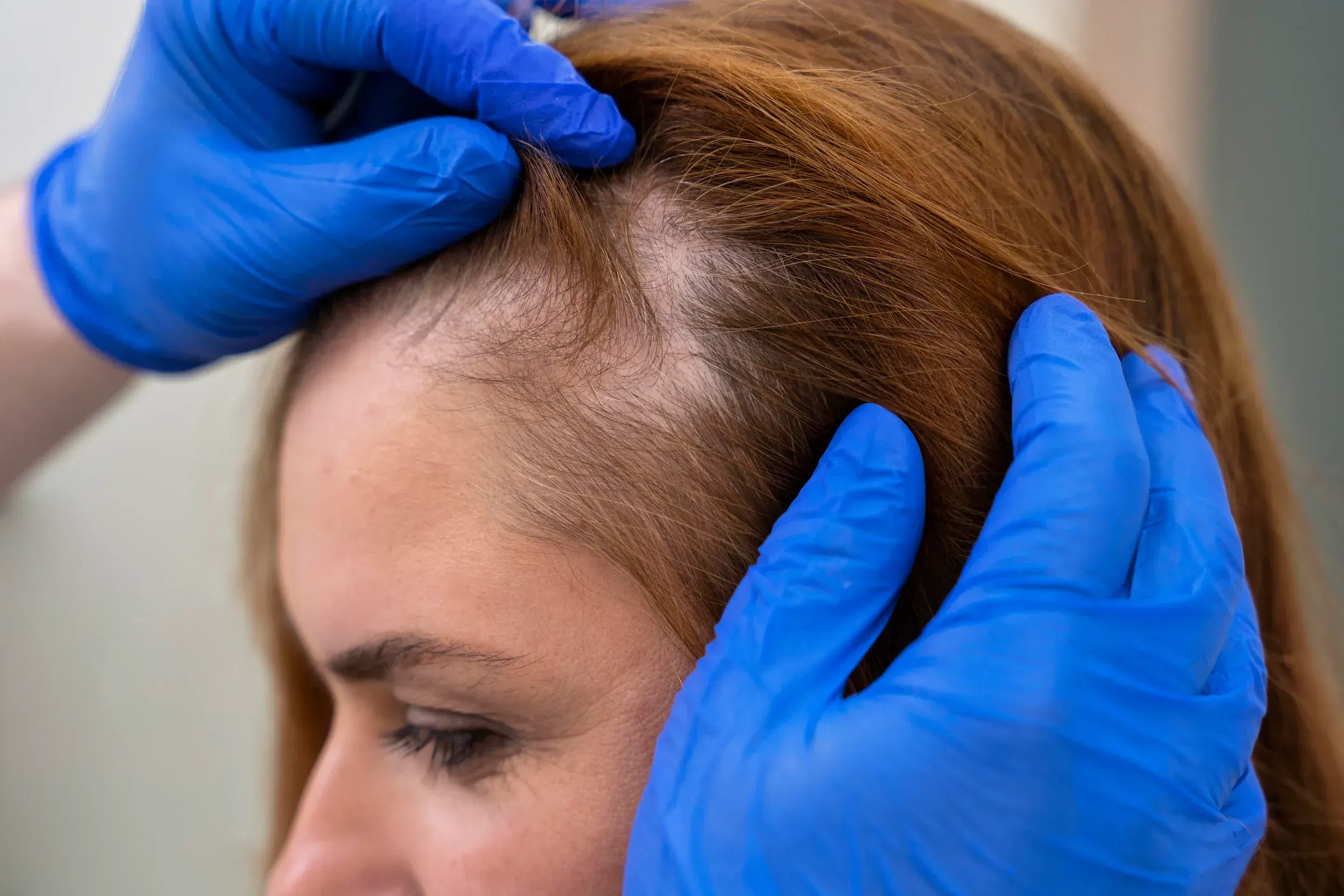
- FPHL typically presents as diffuse thinning along the top of the scalp with preservation of the frontal hairline
- The part line gradually widens
- Unlike male pattern baldness, complete baldness is rare in women
Telogen Effluvium
The hormonal upheaval of menopause can also trigger telogen effluvium:
- Large numbers of follicles shift prematurely from anagen to telogen
- This results in diffuse shedding two to three months after the hormonal trigger
- Menopausal telogen effluvium may overlap with and exacerbate androgenetic alopecia
- Stress, sleep disruption, and other menopausal symptoms can compound the shedding
Nutritional Deficiencies
Menopause can worsen or unmask nutritional issues that affect hair:
- Iron: Changing dietary habits and decreased absorption can lead to low ferritin levels
- Vitamin D: Reduced sun exposure and skin synthesis efficiency contribute to deficiency, which is linked to hair loss
- Calcium and magnesium: Metabolic changes affect mineral balance
- B vitamins: Stress and dietary changes can deplete B-complex vitamins important for hair health
Thyroid Dysfunction
Thyroid disorders become more common during and after menopause:
- Hypothyroidism and Hashimoto's thyroiditis can cause significant hair thinning
- Symptoms may overlap with menopause, making diagnosis challenging
- All women experiencing menopausal hair loss should have their thyroid function checked
- Thyroid-related hair loss is treatable with proper hormone replacement
Symptoms of Menopausal Hair Loss
Menopausal hair loss has characteristic features:
- Gradual thinning at the crown and along the part line: The most common presentation
- Increased shedding: Finding more hair on pillows, in the shower, and in brushes
- Decreased hair volume: Hair may feel thinner and lighter overall
- Slower growth rate: New hair grows more slowly and may be finer
- Changes in texture: Hair may become drier, more brittle, or change curl pattern
- Widening part: One of the earliest visible signs
- More visible scalp: Particularly under bright or overhead lighting
- Thinner ponytail: Many women notice their ponytail circumference decreasing
Treatment Options
Minoxidil
Minoxidil remains the first-line treatment for menopausal hair loss:
- Topical minoxidil 5%: Applied once daily (or 2% twice daily), it extends the anagen phase and increases follicle size
- Oral minoxidil: Low-dose oral minoxidil (0.625-2.5mg daily) is increasingly prescribed for women who find topical application inconvenient or ineffective
- Oral minoxidil may be particularly well-suited for menopausal women as it treats the entire scalp and has better compliance
- Results typically appear within three to six months
- Must be used continuously to maintain results
Hormone Replacement Therapy (HRT)
HRT addresses the root hormonal cause of menopausal symptoms including hair loss:
- Estrogen replacement can help restore the estrogen-androgen balance
- May slow or partially reverse follicular miniaturization driven by relative androgen excess
- Available in various forms: oral, transdermal patches, gels, and creams
- Benefits must be weighed against potential risks (cardiovascular, breast cancer) for each individual
- HRT is most effective for hair when combined with other targeted hair loss treatments
- Discuss with your gynecologist and dermatologist to determine if HRT is appropriate for you
Prescription Medications
- Spironolactone: An anti-androgen that blocks the effects of DHT on hair follicles. Commonly prescribed at 100-200mg daily for women with hormonal hair loss
- Finasteride: Though primarily used in men, some dermatologists prescribe low-dose finasteride for postmenopausal women. Not appropriate for women of childbearing age
- Cyproterone acetate: An anti-androgen available outside the United States that can be effective for hormonal hair loss
Supplements
Targeted supplementation can address nutritional gaps that worsen menopausal hair loss:
- Iron and ferritin: Aim for ferritin levels above 40 ng/mL for optimal hair growth. Supplement if levels are low
- Vitamin D: Target levels of 40-60 ng/mL. Most menopausal women benefit from 2000-4000 IU daily
- Biotin: 2500-5000 mcg daily may support keratin production, though evidence is strongest for those with actual deficiency
- Marine collagen peptides: Some studies suggest collagen supplementation supports hair thickness
- Omega-3 fatty acids: Fish oil or algal oil supplements nourish follicles and reduce inflammation
- Zinc: 15-30mg daily if levels are suboptimal
- B-complex vitamins: Support cellular energy production in follicle cells
PRP Therapy
Platelet-rich plasma therapy is particularly well-suited for menopausal hair loss:
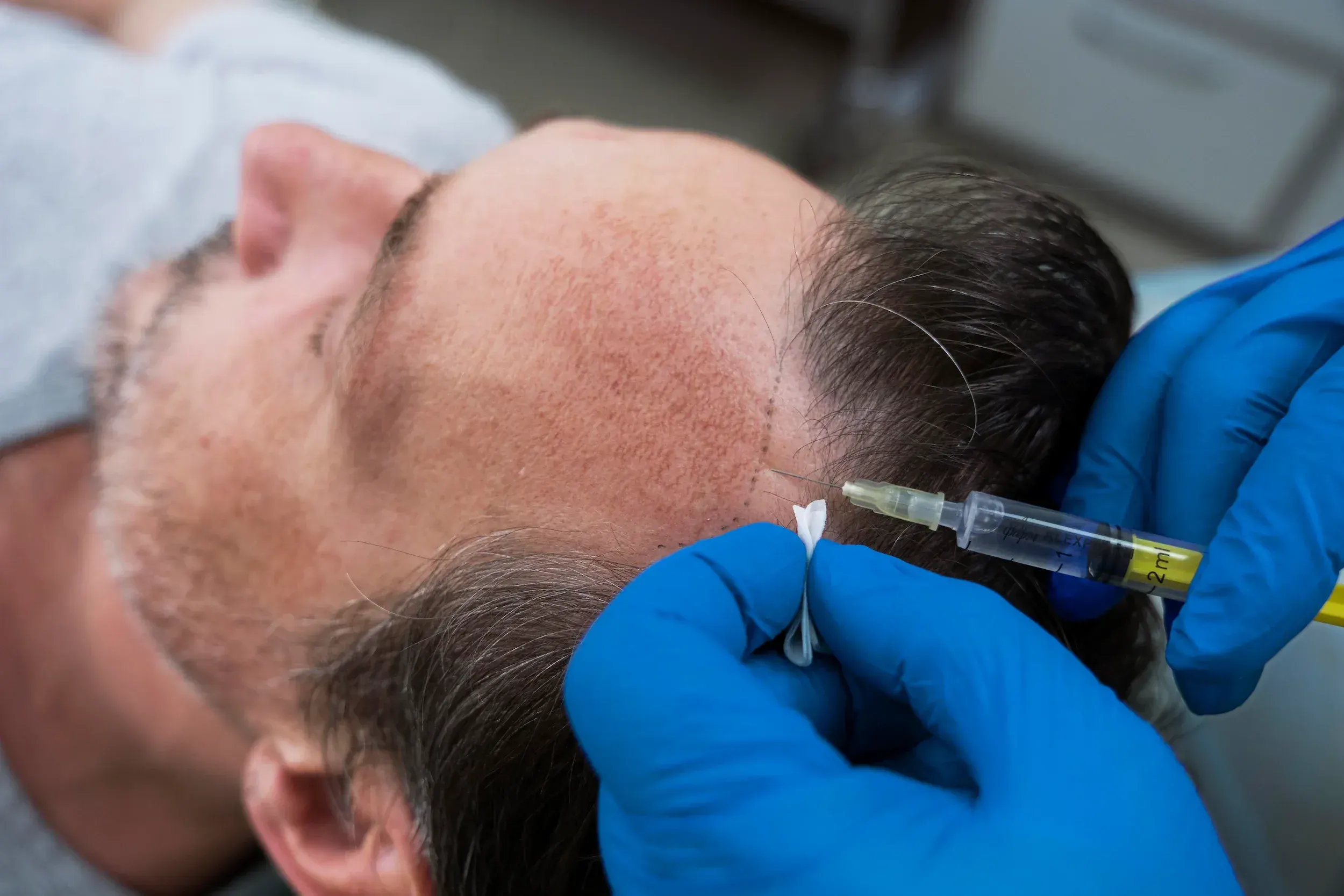
- Uses concentrated growth factors from your own blood to stimulate follicle activity
- Can reactivate miniaturized follicles that have not yet been permanently lost
- Typically involves three to four initial sessions followed by maintenance every six to twelve months
- Safe, with no hormonal side effects
- Can be combined with minoxidil and other treatments for enhanced results
- Many women prefer PRP because it is a natural, drug-free approach
Topical Treatments
- Ketoconazole shampoo: Has mild anti-androgen properties and can reduce scalp inflammation
- Caffeine-based products: Some studies suggest topical caffeine can stimulate follicle growth
- Rosemary oil: Emerging evidence suggests rosemary essential oil may be comparable to 2% minoxidil for some patients
- Peptide serums: Hair growth serums containing biomimetic peptides can support follicle health
Hair Care Tips for Menopausal Women
- Use volumizing shampoos and conditioners: Formulated to add body without weighing hair down
- Avoid sulfates: Switch to gentle, sulfate-free cleansers
- Condition from mid-length to ends: Keep roots free for maximum volume
- Reduce heat styling: Menopausal hair is often more fragile and prone to damage
- Use a silk pillowcase: Reduces friction and breakage during sleep
- Avoid tight hairstyles: Extra tension on already-stressed follicles accelerates loss
- Get regular trims: Removes damaged ends and maintains the appearance of fullness
- Consider a strategic haircut: A skilled stylist can recommend cuts that maximize the appearance of volume
Prevention
While you cannot prevent menopause, you can take steps to minimize its impact on your hair:
- Start treatment early: Begin hair-supportive measures at the first signs of perimenopause
- Optimize nutrition: Address deficiencies before they manifest as hair loss
- Manage stress: Menopause is already stressful; chronic stress compounds hair loss
- Exercise regularly: Improves circulation, reduces stress, and supports hormonal balance
- Monitor your health: Regular check-ups including thyroid function and blood counts
- Protect existing hair: Gentle care practices preserve what you have while treatments work
When to See a Dermatologist
While some degree of hair thinning during menopause is common, you should see a specialist if:
- Hair loss is rapid or severe
- You notice patchy or localized hair loss (may indicate alopecia areata)
- Scalp shows signs of redness, scaling, or scarring
- Over-the-counter treatments have not helped after six months
- Hair loss is accompanied by other unexplained symptoms
- You want a comprehensive evaluation and personalized treatment plan
At DSI Hair, our dermatology team has extensive experience treating menopausal hair loss. We provide thorough evaluations including blood work, scalp analysis, and personalized treatment plans that address your specific situation.
Frequently Asked Questions
Will my hair grow back after menopause? With appropriate treatment, many women see significant improvement. However, androgenetic alopecia is progressive, so ongoing treatment is typically needed to maintain results.
Is menopausal hair loss permanent? Not necessarily. Early intervention with effective treatments can reverse miniaturization in many cases. The key is starting treatment before follicles become permanently inactive.
Can HRT reverse hair loss? HRT can help stabilize hormonal fluctuations and slow hair loss. It works best when combined with targeted hair loss treatments like minoxidil or PRP.
How long does menopausal hair loss last? Without treatment, androgenetic alopecia continues to progress. Telogen effluvium related to the menopausal transition typically resolves within six to twelve months.
Should I take biotin? Biotin supplementation may help if you are deficient, but most people get adequate biotin from their diet. It is not a magic bullet for hair loss, but it can be a supportive part of a comprehensive plan.
Conclusion
Menopausal hair loss is a common and treatable condition. Understanding the hormonal mechanisms behind it empowers you to take proactive steps to protect and restore your hair during this transition.
At DSI Hair, we combine medical expertise with compassionate care to help women navigate menopausal hair loss. From PRP therapy and prescription medications to ARTAS robotic hair transplants for more advanced cases, we have the tools and experience to help you maintain your confidence and your hair.
Schedule your consultation today and take the first step toward managing menopausal hair loss effectively.