
A Doctor's Deep Dive into Male Pattern Baldness
Dr. Vic Khanna provides an in-depth medical perspective on male pattern baldness, from the science of DHT and the Norwood scale to advanced treatments including ARTAS robotic transplants.
Introduction
As a hair restoration specialist, I encounter male pattern baldness more than any other condition. Androgenetic alopecia affects approximately 50% of men by age 50 and up to 70% over a lifetime, making it the most common cause of hair loss worldwide. Despite its prevalence, the science behind it is more complex and fascinating than most people realize.
In this deep dive, I will walk you through the biology of male pattern baldness, how we diagnose and classify it, and the full spectrum of treatment options available today, from medications to cutting-edge robotic technology.
Understanding Male Pattern Baldness
What Is Androgenetic Alopecia?
Male pattern baldness, medically termed androgenetic alopecia (AGA), is a genetic condition characterized by the progressive miniaturization of hair follicles in specific scalp regions. The name itself reveals the two key factors:
- Androgen: Refers to androgens (male hormones), specifically dihydrotestosterone (DHT)
- Genetic: Refers to the inherited sensitivity of certain hair follicles to DHT
Not all hair follicles are created equal. The follicles at the temples and crown are genetically programmed to be sensitive to DHT, while those at the back and sides of the scalp (the "donor area") are resistant. This is why pattern baldness follows such a predictable distribution and why transplanted hairs from the donor area grow permanently in their new location.
The Role of DHT
DHT (dihydrotestosterone) is the primary driver of androgenetic alopecia:
- Production: Testosterone is converted to DHT by the enzyme 5-alpha reductase (types I and II). Type II is predominant in hair follicles
- Mechanism: DHT binds to androgen receptors in genetically susceptible hair follicles. This binding triggers a cascade of molecular events that gradually shrink the follicle
- Miniaturization: Over successive hair growth cycles, the affected follicle produces progressively thinner, shorter, and less pigmented hairs. What was once a thick terminal hair becomes a fine vellus hair
- Timeline: This process occurs over years to decades. Each hair cycle produces a slightly thinner hair than the last
- Paradox: Interestingly, DHT promotes hair growth in other body areas (beard, chest, back). The response to DHT is determined by the follicle's genetic programming, not by the hormone itself
The Hair Growth Cycle in AGA
DHT disrupts the normal hair growth cycle in specific ways:
- Shortened anagen phase: The active growth phase decreases from the normal three to seven years to as short as a few months
- Prolonged telogen: The resting phase may lengthen, creating periods of reduced hair density
- Reduced follicle size: The dermal papilla (the follicle's "command center") shrinks, producing thinner hair shafts
- Eventual cessation: In advanced stages, the follicle may become so miniaturized that it produces only invisible vellus hairs or stops producing visible hair entirely
The Science of Hair Loss
Molecular Pathways
Recent research has elucidated the molecular events downstream of DHT binding:
- Wnt/beta-catenin signaling: DHT suppresses this critical pathway that maintains the dermal papilla and drives hair growth
- TGF-beta upregulation: DHT increases transforming growth factor-beta, which inhibits hair follicle cell proliferation and induces catagen
- DKK-1: Dickkopf-1, a Wnt antagonist, is upregulated by DHT and promotes follicle regression
- Prostaglandin imbalance: Balding scalp has elevated levels of prostaglandin D2 (PGD2), which inhibits hair growth, and decreased levels of prostaglandin E2 (PGE2), which promotes it
- Oxidative stress: DHT-affected follicles show increased oxidative stress markers
- Perifollicular inflammation: Chronic, low-grade inflammation around miniaturizing follicles contributes to progressive damage
Genetic Architecture
The genetics of AGA are polygenic (involving multiple genes):
- Androgen receptor gene (AR): Located on the X chromosome, variants in this gene determine how sensitive follicles are to DHT. This is inherited from the mother
- Autosomal genes: Multiple loci on other chromosomes contribute to risk, including genes involved in Wnt signaling, hair follicle development, and androgen metabolism
- A 2017 genome-wide study identified 287 independent loci associated with severe hair loss
- Risk comes from both parents, not just the maternal side
Prevalence
Male pattern baldness is remarkably common:
- Age 20-29: Approximately 16% show some degree of hair loss
- Age 30-39: Approximately 30%
- Age 40-49: Approximately 40%
- Age 50+: Approximately 50%
- Age 70+: Up to 70% affected
- Prevalence varies by ethnicity (highest in Caucasians, lower in Asian and African populations)
- Severity also varies; some men show only mild recession while others progress to extensive baldness
Diagnosing Male Pattern Baldness
The Hamilton-Norwood Scale
The standard classification system for male pattern baldness:
- Stage I: Full head of hair with minimal or no recession
- Stage II: Slight recession at the temples ("mature hairline"). This is often considered normal adult male hairline maturation
- Stage III: First stage considered clinically significant. Deeper temple recession forming an M or V shape
- Stage IIIa: Primarily frontal recession without significant temple recession
- Stage III Vertex: Hair loss at the crown (vertex) with minimal frontal change
- Stage IV: More severe frontal and vertex thinning. A band of hair still separates the two areas
- Stage V: The areas of loss at the front and vertex are larger, with the separating bridge narrowing
- Stage VI: The bridge is gone. Frontal and vertex bald areas merge
- Stage VII: Only a narrow band of hair remains along the sides and back of the scalp
Diagnostic Evaluation
As a dermatologist, my evaluation includes:
- Clinical history: Age of onset, rate of progression, family history, medications, medical conditions
- Physical examination: Pattern of loss, scalp condition, hair density, and quality
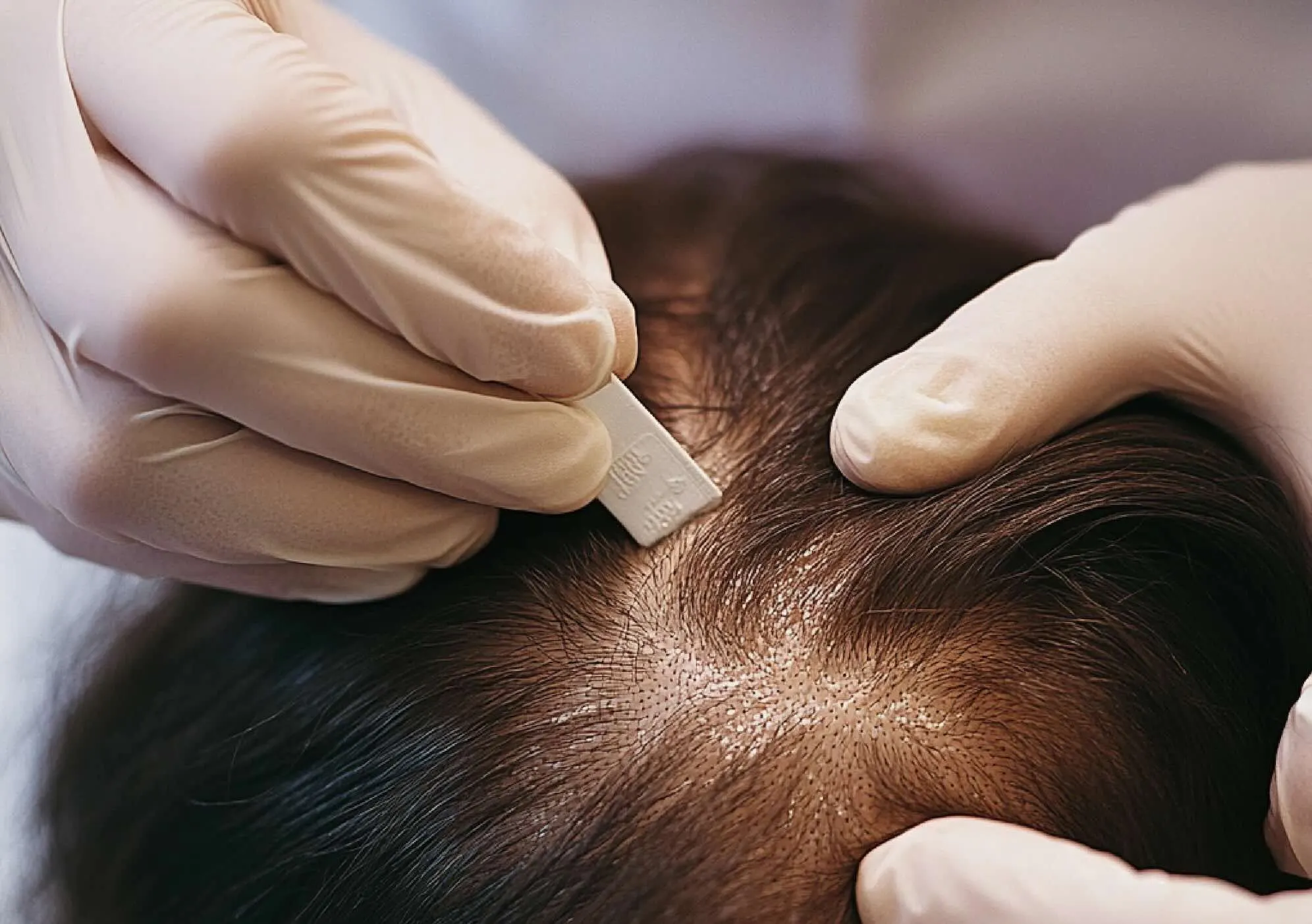
- Dermoscopy/Trichoscopy: Magnified examination revealing hair shaft diameter variability (miniaturization), yellow dots, perifollicular pigmentation, and follicular unit composition
- Pull test: Assessing active shedding
- Blood work: Thyroid function, iron studies, vitamin D, and hormonal panels when indicated (particularly in young men or those with rapid progression)
- Scalp biopsy: Rarely needed but definitive when diagnosis is uncertain
Treatment Options
Non-Invasive Medical Treatments
Minoxidil
- Topical (2% and 5%): FDA-approved since 1988. Applied once or twice daily to the scalp
- Oral (low-dose): Increasingly prescribed off-label at 2.5-5mg daily. May be more effective than topical, especially for non-responders
- Mechanism: Vasodilation, anagen phase extension, and growth factor stimulation
- Effectiveness: Stops progression in most users; produces visible regrowth in 30-40%
- Timeline: Three to six months for initial results, twelve months for full effect
- Must be used continuously: Results reverse upon discontinuation
Finasteride
- Dose: 1mg daily (oral)
- Mechanism: Blocks type II 5-alpha reductase, reducing serum DHT by approximately 70%
- Effectiveness: Stops progression in approximately 90% of men; produces regrowth in approximately 65%
- Timeline: Three to twelve months for visible results, continued improvement over two to five years
- Side effects: Decreased libido in 1-2% of users, which typically resolves upon discontinuation
- My perspective: Finasteride is the single most effective medical treatment for AGA. I discuss the side effect profile thoroughly with every patient and find that the vast majority tolerate it well
Dutasteride
- Dose: 0.5mg daily (oral)
- Mechanism: Blocks both type I and type II 5-alpha reductase, reducing DHT by approximately 90%
- Effectiveness: May be more potent than finasteride, particularly in non-responders
- Not FDA-approved for hair loss: Used off-label
- Side effect profile: Similar to finasteride but potentially slightly higher rates
Ketoconazole Shampoo
- Used as an adjunct treatment
- Has mild anti-androgen and anti-inflammatory properties when applied topically
- May enhance the effects of finasteride and minoxidil
- Used two to three times per week
Minimally Invasive Treatments
PRP (Platelet-Rich Plasma)
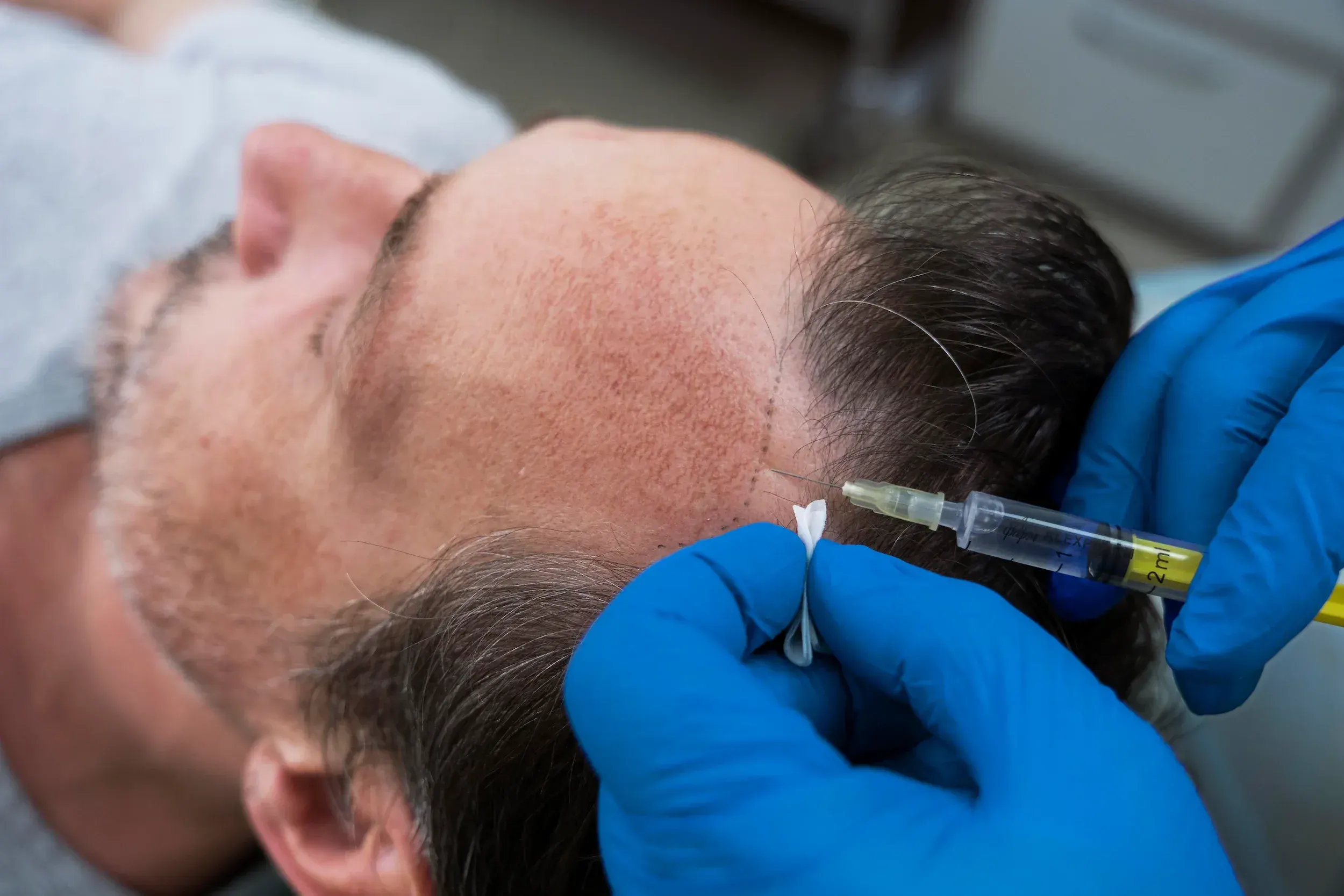
- Concentrated growth factors from your own blood injected into the scalp
- Stimulates dormant follicles and promotes thicker growth
- Three to four initial sessions, then maintenance every six to twelve months
- Best for early to moderate stages
- Excellent safety profile
- Often combined with microneedling for enhanced delivery
Low-Level Laser Therapy (LLLT)
- FDA-cleared devices like the Revian Red cap
- Uses specific wavelengths (630-670nm) to stimulate mitochondrial activity in follicle cells
- Increases ATP production, blood flow, and growth factor expression
- Non-invasive with no side effects
- Best results when combined with other treatments
- Requires consistent use (typically 10 minutes daily)
Surgical Treatment: ARTAS Robotic Hair Transplant
For patients with moderate to advanced hair loss, or those who want permanent results, the ARTAS robotic hair transplant represents the gold standard:
- AI-guided precision: The ARTAS robot uses artificial intelligence to select, harvest, and place follicular units with unmatched accuracy
- Minimally invasive FUE: Individual follicular units are extracted through tiny punctures with no linear scar
- Permanent results: Transplanted follicles from the DHT-resistant donor area grow permanently in their new location
- Natural appearance: Digital planning and precise placement create results that are indistinguishable from natural hair growth
- Quick recovery: Most patients return to normal activities within days
Who is a good candidate?
- Men with Norwood III and above who have a stable pattern (not rapidly progressing)
- Adequate donor hair density
- Realistic expectations about coverage and density
- Typically age 25 or older (though case-by-case evaluation is important)
- Ideally, should be on medical therapy (finasteride, minoxidil) to protect non-transplanted hair
Living with Male Pattern Baldness
Coping and Lifestyle
- Early action: Starting treatment early preserves more hair and provides better long-term outcomes
- Embrace a comprehensive approach: Combining treatments (e.g., finasteride + minoxidil + PRP) produces better results than any single treatment
- Mental health: Hair loss can significantly impact self-esteem and confidence. Acknowledging this and seeking support when needed is important
- Practical strategies: Working with a skilled barber or stylist who understands thinning hair can maximize your appearance while treatment works
- Community: Connecting with others experiencing hair loss can provide support and practical advice
Lifestyle Factors
While lifestyle changes alone will not reverse genetic hair loss, they support overall hair health:
- Maintain a nutrient-rich diet (protein, iron, zinc, vitamins D and B)
- Exercise regularly to improve circulation and reduce stress
- Get adequate sleep for hormonal balance and cellular repair
- Manage stress, which can exacerbate shedding
- Avoid smoking, which impairs blood flow to follicles
The Future of Treatment
Research into male pattern baldness is advancing rapidly:
- Clascoterone: A topical anti-androgen that blocks DHT at the follicle level without systemic effects
- Stem cell therapy: Research into hair follicle stem cell activation and transplantation
- Wnt pathway modulators: Drugs that reactivate the Wnt/beta-catenin pathway suppressed by DHT
- Prostaglandin analogs: PGE2 agonists and PGD2 antagonists to rebalance the prostaglandin environment
- Gene therapy: Targeted approaches to modify androgen receptor sensitivity
- Hair follicle cloning: The ultimate goal of creating unlimited donor follicles from a small sample
While some of these are years from clinical availability, the pace of discovery gives reason for optimism.
When to See a Dermatologist
I recommend seeking evaluation:
- At the first signs of thinning or recession
- If you have a strong family history, even before visible loss begins
- If hair loss is rapid or does not follow a typical pattern
- If you are considering treatment and want a personalized plan
- If over-the-counter products have not produced results
- If hair loss is affecting your confidence or quality of life
The earlier you start, the more hair we can preserve and the better your long-term outcome will be.
Conclusion
Male pattern baldness is a genetic condition driven by DHT, but it is far from untreatable. From proven medications like finasteride and minoxidil to advanced therapies like PRP and LLLT, and ultimately to permanent restoration through ARTAS robotic hair transplantation, we have more effective tools than ever before.
At DSI Hair, I work with each patient to create a comprehensive, personalized treatment plan that addresses their specific stage of hair loss, goals, and lifestyle. The key is starting early and taking a proactive, multi-faceted approach.
If you are experiencing male pattern baldness at any stage, I invite you to schedule a consultation. Together, we can develop a strategy that preserves your hair, restores your confidence, and gives you the best possible long-term outcome.
Dr. Vic Khanna is a hair restoration specialist at DSI Hair, combining dermatologic expertise with ARTAS robotic technology to deliver natural-looking, lasting results for patients with male pattern baldness.