How Much Hair Loss is Normal?
Learn what constitutes normal hair shedding versus excessive hair loss. Understand the hair growth cycle, common types of hair loss, and when to seek professional help.
Introduction
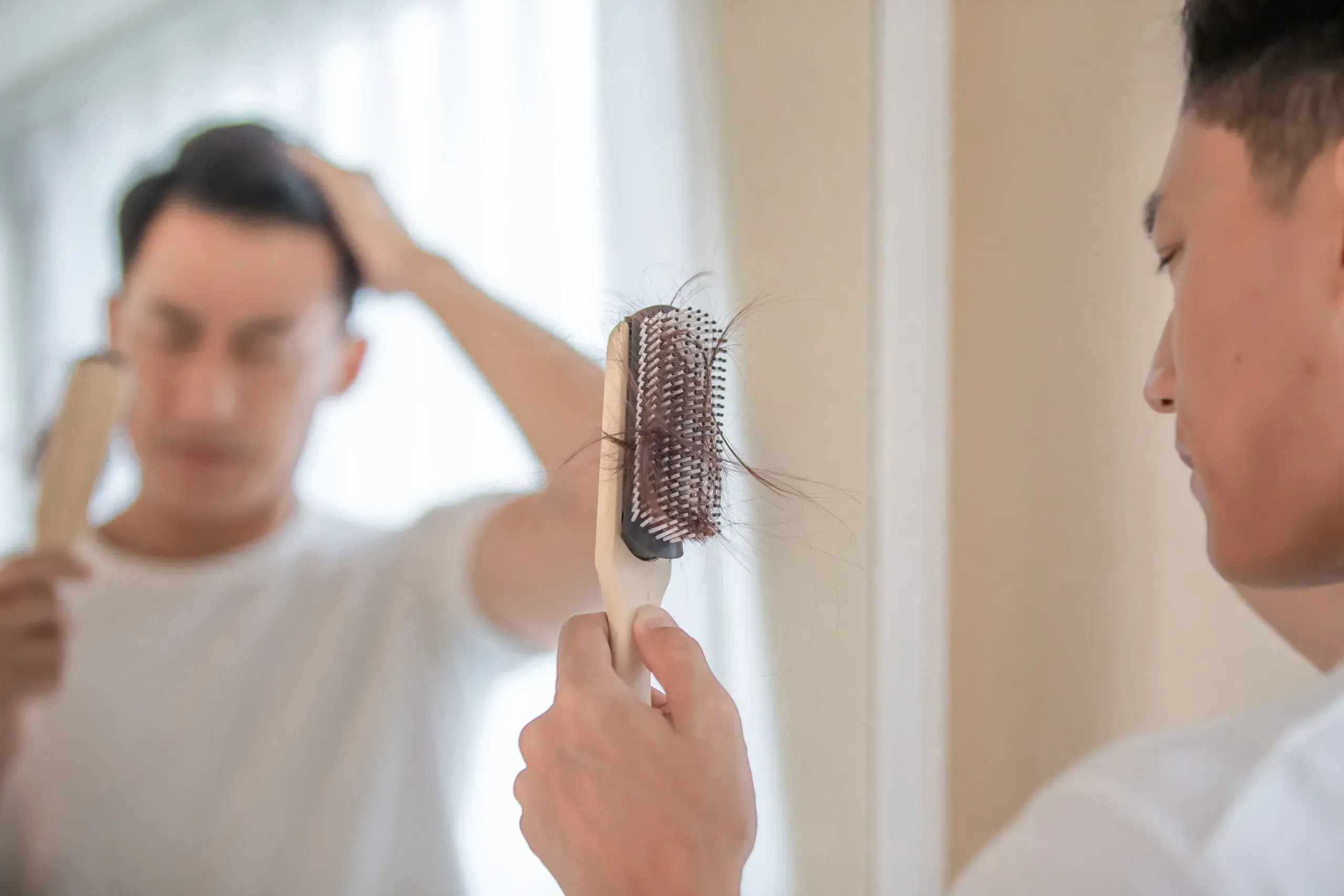
Finding hair in your brush, on your pillow, or swirling down the shower drain is a universal experience. But how much hair loss is actually normal, and when should you be concerned? This question keeps many people up at night, worrying about whether they are heading toward significant thinning.
At DSI Hair, we help patients distinguish between normal shedding and problematic hair loss every day. This guide explains the hair growth cycle, defines normal shedding ranges, describes the most common types of hair loss, and outlines when and how to seek help.
Understanding the Hair Growth Cycle
To understand normal shedding, you first need to understand how hair grows. Every hair on your head goes through a continuous cycle of growth, transition, and rest.
Anagen Phase (Active Growth)
- Duration: Two to seven years (average three to five years for scalp hair)
- Approximately 85-90% of your hair is in this phase at any given time
- The length of your anagen phase determines the maximum length your hair can achieve
- Hair grows approximately 0.3-0.5mm per day (about half an inch per month)
- The anagen phase is influenced by genetics, age, nutrition, and hormones
- Scalp hair has the longest anagen phase of any body site
Catagen Phase (Transition)
- Duration: Two to three weeks
- About 1-2% of hair is in this phase at any time
- The follicle shrinks and detaches from the blood supply
- The lower portion of the follicle (hair bulb) degrades
- Hair growth stops, and the hair shaft is now a "club hair"
- This phase is tightly regulated by signaling molecules
Telogen Phase (Resting)
- Duration: Three to four months
- About 10-15% of hair is in this phase at any time
- The old club hair rests in the follicle while a new anagen hair begins forming beneath it
- At the end of telogen, the old hair is pushed out (shed) as the new hair emerges
- This is the normal mechanism of daily shedding
Exogen Phase (Shedding)
Some researchers identify a distinct exogen phase:
- The active process of hair release from the follicle
- May last several days to weeks
- A single follicle can contain both the old exogen hair and the new anagen hair simultaneously
- This overlap explains why normal shedding does not lead to visible thinning
Normal Shedding vs. Hair Loss
What Is Normal?
- The average person sheds 50 to 100 hairs per day
- This number is based on having approximately 100,000 scalp hairs with 10-15% in telogen at any time
- People with thicker hair (more follicles) may shed more; those with fewer follicles may shed less
- Shedding varies by season, with slightly more loss in late summer and fall
- Washing days may produce more visible shedding simply because mechanical action dislodges hairs that were already in the exogen phase
- On days you do not wash, fewer hairs will appear to fall out, but the overall daily average remains similar
How to Assess Your Shedding
The shower test:
- Place a drain cover to collect shed hairs during washing
- Count the hairs over several wash days to establish your baseline
- Consistently finding more than 100-150 hairs per wash may warrant attention
- Remember that longer hair appears more voluminous, making normal shedding look more dramatic
The pull test:
- Grasp about 40-60 hairs between your thumb and forefinger near the scalp
- Pull firmly but gently along the hair shaft
- Normal: zero to two hairs come out
- Concerning: more than six hairs come out, especially if they have white bulbs (telogen hairs)
- This test should be performed on unwashed hair for accuracy
The comb test:
- Comb your hair from back to front over a light-colored towel for 60 seconds
- Count the hairs on the towel
- Normal: fewer than 10 hairs
- This standardized test can be useful for tracking changes over time
When Shedding Becomes Hair Loss
The distinction between normal shedding and pathological hair loss:
- Normal shedding: 50-100 hairs per day, with no visible thinning. The shed hairs are replaced by new growth at the same rate
- Excessive shedding (telogen effluvium): More than 100-150 hairs per day, often with noticeable thinning. The trigger disrupts the growth cycle, pushing too many follicles into telogen simultaneously
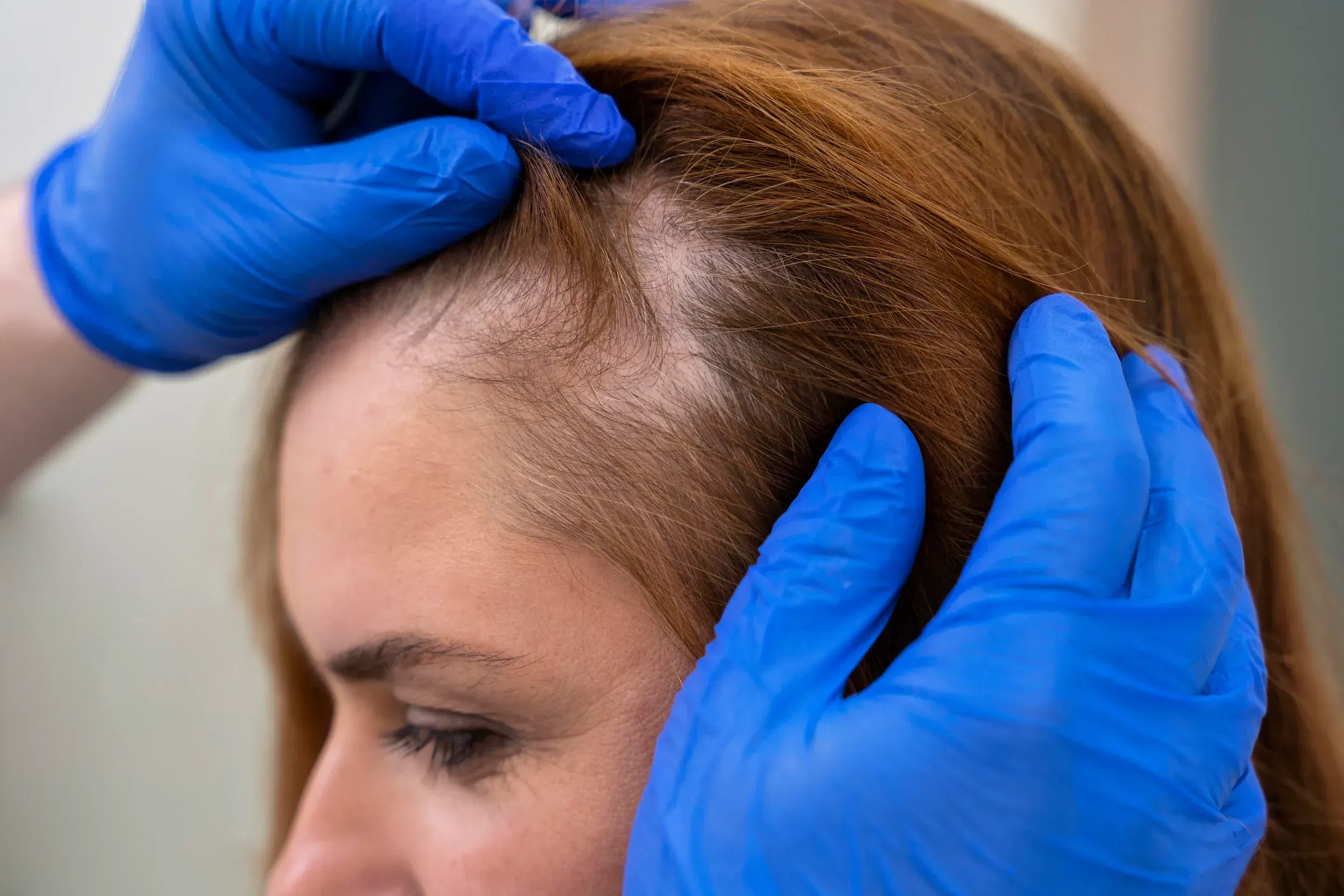
- True hair loss: Follicles miniaturize or stop producing hair entirely. You see less regrowth, widening part, receding hairline, or bald patches
Common Types of Hair Loss
Androgenetic Alopecia
The most common form, affecting 50 million men and 30 million women in the US:
- Progressive miniaturization of hair follicles driven by DHT
- In men: receding hairline, crown thinning (Norwood scale)
- In women: diffuse thinning along the part (Ludwig scale)
- Gradual onset, typically progressing over years to decades
- Without treatment, the process continues indefinitely
Telogen Effluvium
The most common cause of diffuse shedding:
- Triggered by physical or emotional stress, illness, surgery, weight loss, pregnancy, or medication changes
- Shedding begins two to three months after the triggering event
- Hair comes out evenly from all over the scalp
- Typically self-resolving within six to twelve months once the trigger is addressed
- Can be chronic if the trigger persists or multiple triggers overlap
Alopecia Areata
Autoimmune-driven patchy hair loss:
- Smooth, round patches appear suddenly
- Can occur on the scalp, beard, eyebrows, or any hair-bearing area
- Exclamation point hairs (short, tapered hairs at the patch margins) are characteristic
- May resolve spontaneously or progress to totalis or universalis
- Treatment targets the immune system
Traction Alopecia
Hair loss from chronic tension:
- Caused by tight hairstyles (ponytails, braids, extensions)
- Typically affects the hairline and temples
- Early stages are reversible with hairstyle changes
- Prolonged traction leads to permanent follicle damage
When to See a Dermatologist
Seek professional evaluation when:
- Shedding consistently exceeds 100-150 hairs per day for more than two months
- You notice visible thinning, a widening part, or more visible scalp
- Hair loss occurs in patches
- Shedding is accompanied by scalp symptoms (itching, pain, burning, redness)
- Hair loss follows a new medication or medical event
- You have a family history of hair loss and want a prevention plan
- Hair loss is affecting your emotional well-being
- Over-the-counter treatments have not helped after six months
Treatment Options
Minoxidil
- FDA-approved topical treatment (2% and 5%)
- Also available as low-dose oral minoxidil by prescription
- Extends the anagen phase and stimulates follicle growth
- Effective for androgenetic alopecia and may accelerate telogen effluvium recovery
- Results in three to six months with consistent use
Finasteride
- Oral prescription medication for men (1mg daily)
- Blocks DHT production, the primary driver of male pattern baldness
- Stops progression in 90% and produces regrowth in 65% of men
- Takes three to twelve months for visible results
PRP Therapy
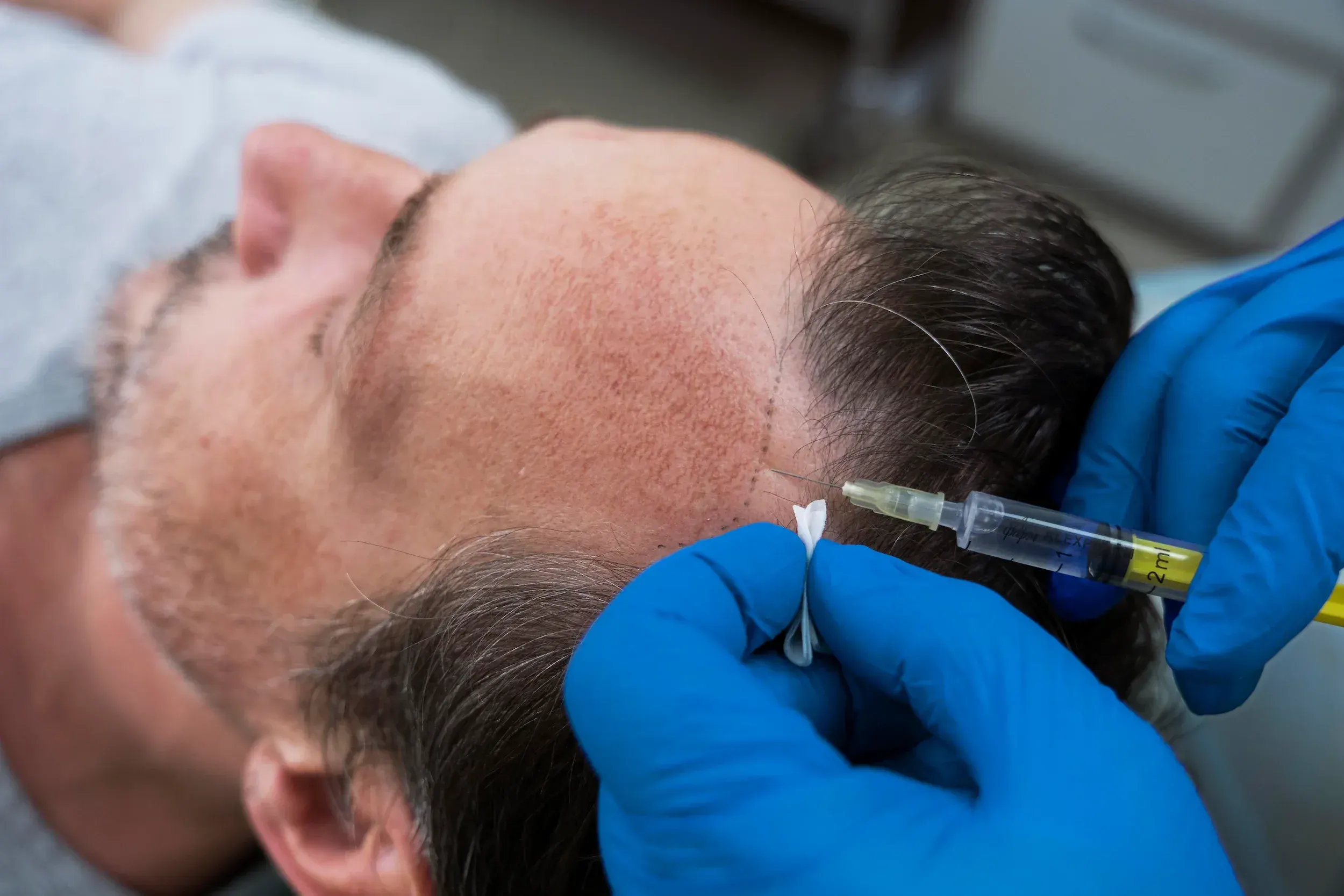
- Platelet-rich plasma injections stimulate follicle growth
- Effective for androgenetic alopecia and alopecia areata
- Three to four initial sessions, then maintenance treatments
- Uses your body's own growth factors
- Safe with minimal side effects
Low-Level Laser Therapy (LLLT)
- FDA-cleared devices like the Revian Red cap
- Stimulates cellular energy in hair follicles
- Non-invasive, no side effects
- Best results when combined with other treatments
- Available at DSI Hair
ARTAS Robotic Hair Transplant
- For permanent restoration of areas with significant hair loss
- AI-guided robotic precision for natural-looking results
- Minimally invasive with no linear scar
- Transplanted follicles grow permanently
- Available at DSI Hair for qualifying candidates
Supplements and Nutrition
- Address iron, vitamin D, zinc, and protein deficiencies
- Consider biotin only if confirmed deficient
- Omega-3 fatty acids support follicle nourishment
- A balanced diet is the foundation of hair health
Lifestyle Changes to Reduce Excessive Shedding
- Manage stress: Chronic stress is one of the most common triggers for excessive shedding
- Eat a balanced diet: Ensure adequate protein, iron, zinc, and vitamins
- Sleep well: Seven to nine hours supports cellular repair and growth hormone production
- Exercise regularly: Improves circulation and reduces cortisol
- Be gentle with your hair: Avoid harsh treatments, tight styles, and excessive heat
- Stay hydrated: Dehydration can affect hair shaft quality
- Quit smoking: Smoking impairs blood flow to follicles and generates oxidative stress
- Limit alcohol: Excessive alcohol depletes nutrients essential for hair health
Frequently Asked Questions
Is it normal to lose hair every day? Yes. Losing 50-100 hairs per day is completely normal and is part of the natural hair growth cycle. These hairs are continuously replaced by new growth.
Why do I lose more hair when I wash it? Washing mechanically dislodges hairs that are already in the shedding phase. You are not causing additional loss; you are simply collecting hairs that would have fallen out over the next few days.
Does stress cause hair loss? Yes. Significant physical or emotional stress can trigger telogen effluvium, causing increased shedding two to three months later. This is usually temporary.
Can diet affect hair shedding? Absolutely. Deficiencies in iron, protein, zinc, vitamin D, and other nutrients can increase shedding and impair regrowth. Crash diets are a common trigger for telogen effluvium.
At what point is hair loss considered excessive? Consistently losing more than 100-150 hairs per day, visible thinning, or a widening part are signs that shedding has crossed into problematic territory.
Does wearing a hat cause hair loss? No. Hats do not cause hair loss. This is a persistent myth with no scientific basis.
Conclusion
Some hair loss is perfectly normal and nothing to worry about. The key is knowing your baseline, understanding what triggers excessive shedding, and recognizing when normal shedding has crossed into problematic hair loss.
If you are concerned about your hair shedding, the team at DSI Hair can help. Our comprehensive evaluation identifies the exact cause of your hair loss and creates a personalized treatment plan to address it. From medical therapies to advanced ARTAS robotic transplants, we have the expertise and technology to help you maintain a full, healthy head of hair.
Contact DSI Hair today to schedule your consultation and get clarity about your hair health.