Hormonal Alopecia: Causes, Signs, and Proven Ways to Fight Back
Hormonal alopecia affects millions worldwide, driven by imbalances in DHT, estrogen, cortisol, and thyroid hormones. Learn the causes, recognize the signs, and discover proven treatments.
What Is Hormonal Alopecia?
Hormonal alopecia is a form of hair loss triggered by fluctuations or imbalances in the body's hormones. Unlike hair loss caused by external damage or nutritional deficiencies, hormonal alopecia originates from within your endocrine system. It can affect both men and women at various stages of life, from puberty through menopause and beyond.
This condition is one of the most common forms of hair loss worldwide. While it can be distressing, understanding the hormonal mechanisms behind it is the first step toward effective treatment and, in many cases, meaningful hair restoration.
The Hormone-Hair Connection
Your hair follicles are remarkably sensitive to hormonal changes. Several key hormones play a direct role in regulating the hair growth cycle.
DHT (Dihydrotestosterone)
DHT is the primary culprit in androgenetic alopecia, the most common form of hormonal hair loss. Testosterone is converted into DHT by an enzyme called 5-alpha reductase. When DHT binds to receptors in hair follicles, it causes them to shrink over time in a process called miniaturization. The affected follicles produce progressively thinner, shorter, and lighter hairs until they eventually stop producing visible hair altogether.
Not everyone with normal testosterone levels experiences DHT-related hair loss. The key factor is follicle sensitivity, which is largely determined by genetics. If your hair follicles have a high density of androgen receptors, they are more susceptible to DHT's damaging effects.
Estrogen
Estrogen plays a protective role in hair health. It helps keep hair in the active growth phase (anagen) for longer periods and promotes thicker, healthier strands. This is why many women experience fuller hair during pregnancy when estrogen levels are elevated, and significant shedding after childbirth when those levels drop sharply.
Declines in estrogen during perimenopause and menopause can unmask the effects of androgens like DHT, leading to thinning hair in women who never previously experienced hair loss.
Cortisol
Cortisol, the body's primary stress hormone, can wreak havoc on hair growth when chronically elevated. High cortisol levels can push hair follicles prematurely into the resting phase (telogen), leading to a condition called telogen effluvium. Chronic stress also disrupts the delicate balance of other hormones, creating a cascade effect that worsens hair loss.
Thyroid Hormones
Both hypothyroidism (underactive thyroid) and hyperthyroidism (overactive thyroid) can cause diffuse hair thinning. Thyroid hormones regulate metabolism at the cellular level, and hair follicles are particularly sensitive to these changes. When thyroid function is off, hair may become dry, brittle, and thin, and the growth cycle can be significantly disrupted.
Common Causes and Risk Factors
Several factors can trigger or worsen hormonal alopecia:
- Genetics - A family history of pattern baldness significantly increases your risk
- Age - Hormonal shifts associated with aging affect hair density
- Pregnancy and postpartum - Dramatic estrogen fluctuations cause temporary but significant shedding
- Menopause - Declining estrogen allows androgens to exert greater influence
- Polycystic ovary syndrome (PCOS) - Elevated androgens in women cause thinning
- Thyroid disorders - Both hypo- and hyperthyroidism affect hair growth
- Chronic stress - Sustained cortisol elevation disrupts the growth cycle
- Hormonal medications - Birth control pills, hormone replacement therapy, and anabolic steroids
- Insulin resistance - Can increase androgen production
- Adrenal disorders - Conditions affecting adrenal gland function alter hormone levels
Recognizing the Signs
Hormonal alopecia often presents differently than other forms of hair loss. Knowing what to look for can help you seek treatment earlier, when interventions are most effective.
In Men
- Receding hairline, typically starting at the temples
- Thinning at the crown (vertex)
- Gradual progression following the Norwood scale pattern
- Miniaturized hairs that are finer and lighter than surrounding hair
- Increased hair on the pillow, in the shower, or on brushes
In Women
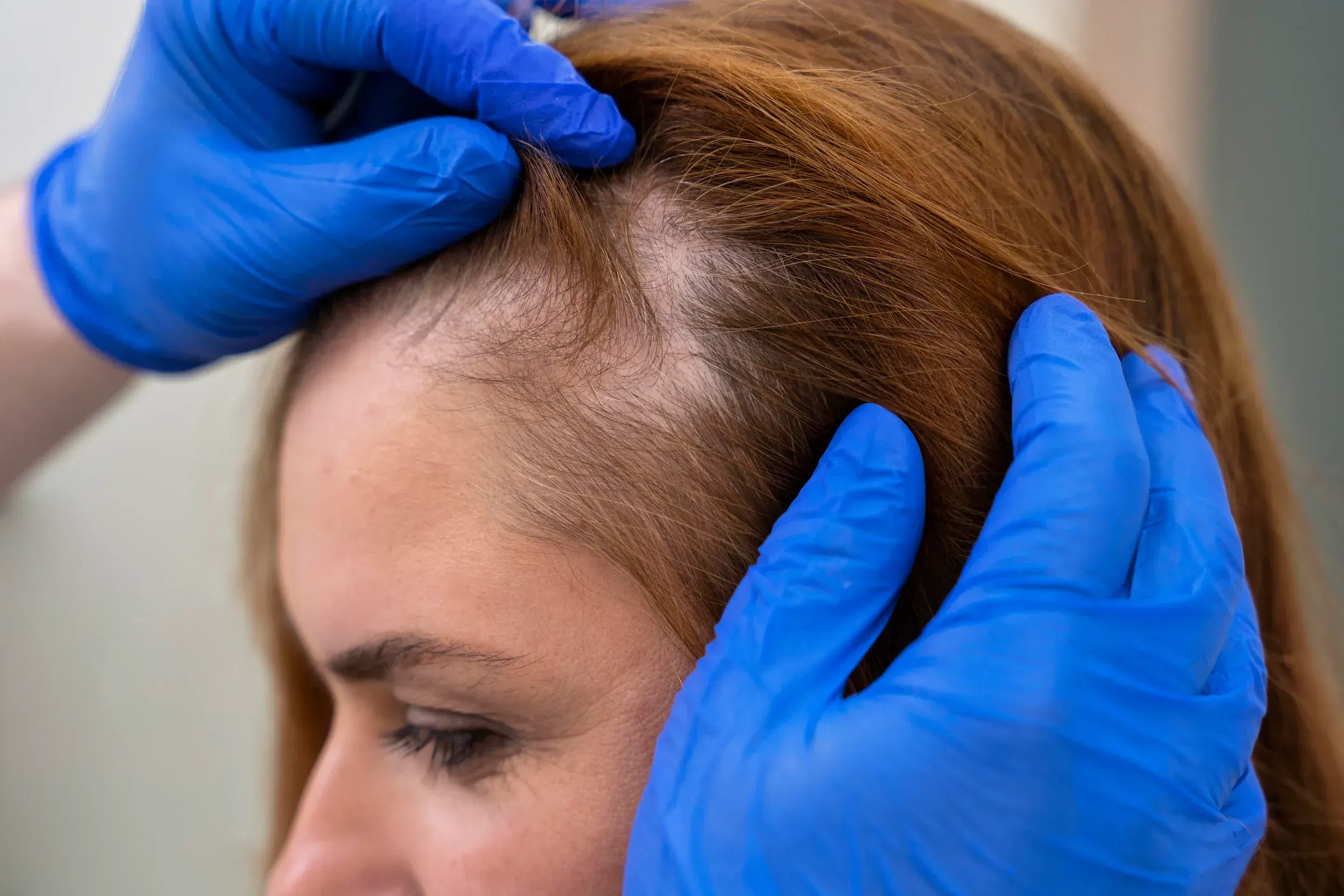
- Diffuse thinning across the top of the scalp
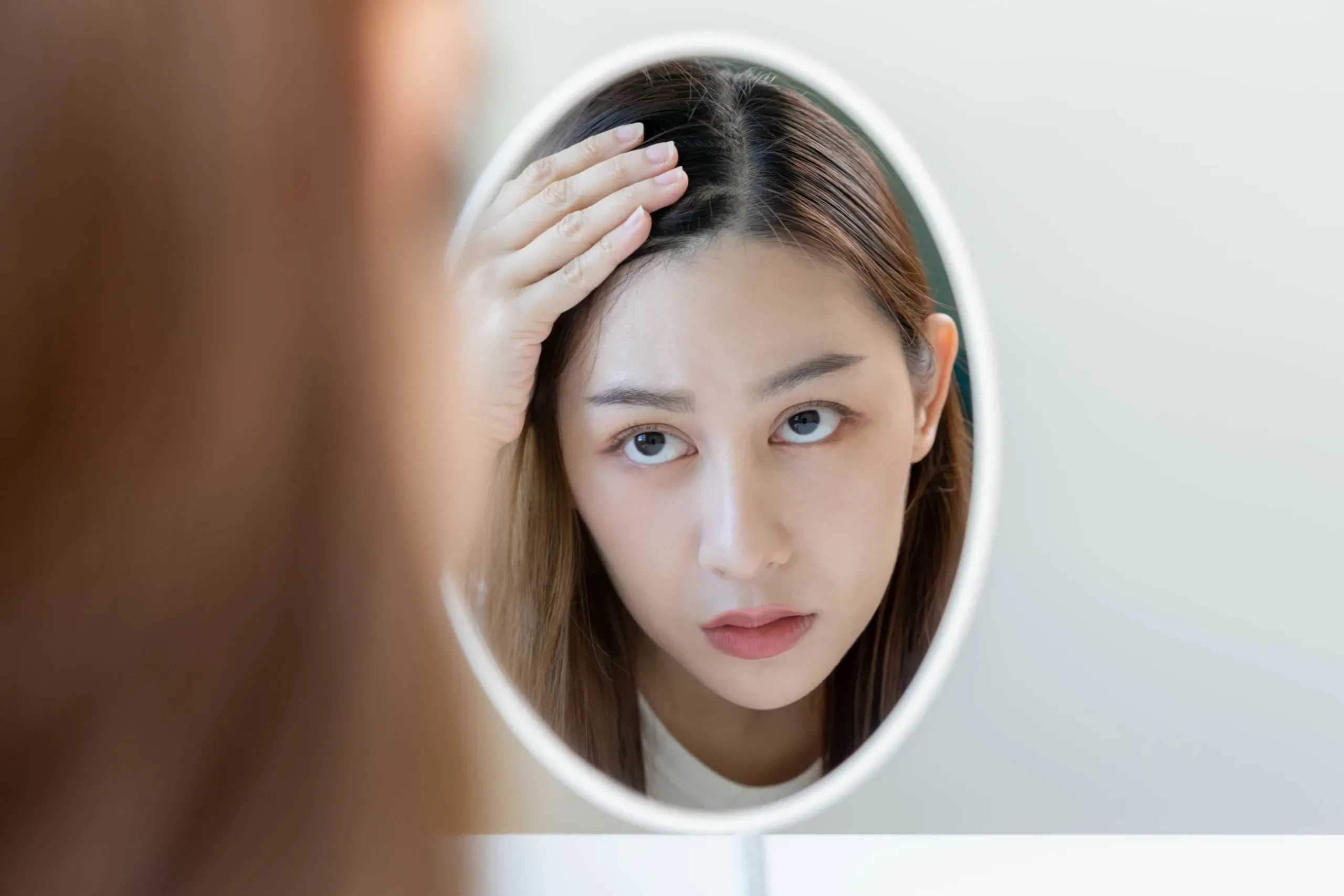
- Widening of the hair part
- Preserved frontal hairline (in most cases)
- Overall decrease in hair volume and density
- Hair that feels thinner or less substantial
- Increased scalp visibility in certain lighting
General Warning Signs
- Gradual onset over months or years (sudden loss suggests other causes)
- Family members with similar patterns of hair loss
- Hair loss that coincides with hormonal life events
- Miniaturized hairs visible upon close inspection
Getting a Diagnosis
Proper diagnosis is essential because the treatment approach varies significantly depending on the underlying hormonal cause. A dermatologist or trichologist will typically:
- Review medical history - Including family history, medications, and life events
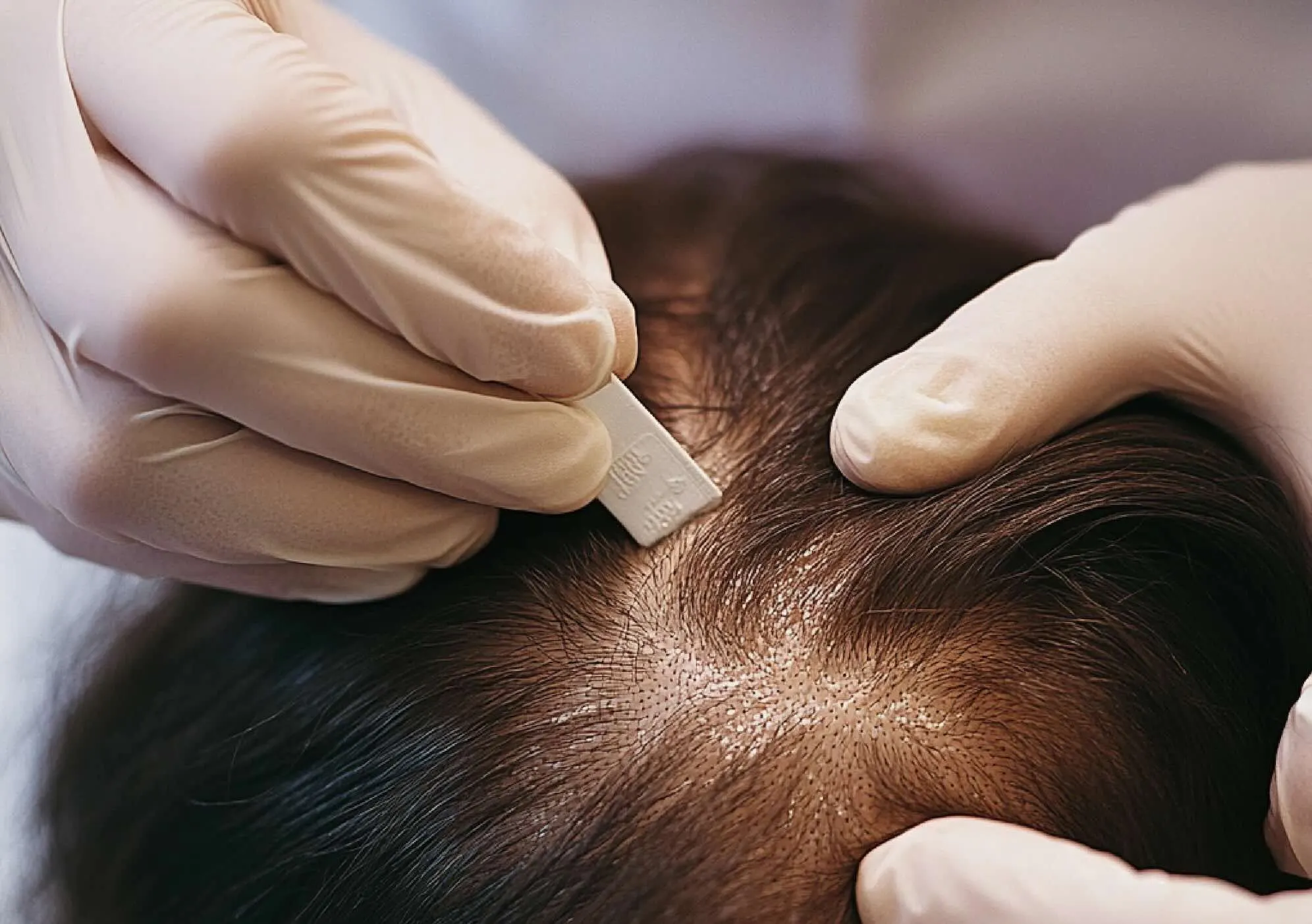
- Physical examination - Assessing the pattern, distribution, and quality of hair loss
- Pull test - Gently pulling on a group of hairs to assess shedding rate
- Blood tests - Checking levels of testosterone, DHT, estrogen, thyroid hormones (TSH, T3, T4), cortisol, iron, ferritin, and vitamin D
- Scalp biopsy - In some cases, a small tissue sample helps differentiate between types of alopecia
- Trichoscopy - A magnified examination of the scalp to identify miniaturized follicles and other diagnostic features
Treatment Options
The good news is that hormonal alopecia is treatable, especially when caught early. A comprehensive approach often combines multiple therapies for the best results.
Minoxidil
Minoxidil is an FDA-approved topical treatment available over the counter in 2% and 5% formulations. It works by increasing blood flow to hair follicles and prolonging the growth phase. It is effective for both men and women. Results typically become visible after three to six months of consistent use, and the treatment must be continued to maintain benefits.
Finasteride
Finasteride is an oral prescription medication that blocks 5-alpha reductase, reducing DHT levels by approximately 70%. The standard dose for hair loss is 1mg daily (brand name Propecia). It is FDA-approved for men and is sometimes prescribed off-label for women. Clinical studies show that finasteride stops further hair loss in about 86% of men and produces visible regrowth in roughly 65%.
Spironolactone
Spironolactone is an anti-androgen medication commonly prescribed to women with hormonal hair loss. Originally developed as a blood pressure medication, it works by blocking androgen receptors and reducing androgen production. Typical doses for hair loss range from 100mg to 200mg daily. It is not recommended for men due to its feminizing effects.
PRP (Platelet-Rich Plasma) Therapy
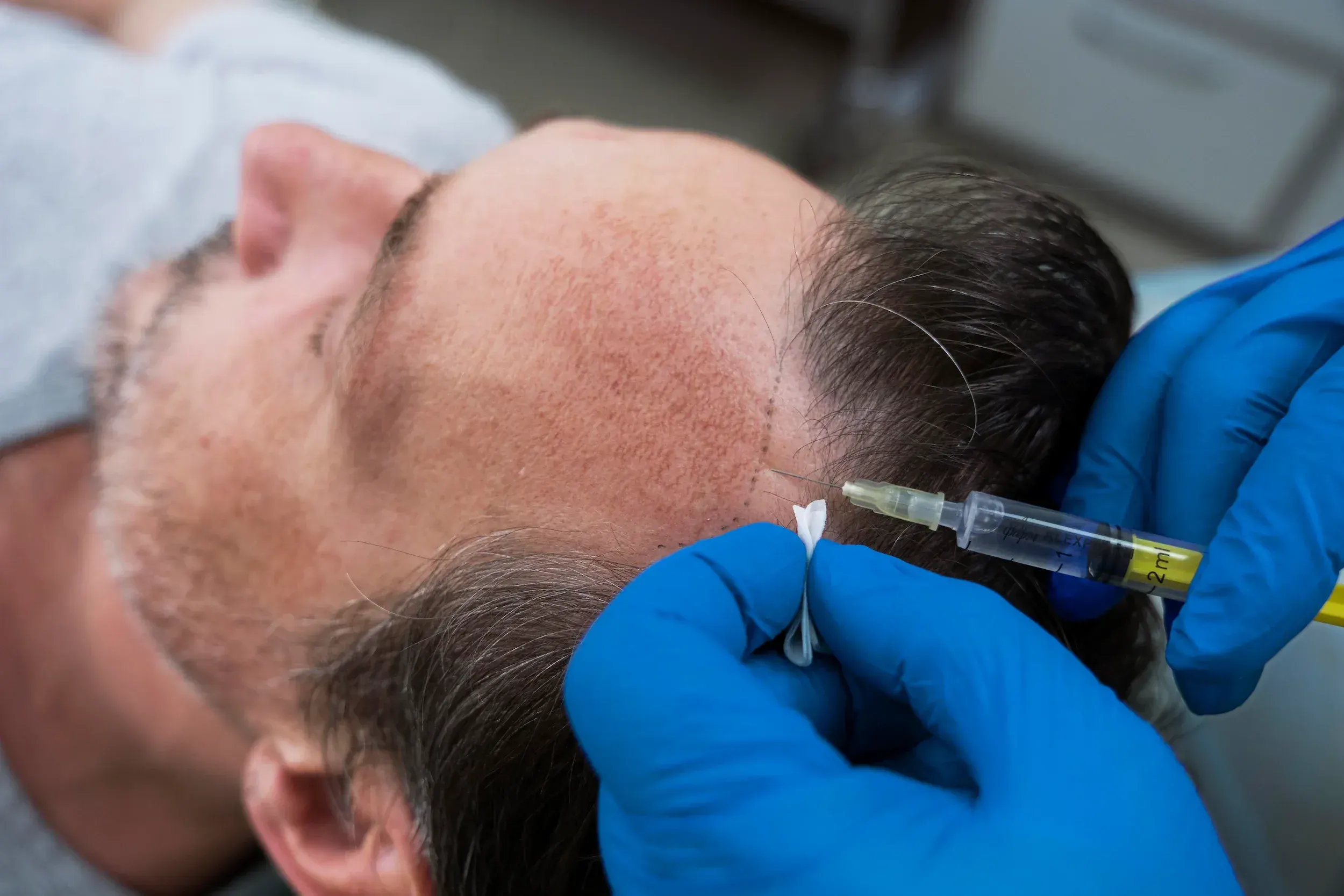
PRP therapy involves drawing a small amount of the patient's blood, concentrating the platelets, and injecting the platelet-rich plasma into the scalp. The growth factors in platelets stimulate dormant follicles and promote healing. Most patients undergo a series of three to four treatments spaced four to six weeks apart, followed by maintenance sessions every six to twelve months.
LLLT (Low-Level Laser Therapy)
Low-level laser therapy uses red light wavelengths to stimulate cellular activity in hair follicles. FDA-cleared devices are available as caps, helmets, and combs for home use. LLLT is most effective as a complementary treatment alongside other therapies. Consistent use for 15 to 25 minutes several times per week is typically recommended.
Hair Transplant Surgery
For more advanced hormonal alopecia, hair transplant surgery offers a permanent solution by relocating DHT-resistant follicles from the back and sides of the scalp to thinning areas. Modern techniques include FUE (Follicular Unit Extraction) and FUT (Follicular Unit Transplantation). Robotic-assisted procedures like ARTAS provide enhanced precision and natural-looking results.
Supplements and Nutritional Support
While supplements alone rarely reverse hormonal hair loss, they can support overall hair health:
- Biotin - Supports keratin production
- Iron and ferritin - Essential for oxygen delivery to follicles
- Vitamin D - Plays a role in follicle cycling
- Zinc - Supports hormone regulation and hair tissue repair
- Saw palmetto - A natural DHT blocker with modest evidence
- Omega-3 fatty acids - Reduce inflammation that can worsen hair loss
Understanding Side Effects
Every treatment carries potential side effects that should be discussed with your healthcare provider:
- Minoxidil - Scalp irritation, initial shedding, unwanted facial hair growth (especially in women)
- Finasteride - Sexual side effects in a small percentage of men (decreased libido, erectile dysfunction), rare mood changes
- Spironolactone - Dizziness, breast tenderness, menstrual irregularities, potassium elevation
- PRP - Temporary scalp soreness, bruising, infection risk (minimal)
- LLLT - Generally well-tolerated with minimal side effects
- Hair transplant - Swelling, numbness, infection risk, temporary shock loss
Can Hormonal Alopecia Be Reversed?
The answer depends on several factors. In cases where hormonal imbalances are temporary, such as postpartum hair loss or thyroid dysfunction that responds to medication, hair can fully recover once hormone levels normalize.
For androgenetic alopecia driven by DHT, early intervention is critical. Miniaturized follicles can often be revived if treatment begins before the follicle is permanently damaged. However, if a follicle has been dormant for an extended period and scarring has occurred, it may no longer respond to medical therapy. In these cases, surgical options like hair transplantation become the most effective path to restoration.
The key takeaway is that the earlier you address hormonal hair loss, the more options you have and the better your outcomes will be.
Prevention Strategies
While you cannot change your genetics, you can take proactive steps to minimize the impact of hormonal alopecia:
- Monitor hormone levels regularly, especially during life transitions
- Manage stress through exercise, meditation, and adequate sleep
- Maintain a balanced diet rich in protein, iron, zinc, and vitamins
- Avoid harsh styling practices that add mechanical stress to vulnerable follicles
- Address thyroid and metabolic issues promptly
- Consider preventive treatments like low-dose finasteride or minoxidil if you have a strong family history
- Get regular scalp assessments to catch changes early
Frequently Asked Questions
Is hormonal alopecia the same as androgenetic alopecia?
Androgenetic alopecia is one type of hormonal alopecia, specifically driven by DHT. Hormonal alopecia is a broader term that includes hair loss caused by any hormonal imbalance, including thyroid disorders, cortisol elevation, and estrogen fluctuations.
Can birth control pills cause hormonal hair loss?
Yes. Some birth control pills contain progestins with androgenic activity that can trigger or worsen hair loss in susceptible individuals. Conversely, stopping birth control can also cause temporary shedding due to the hormonal shift.
How long does treatment take to show results?
Most medical treatments for hormonal alopecia require three to six months of consistent use before visible results appear. Full results may take twelve months or longer. Patience and consistency are essential.
Is hormonal hair loss different in men and women?
Yes. Men typically experience a receding hairline and crown thinning, while women more commonly experience diffuse thinning across the top of the scalp. The underlying hormonal mechanisms also differ, with treatment approaches tailored accordingly.
Should I see an endocrinologist or a dermatologist?
A dermatologist who specializes in hair loss is usually the best starting point. If blood work reveals significant hormonal abnormalities, they may refer you to an endocrinologist for comprehensive hormone management.
Hormonal alopecia can feel overwhelming, but with the right diagnosis and a tailored treatment plan, meaningful improvement is achievable. The most important step is to act early and work with qualified professionals who can guide you toward the most effective solutions for your specific situation.