Combining PRP with Hair Transplant: Enhanced Results Explained
PRP therapy combined with hair transplant surgery can improve graft survival, speed healing, and boost density. Learn how the combination works and what to expect.
The Basics of PRP Therapy
PRP (Platelet-Rich Plasma) therapy is a regenerative treatment that uses concentrated growth factors from your own blood to stimulate tissue repair and healing. In the context of hair restoration:
- A small amount of blood is drawn and processed in a centrifuge to separate the platelet-rich plasma
- The concentrated PRP — containing growth factors like PDGF, VEGF, and TGF-beta — is injected into the scalp
- These growth factors stimulate dormant follicles, improve blood supply, and support the health of existing hair
PRP has become one of the most popular non-surgical hair loss treatments, but its benefits are amplified significantly when combined with hair transplant surgery.
How Hair Transplant Surgery Works
Hair transplant surgery involves moving healthy, DHT-resistant follicles from the donor area (typically the back and sides of the scalp) to areas of thinning or baldness.
FUE (Follicular Unit Extraction)
- Individual follicular units are extracted one at a time using a small punch tool
- Minimally invasive with no linear scar
- Faster recovery compared to FUT
FUT (Follicular Unit Transplantation)
- A strip of scalp is removed from the donor area
- Individual follicular units are dissected under magnification
- Can yield more grafts per session
- Leaves a linear scar in the donor area
Both techniques rely on the transplanted follicles surviving the extraction, storage, and placement process — and this is where PRP can make a meaningful difference.
The Combination Benefits
Better Graft Survival
One of the most significant benefits of combining PRP with hair transplant surgery is improved graft survival rates:
- Growth factors in PRP promote cell survival and reduce inflammation at the transplant site
- PRP can be applied to grafts during the holding period between extraction and placement, helping them stay viable
- Studies have shown that PRP-treated grafts demonstrate higher survival rates compared to untreated grafts
Faster Healing
PRP accelerates the body's natural healing processes:
- Reduced inflammation and swelling in the recipient and donor areas
- Faster closure of extraction sites in the donor zone
- Shorter time to scab resolution in the recipient area
- Patients often report a more comfortable recovery when PRP is part of the protocol
Increased Density
PRP can improve the overall density of the result:
- Transplanted follicles may produce thicker, healthier hair when supported by PRP
- Native hair surrounding the transplant zone can be stimulated by PRP, adding to the overall density
- The combination effect — transplanted hair plus revitalized native hair — creates a fuller, more natural appearance
The Role of Growth Factors
PRP works through its concentrated growth factors:
- PDGF (Platelet-Derived Growth Factor) — Promotes tissue repair and new blood vessel formation
- VEGF (Vascular Endothelial Growth Factor) — Improves blood supply to the scalp and follicles
- TGF-beta (Transforming Growth Factor) — Supports wound healing and tissue regeneration
- EGF (Epidermal Growth Factor) — Stimulates cell growth and differentiation
These growth factors work together to create an optimal environment for transplanted grafts to thrive and for native follicles to be revitalized.
Benefits of PRP After Transplant
PRP treatments performed in the weeks and months following a hair transplant can extend the benefits:
- Post-operative PRP sessions (typically starting 4–6 weeks after surgery) support ongoing healing and follicle activation
- Series of treatments (3–4 sessions spaced 4–6 weeks apart) can maximize the growth response
- Maintenance sessions (every 6–12 months) help sustain results long-term
- PRP can also help protect native hair from ongoing thinning, preserving the overall result
What to Expect from PRP Sessions
A typical PRP session involves:
- Blood draw — A small amount of blood (usually 30–60 mL) is drawn from your arm
- Processing — The blood is placed in a centrifuge for 10–15 minutes to separate the PRP
- Numbing — The scalp is numbed with local anesthesia or a topical numbing cream
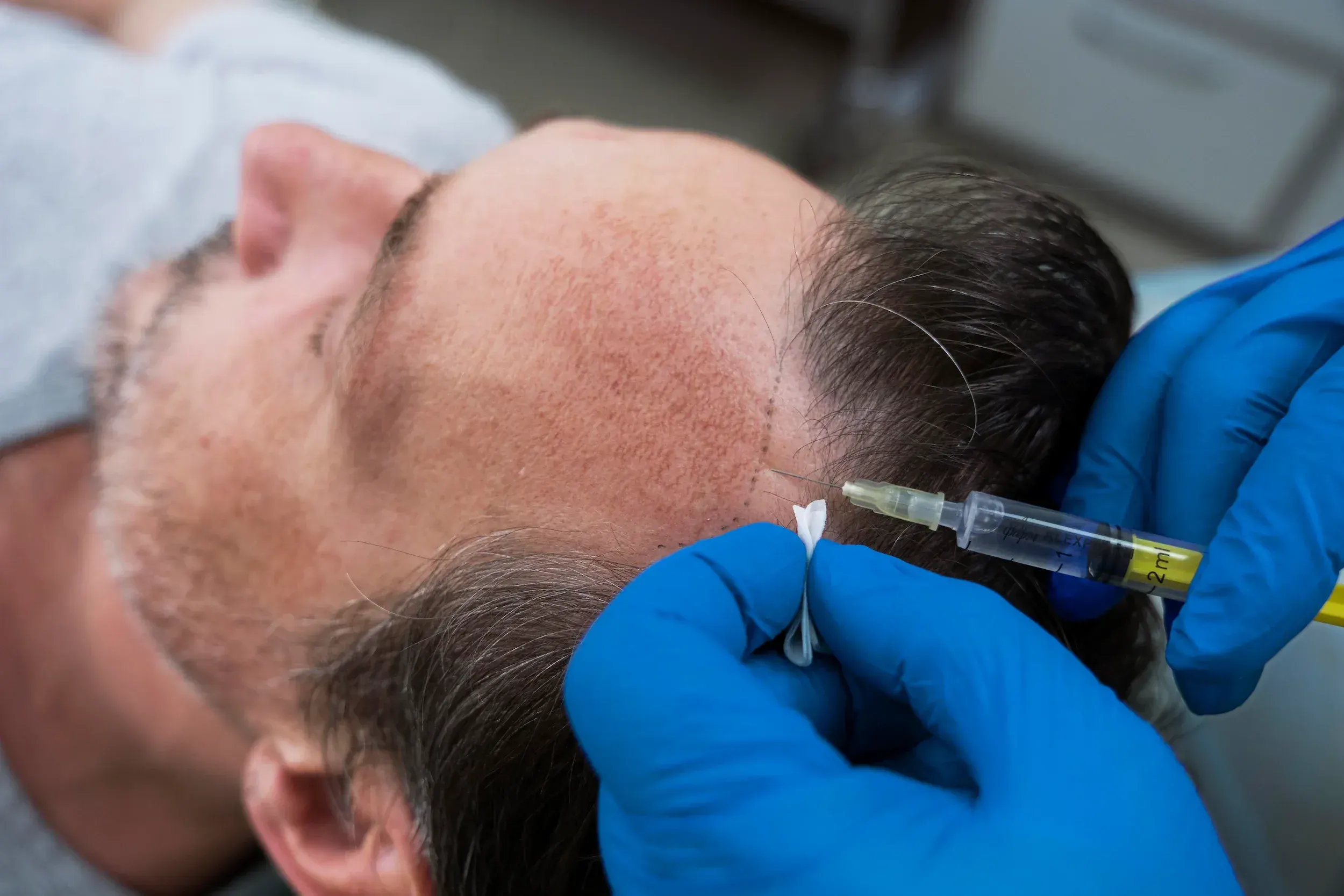
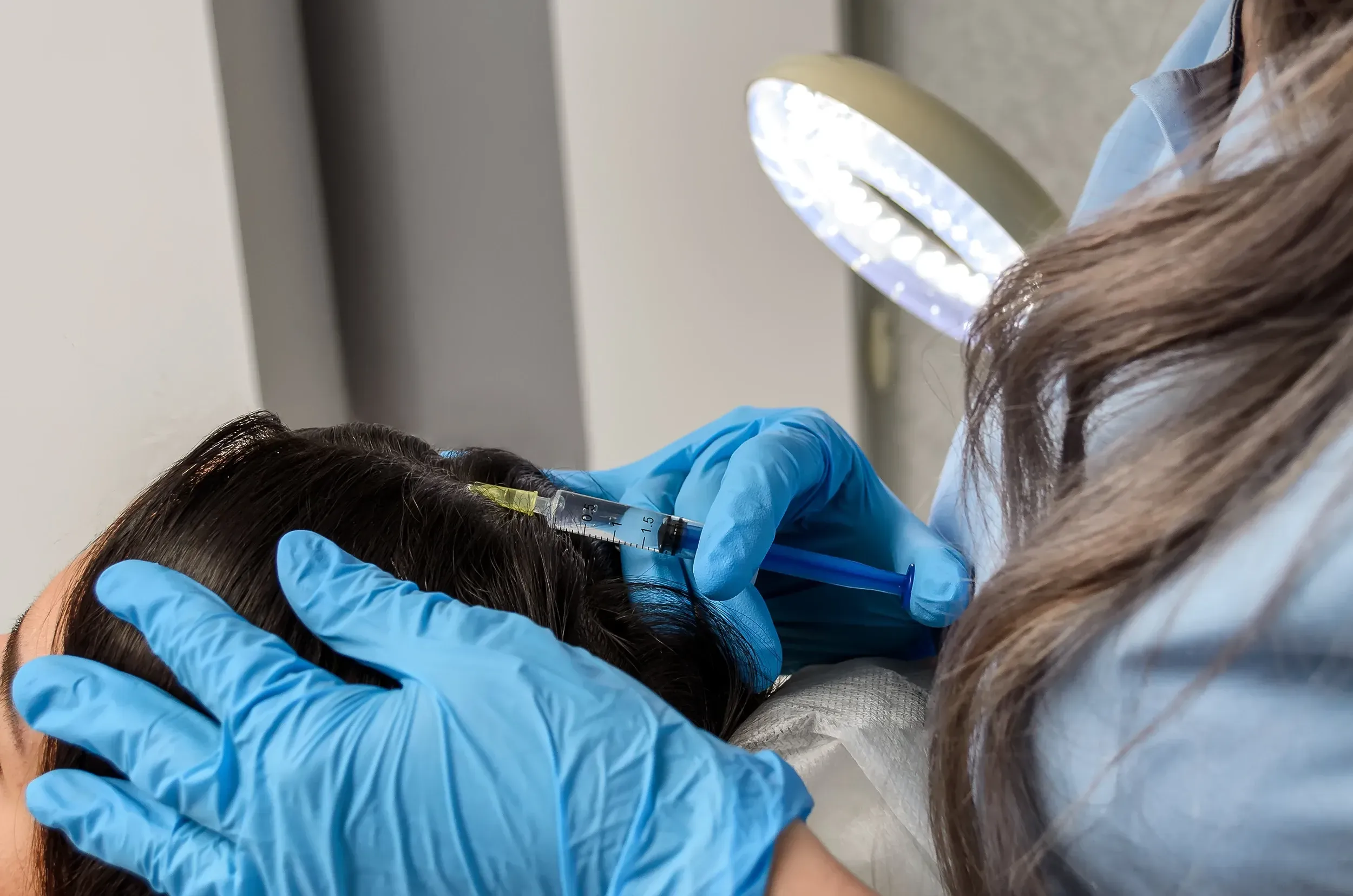
- Injection — PRP is injected into the scalp using a series of small injections across the treatment area
- Duration — The entire process takes about 30–60 minutes
- Recovery — Minimal downtime. Most patients return to normal activities the same day
Mild soreness, redness, or swelling at the injection sites is normal and typically resolves within 24–48 hours.
Hair Loss Beyond Surgery
PRP is particularly valuable because hair transplant surgery addresses existing hair loss but does not prevent future thinning of native hair. PRP helps bridge this gap:
- Supports the health and longevity of non-transplanted native hair
- Can slow or reduce the progression of androgenetic alopecia
- Reduces the likelihood of needing additional transplant procedures in the future
- Maintains a more consistent appearance over time
Side Effects
PRP is derived from your own blood, which makes it one of the safest regenerative treatments available:
- No risk of allergic reaction — It is your own biological material
- Minimal side effects — Temporary soreness, swelling, or bruising at injection sites
- No significant downtime — Most patients resume normal activities immediately
- Rare complications — Infection (extremely rare with proper technique), temporary headache
Complementary Treatments
For the best possible results, PRP and hair transplant surgery can be combined with:
- Finasteride — Blocks DHT to protect native hair
- Minoxidil — Stimulates growth in both transplanted and native follicles
- Low-Level Laser Therapy (LLLT) — Improves scalp circulation and cellular energy
- Nutritional optimization — Ensuring adequate iron, vitamin D, biotin, and zinc levels
A multi-modal approach — surgery + PRP + medical therapy + nutrition — consistently produces the best long-term outcomes.
The Science Behind It
Multiple peer-reviewed studies have demonstrated the benefits of combining PRP with hair transplant surgery:
- Improved graft survival rates
- Faster onset of new growth in the transplanted area
- Greater hair density at 6 and 12 months post-surgery
- Enhanced native hair quality in PRP-treated zones
While research is ongoing, the existing evidence strongly supports PRP as a valuable adjunct to surgical hair restoration.
ARTAS Technology and PRP
The ARTAS Robotic System — which uses AI-guided precision for follicular unit extraction — pairs particularly well with PRP:
- ARTAS provides consistent, precise graft harvesting with minimal trauma
- PRP enhances graft viability and healing after the precision extraction
- The combination of robotic precision and biological support represents the most advanced approach to hair transplant surgery available today
Key Benefits Summary
- Improved graft survival and growth
- Faster recovery and healing
- Enhanced density from both transplanted and native hair
- Reduced inflammation and discomfort
- Long-term support for native hair preservation
- Safe, well-tolerated treatment derived from your own blood
Combining PRP with hair transplant surgery is not just an add-on — it is an integral part of a modern, comprehensive hair restoration strategy. When paired with skilled surgical technique and ongoing medical management, it helps ensure the best possible results for years to come.