Can You Change Your Hairline?
Whether your hairline is receding, uneven, or simply not where you want it, the answer is yes: you can change it. Explore non-surgical and surgical options for reshaping your hairline.
Understanding Hairlines
Your hairline is one of the most defining features of your face. It frames your forehead, influences how your facial proportions are perceived, and plays a significant role in your overall appearance. No two hairlines are exactly alike, and understanding what is normal can help you decide whether you want to make a change.
Common Hairline Types
Rounded - A soft, curved hairline that follows the natural contour of the forehead. Common in women and some men.
M-shaped - Features slight recession at the temples with a more prominent central point. This is the classic mature male hairline and is completely normal.
Straight - Runs relatively flat across the forehead without significant peaks or valleys. Less common but perfectly normal.
Widow's peak - Features a distinct V-shaped point at the center of the forehead. Genetically determined and not an indicator of hair loss.
High hairline - The hairline sits higher on the forehead than average. Can be genetic or the result of hair loss.
Low hairline - The hairline sits close to the eyebrows. Genetic and common in certain ethnicities.
Bell-shaped - Rounded at the center with the sides curving inward. Common in women.
What Is a Normal Hairline?
There is enormous natural variation in hairline shape and position. A normal hairline can sit anywhere from about two to three inches above the eyebrows. Slight asymmetry is universal, and most people's hairlines are not perfectly symmetrical.
In men, it is normal for the hairline to mature (move back slightly) during the late teens to mid-twenties. This is not the same as recession and does not necessarily indicate progressive hair loss.
Why Hairlines Change
Several factors can cause your hairline to shift from its original position.
Hormones
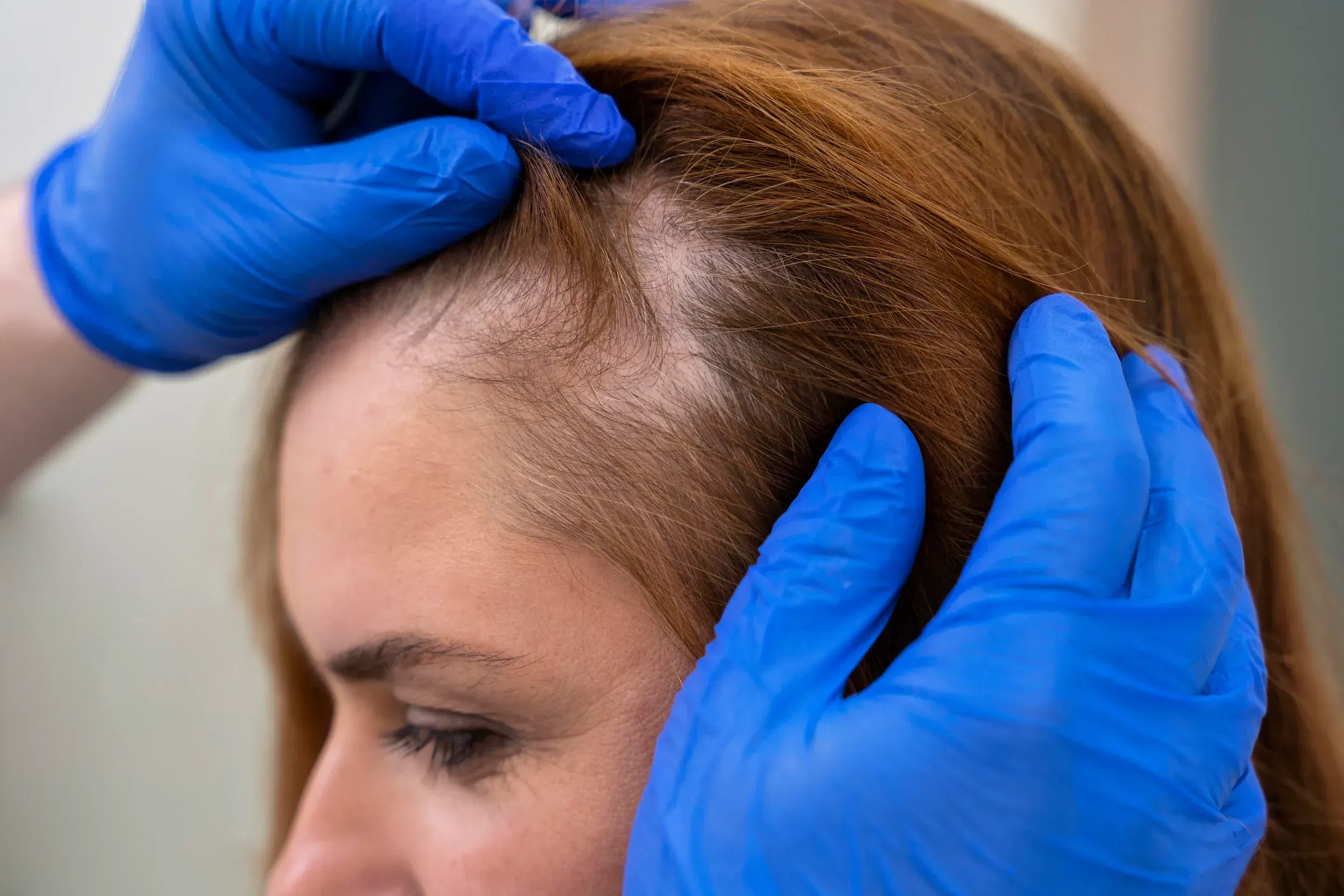
DHT (dihydrotestosterone) is the primary hormonal driver of hairline recession in androgenetic alopecia. DHT causes susceptible follicles at the temples and frontal scalp to miniaturize progressively. This is genetically determined and affects both men and women, though the pattern differs between sexes.
Hairstyling Habits
Chronic tension from tight hairstyles can cause traction alopecia, gradually pulling the hairline back. This is particularly common along the temples and edges in people who regularly wear tight braids, ponytails, cornrows, or extensions.
Stress
Acute or chronic stress can trigger telogen effluvium, causing widespread shedding that may be most noticeable at the hairline. While typically temporary, repeated episodes can compound over time.
Medications
Certain medications can contribute to hair thinning that affects the hairline, including some blood thinners, antidepressants, hormonal medications, and chemotherapy drugs.
Can You Actually Change Your Hairline?
Yes. Modern medicine and surgery offer multiple approaches to altering your hairline, from subtle improvements to dramatic transformations. The right option depends on your specific situation, goals, and the underlying cause of your hairline concerns.
Non-Surgical Treatments
Minoxidil
Minoxidil is an FDA-approved topical treatment that can help regrow hair along a receding hairline. Available in 2% and 5% formulations (liquid and foam), it works by increasing blood flow to follicles and extending the growth phase.
For hairline improvement specifically:
- Apply directly to the receding areas twice daily
- Results typically begin at three to six months
- Works best on recent recession where follicles are miniaturized but not yet dead
- Must be continued indefinitely to maintain results
- Oral minoxidil (prescription) may be more effective for some patients
Finasteride
Finasteride blocks the production of DHT, addressing the root cause of androgenetic hairline recession. At 1mg daily, it can slow or stop recession and, in many cases, promote modest regrowth.
For hairline concerns:
- Most effective at preventing further recession
- Regrowth is possible but tends to be more modest at the hairline than the crown
- Topical finasteride formulations offer localized treatment with fewer systemic effects
- Best results come from starting early, before significant recession has occurred
Supplements
While supplements alone are unlikely to change a receding hairline, they can support overall hair health and complement other treatments:
- Saw palmetto - A natural DHT blocker with mild evidence of benefit
- Biotin - Supports keratin production
- Iron and ferritin - Essential if you are deficient
- Vitamin D - Plays a role in follicle cycling
- Marine collagen - Some evidence for improving hair thickness
- Pumpkin seed oil - Contains compounds that may inhibit 5-alpha reductase
PRP (Platelet-Rich Plasma)
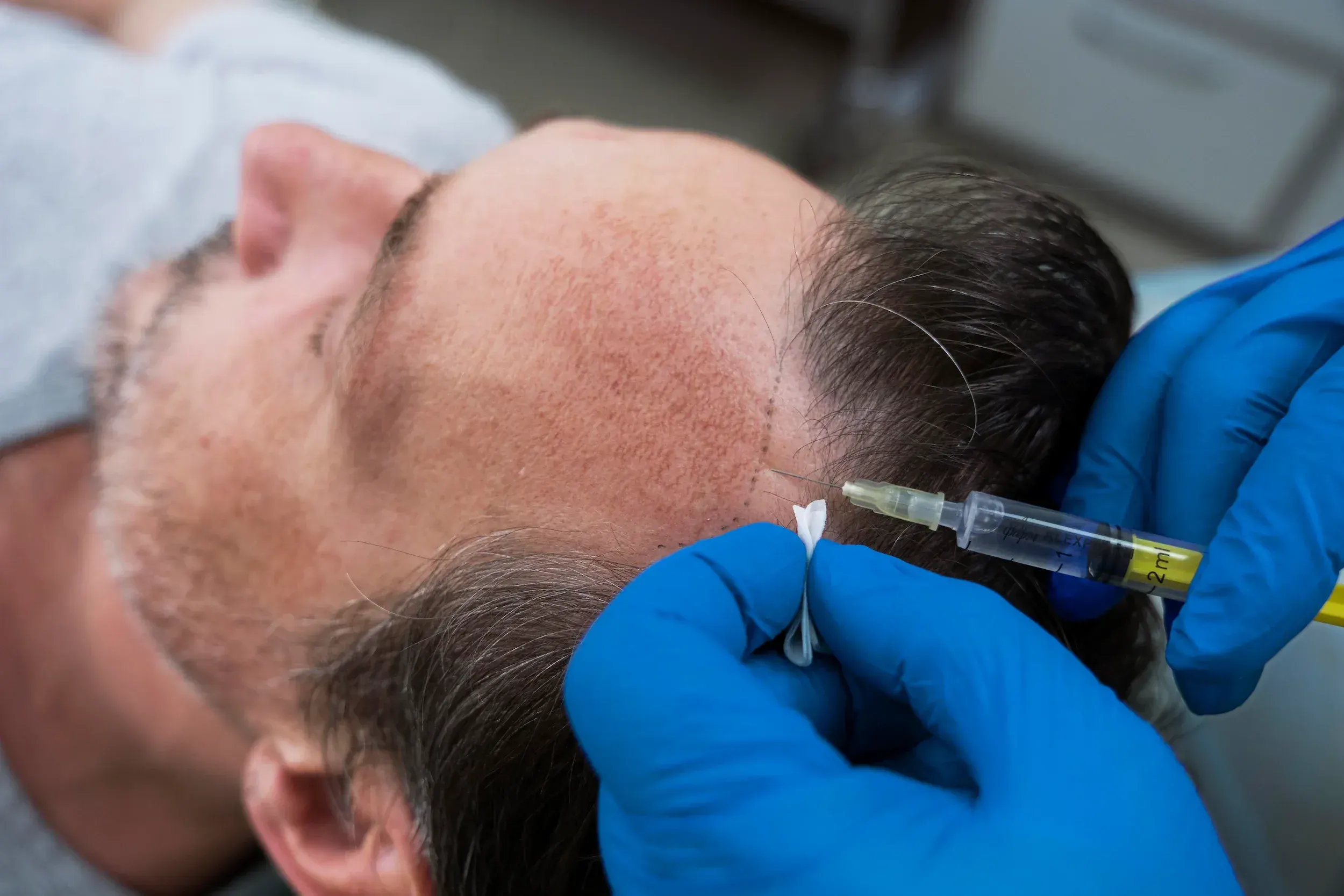
PRP therapy concentrates growth factors from your own blood and delivers them directly to areas of concern. For hairline improvement, PRP can stimulate dormant follicles and improve the quality of existing hair.
Typical protocol involves three to four sessions spaced four to six weeks apart, followed by maintenance sessions every six to twelve months. PRP is often combined with other treatments for enhanced results.
Surgical Options
FUE (Follicular Unit Extraction)
FUE is the most popular hair transplant technique for hairline restoration. Individual follicular units are extracted from the DHT-resistant donor area at the back of the scalp and implanted into the hairline.
Advantages for hairline work:
- Allows precise, artistic placement of individual grafts
- Single-hair grafts create a natural, feathered front edge
- No linear scar in the donor area
- Minimal downtime
- Results are permanent
A skilled surgeon can design a hairline that complements your facial features, age, and natural growth patterns, creating results that look entirely natural.
FUT (Follicular Unit Transplantation)
FUT involves removing a strip of tissue from the donor area and dissecting it into individual follicular units under a microscope. While it leaves a linear scar, it can yield a high number of grafts in a single session.
FUT may be preferred when a large number of grafts is needed or when maximizing graft yield from the donor area is a priority.
Hairline Lowering Surgery (Forehead Reduction)
For individuals with a naturally high hairline (not caused by hair loss), hairline lowering surgery is an option. This procedure involves:
- Removing a strip of forehead skin along the hairline
- Advancing the scalp and hairline forward
- Closing the incision along the new, lower hairline
This procedure can lower the hairline by one to two centimeters in a single surgery. It is most commonly performed on women and works best for those with good scalp laxity and a high but otherwise healthy hairline.
Scalp Micropigmentation (SMP)
While not a surgical hair restoration procedure, scalp micropigmentation deserves mention. SMP uses specialized tattooing techniques to create the appearance of hair follicles on the scalp. For hairline concerns, SMP can:
- Create the illusion of a lower, more defined hairline
- Add the appearance of density behind a thinning hairline
- Complement a hair transplant by enhancing the look of density
- Provide a non-invasive option for those who are not candidates for surgery
Choosing the Right Option for Your Hair Type
The best approach depends on your specific situation:
For mild recession (Norwood 2-3):
- Start with minoxidil and finasteride
- Add PRP for enhanced results
- Consider a small transplant session (500-1500 grafts) if medical therapy is insufficient
For moderate recession (Norwood 3-4):
- Medical therapy as a foundation
- FUE transplant to restore the hairline (1500-3000 grafts)
- Ongoing medical therapy to protect native hair
For significant recession (Norwood 5+):
- Comprehensive transplant planning (may require multiple sessions)
- Maximize donor utilization with FUE or FUT
- Consider SMP to complement surgical results
- Long-term medical therapy is essential
For naturally high hairline (no hair loss):
- Hairline lowering surgery
- FUE transplant to lower and reshape the hairline
- SMP for a subtle cosmetic improvement
Managing Expectations
Realistic expectations are essential for satisfaction with any hairline treatment:
- Medical treatments can slow recession and promote modest regrowth but typically cannot fully restore a significantly receded hairline
- Hair transplants can create dramatic improvements but are limited by donor supply and require 12-18 months for full results
- No treatment creates infinite density as transplanted hair is redistributed, not newly created
- Ongoing maintenance is usually necessary to protect the investment
Bonus Tips for Hairline Health
- Be gentle along the hairline when washing and styling
- Avoid pulling hairstyles that stress the frontal follicles
- Apply sunscreen or wear a hat to protect exposed scalp from UV damage
- Keep the hairline clean to prevent follicle-clogging buildup
- Consider a hairstyle that works with your current hairline while treatments take effect
- Take photos regularly to track changes objectively
Frequently Asked Questions
How much does it cost to change your hairline?
Costs vary widely. Minoxidil costs $10-30 per month. Finasteride is $10-50 per month. PRP sessions range from $500-1500 each. Hair transplant surgery ranges from $4,000 to $15,000+ depending on the number of grafts. Hairline lowering surgery typically costs $5,000-10,000.
Is a hair transplant permanent?
Yes. Transplanted follicles are taken from DHT-resistant areas and maintain their resistance after transplantation. The transplanted hair will continue to grow for life. However, native hair around the transplant may continue to thin without medical therapy.
Can women change their hairline?
Absolutely. Women have all the same options available, including minoxidil, PRP, hair transplants, and hairline lowering surgery. The approach is tailored to the specific cause and pattern of their hairline concerns.
How long until I see results?
Medical treatments typically show results at three to six months. Hair transplant results begin to appear at three to four months and reach full maturity at 12 to 18 months. PRP improvements are usually noticeable after two to three sessions.
Changing your hairline is absolutely possible with today's treatments. The key is getting an accurate diagnosis of what is causing your hairline to change, then choosing the treatment approach that best matches your goals, budget, and timeline. A consultation with a hair restoration specialist is the best starting point for creating a personalized plan.