Red Light Therapy for Hair Loss: Science, Benefits, and What to Expect
Explore the science behind red light therapy (LLLT) for hair loss. Learn how photobiomodulation stimulates follicles, which devices work best, and what results to expect.
Introduction
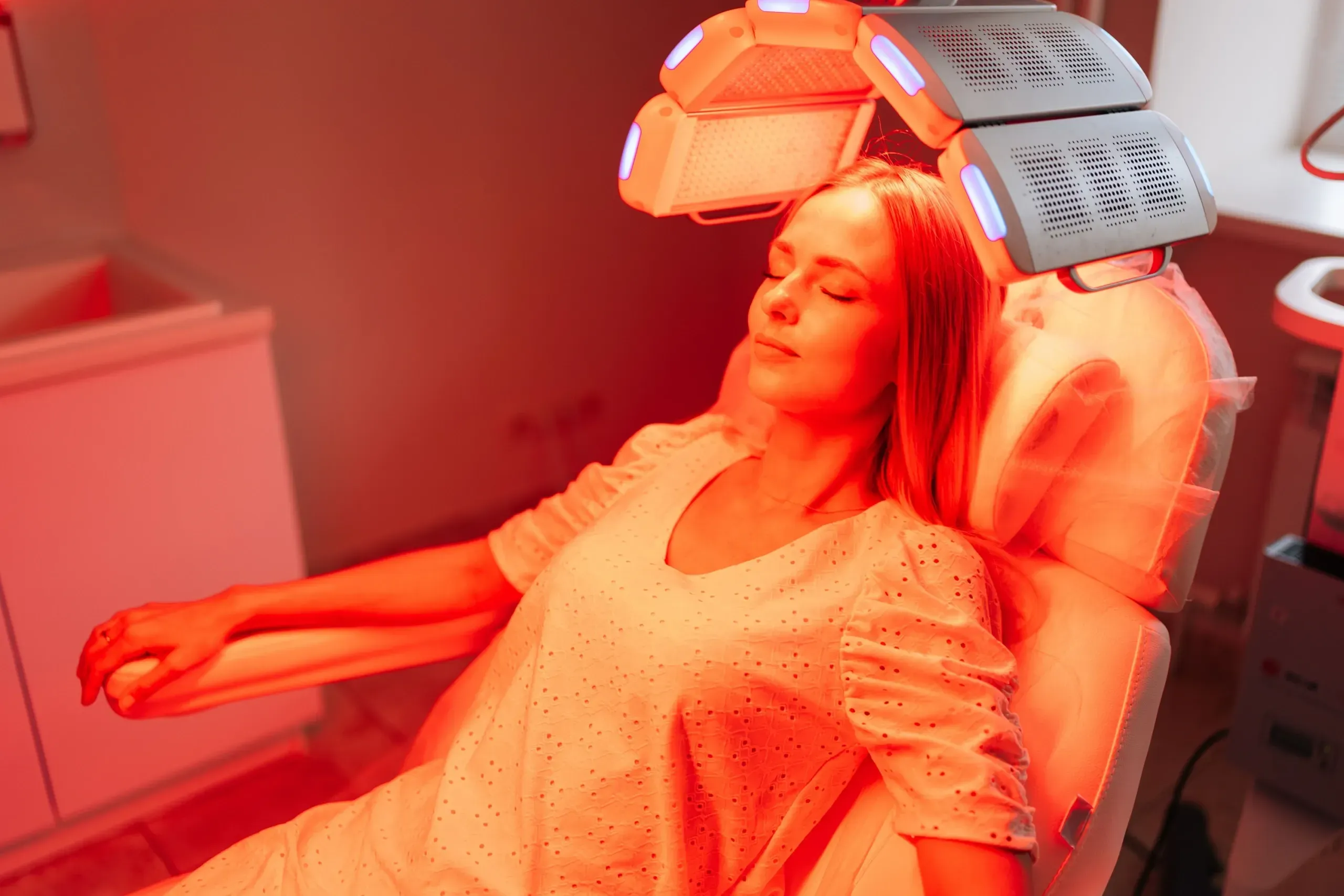
Red light therapy, also known as low-level laser therapy (LLLT) or photobiomodulation, has emerged as one of the most promising non-invasive treatments for hair loss. Using specific wavelengths of light to stimulate cellular activity in hair follicles, this technology offers a drug-free, pain-free approach to slowing hair loss and promoting regrowth.
At DSI Hair, we incorporate LLLT into many of our patients' treatment plans, including the FDA-cleared Revian Red cap. In this guide, we explore the science behind red light therapy, review the clinical evidence, and help you understand what to expect.
What Is Red Light Therapy?
Red light therapy uses low-energy light in the red and near-infrared spectrum to stimulate biological processes at the cellular level. When applied to the scalp, these specific wavelengths penetrate the skin to reach hair follicles.
Key Terminology
- LLLT (Low-Level Laser Therapy): The original term, referring to the use of low-power lasers
- Photobiomodulation: The broader, more accurate scientific term encompassing both laser and LED light sources
- LED therapy: Uses light-emitting diodes instead of lasers. Modern devices often combine both
Wavelengths That Matter
Not all light is created equal when it comes to hair growth:
- Red light (630-670nm): The most studied range for hair growth stimulation. This wavelength penetrates 2-3mm into tissue, reaching the hair follicle bulb
- Near-infrared (810-850nm): Penetrates deeper (up to 5mm) and may provide additional benefits for scalp tissue
- The therapeutic window: Wavelengths between 600-1000nm are considered the "optical window" where light can effectively penetrate tissue without being absorbed by water or hemoglobin
- Optimal wavelength for hair: Studies consistently show 650-670nm as the sweet spot for hair follicle stimulation
How Red Light Therapy Works
Mitochondrial Stimulation
The primary mechanism of action involves the mitochondria, the powerhouses of every cell:
- Cytochrome c oxidase, a photoacceptor in the mitochondrial electron transport chain, absorbs red and near-infrared light
- This absorption increases electron transport activity, boosting the production of adenosine triphosphate (ATP)
- ATP is the energy currency of cells. More ATP means more energy for cellular processes, including hair growth
- The increased ATP drives multiple downstream effects that benefit hair follicles
ATP Production and Cellular Energy
The cascade of effects from increased ATP includes:
- Enhanced cell metabolism and proliferation in the dermal papilla
- Increased production of growth factors including VEGF, HGF, and IGF-1
- Stimulation of hair follicle stem cells in the bulge region
- Upregulation of genes involved in hair growth
- Improved cellular repair mechanisms
Extending the Anagen Phase
One of the most important effects of LLLT on hair is its ability to influence the hair growth cycle:
- It helps transition follicles from the telogen (resting) phase back into anagen (active growth)
- It extends the duration of the anagen phase, allowing hair to grow longer and thicker
- It delays the catagen (regression) phase
- These cycle modifications result in a greater percentage of actively growing follicles at any given time
Improved Blood Flow
Red light therapy promotes better circulation in the scalp:
- It stimulates the release of nitric oxide, a potent vasodilator
- Increased blood flow delivers more oxygen and nutrients to follicles
- Better circulation removes waste products that can impair follicle function
- Enhanced microcirculation around the follicular unit supports healthier growth
Anti-Inflammatory Effects
Chronic low-grade inflammation around hair follicles contributes to miniaturization:
- LLLT reduces pro-inflammatory cytokines in the scalp
- It modulates the local immune response
- Reduced inflammation creates a more favorable environment for hair growth
- This mechanism may be particularly beneficial for alopecia areata
Clinical Studies and Evidence
The evidence supporting LLLT for hair loss has grown substantially:
- A 2014 meta-analysis in Lasers in Surgery and Medicine reviewed 11 randomized controlled trials and found that LLLT significantly increased hair density compared to sham devices
- A 2017 study published in the American Journal of Clinical Dermatology found that LLLT increased hair count by an average of 20-25 hairs per square centimeter over 26 weeks
- A large 2019 review in the Journal of the American Academy of Dermatology concluded that LLLT is a safe and effective treatment for androgenetic alopecia in both men and women
- Studies show that LLLT works synergistically with minoxidil, with combination therapy outperforming either treatment alone
- Response rates vary, but most studies report clinically meaningful improvement in 50-70% of users
FDA-Cleared Devices
Several LLLT devices have received FDA 510(k) clearance for the treatment of androgenetic alopecia:
Laser Caps and Helmets
- Revian Red: Uses dual-wavelength LED technology (620nm and 660nm). This is the device we recommend at DSI Hair for its clinical backing and ease of use. Treatment time is just 10 minutes per day
- Capillus: A laser cap with various models offering different numbers of laser diodes
- iRestore: Available in laser and LED combinations
- Theradome: A helmet-style device using clinical-grade lasers
Laser Combs
- HairMax LaserComb: One of the first FDA-cleared devices for hair loss
- HairMax LaserBand: A more convenient band-style device
- These require manual movement across the scalp, which some users find less convenient than caps
Key Features to Look For
- FDA clearance specifically for hair growth (not just general wellness)
- Appropriate wavelength (630-670nm range)
- Sufficient power output and coverage area
- Clinical studies supporting the specific device
- Comfortable design that allows consistent use
Ideal Candidates for Red Light Therapy
LLLT works best for certain types and stages of hair loss:
Good candidates:
- Early to moderate androgenetic alopecia (Norwood II-V for men, Ludwig I-II for women)
- Individuals with miniaturized but still-living follicles
- People who prefer drug-free treatment approaches
- Those who want to complement medical or surgical treatment
- Patients who cannot tolerate minoxidil or finasteride
Less ideal candidates:
- Completely bald areas where follicles have been destroyed
- Advanced scarring alopecias
- Hair loss caused by active infections or inflammatory conditions that need medical treatment first
Combining LLLT with Other Treatments
LLLT is most effective as part of a multimodal approach:
LLLT Plus Minoxidil
- LLLT may enhance minoxidil absorption and effectiveness
- The combination addresses multiple growth pathways simultaneously
- Several studies show superior results compared to either treatment alone
LLLT Plus Finasteride
- Finasteride blocks the hormonal driver (DHT) while LLLT energizes follicle cells
- A complementary approach that attacks hair loss from different angles
LLLT Plus PRP
- PRP provides growth factors while LLLT enhances cellular responsiveness
- The combination may amplify the benefits of both treatments
LLLT After Hair Transplant
- Can improve graft survival and accelerate growth of transplanted follicles
- Helps maintain non-transplanted hair around the treatment area
- Many transplant surgeons recommend LLLT as part of the post-operative protocol
Risks and Side Effects
LLLT has an excellent safety profile:
- No significant adverse effects have been reported in clinical trials at therapeutic doses
- No UV radiation: Unlike sunlight, LLLT devices emit no ultraviolet light
- Non-thermal: The light energy does not heat tissue or cause burns
- No drug interactions: Safe to use with any medication
- Possible initial shedding: Some users report a brief period of increased shedding as dormant follicles are stimulated into a new growth cycle. This is temporary and a sign the treatment is working
- Eye safety: Avoid looking directly into laser diodes. Most cap-style devices are designed to prevent this
Comparisons to Hair Transplants
LLLT and hair transplants serve different purposes:
| Factor | LLLT | Hair Transplant |
|---|---|---|
| Invasiveness | Non-invasive | Minimally invasive surgical procedure |
| Best for | Preservation and mild regrowth | Significant restoration of bald areas |
| Permanence | Requires ongoing use | Permanent results |
| Cost | $200-$3,000 for device | $5,000-$25,000+ |
| Recovery | None | 1-2 weeks |
| Results timeline | 3-6 months | 9-12 months for full growth |
Many patients benefit from both: LLLT to maintain existing hair and enhance transplanted follicles, combined with ARTAS transplantation for areas of significant loss.
Types of Hair Loss Treated by LLLT
- Androgenetic alopecia: The primary FDA-cleared indication, with the most evidence
- Telogen effluvium: May help accelerate recovery by promoting anagen reentry
- Alopecia areata: Emerging evidence suggests potential benefit, particularly in combination with other treatments
- Chemotherapy-induced hair loss: Some studies suggest LLLT may accelerate regrowth after chemotherapy
- Post-transplant: Enhances graft survival and growth
Tips for Getting the Best Results
- Be consistent: Use your device as directed. Most require daily or every-other-day use. Skipping sessions reduces effectiveness
- Be patient: Results typically take three to six months to become noticeable. Twelve months provides a better picture of full results
- Clean scalp: Use LLLT on clean, dry hair for optimal light penetration. Product buildup can block light
- Combine treatments: LLLT alone may produce modest results. Combining with minoxidil, finasteride, or PRP significantly enhances outcomes
- Track progress: Take photos in consistent lighting every month to document changes. Subtle improvements may not be noticeable day-to-day
- Use the right device: Invest in an FDA-cleared device with clinical evidence supporting its effectiveness
- Follow the protocol: Do not use more than recommended. More light is not necessarily better, and there is a biphasic dose response where too much exposure can actually inhibit results
Buying Guide
When choosing an LLLT device:
- Verify FDA clearance: Look for 510(k) clearance specifically for promoting hair growth
- Check the wavelength: Should be in the 630-670nm range for primary emission
- Assess coverage: Full-cap designs treat the entire scalp evenly
- Consider convenience: Shorter treatment times (10 minutes versus 30 minutes) improve compliance
- Read clinical data: Prefer devices with published peer-reviewed studies
- Budget: Devices range from $200 to $3,000. More expensive does not always mean more effective
- Warranty: A good warranty indicates manufacturer confidence in the device
Frequently Asked Questions
How long does it take to see results? Most patients notice initial improvements at three months, with continued improvement through twelve months of consistent use.
Can I use LLLT if I have no hair? LLLT works on miniaturized follicles, not dead ones. Completely bald areas with no follicles will not respond. However, areas with thin, vellus hair may respond.
Is LLLT safe for long-term use? Yes. Studies extending beyond two years show continued safety with no cumulative side effects.
Can I use LLLT during pregnancy? While no adverse effects have been reported, most manufacturers recommend consulting your physician before use during pregnancy.
Does insurance cover LLLT devices? Most insurance plans do not cover LLLT devices for hair loss. However, they may be eligible for HSA or FSA purchases.
Conclusion
Red light therapy represents a safe, effective, and convenient tool in the fight against hair loss. Backed by growing clinical evidence and FDA clearance, LLLT devices offer a non-invasive option that can be used alone or in combination with other treatments for enhanced results.
At DSI Hair, we help patients integrate LLLT into comprehensive treatment plans tailored to their specific type and stage of hair loss. Whether you are looking to maintain what you have, regrow what you have lost, or optimize the results of other treatments, red light therapy may be the missing piece in your hair restoration strategy.
Schedule a consultation with DSI Hair today to learn which combination of treatments will give you the best results.