PCOS and Hair Loss: Why It Happens and How to Treat It | DSI Hair
PCOS can cause androgenic hair loss through elevated androgens and DHT. Dr. Khanna at DSI Hair in Algonquin, IL explains the connection and treatment options.
How polycystic ovary syndrome causes androgenic hair thinning and what evidence-based treatments are available.
By DSI Hair Team | Dermatology Specialists of Illinois Hair | Algonquin, IL
Introduction
Hair loss associated with polycystic ovary syndrome (PCOS) is one of the most frequently misunderstood and undertreated forms of female hair loss. Many women spend years trying topical products or supplements that address surface-level symptoms without touching the hormonal root cause. Understanding why PCOS causes hair loss and which treatments actually work requires understanding the endocrine biology driving the problem.
At DSI Hair in Algonquin, Illinois, we see a significant number of female patients whose hair loss has a hormonal or endocrine component. PCOS is among the most common underlying causes in women of reproductive age. Here is the complete, evidence-based explanation.
What PCOS Is and How Common It Is
Polycystic ovary syndrome is the most common endocrine disorder in women of reproductive age, estimated to affect 8 to 13 percent of women globally. It is characterized by a combination of elevated androgens (hyperandrogenism), irregular or absent ovulation, and polycystic ovarian morphology on ultrasound. Patients are typically diagnosed when they present with two of these three criteria.
PCOS is not a single condition but a spectrum, and the relative prominence of each feature varies considerably between patients. Some women with PCOS have predominantly hormonal symptoms such as acne, hirsutism, and hair loss. Others present primarily with metabolic features including insulin resistance and weight management difficulty. Most have some combination of both.
How PCOS Causes Hair Loss
The hair loss associated with PCOS is androgenic alopecia, the same biological process that drives male pattern hair loss, driven by elevated circulating androgens and the sensitivity of hair follicles to dihydrotestosterone (DHT).
In PCOS, the ovaries and, in some cases, the adrenal glands produce excess androgens, particularly testosterone and androstenedione. Some of this circulating testosterone is converted to DHT by the enzyme 5-alpha reductase in the scalp and elsewhere. DHT binds to androgen receptors in genetically susceptible hair follicles and initiates a process called miniaturization: the follicle progressively produces shorter, thinner, and lighter hairs until it eventually produces no visible hair at all.
Insulin resistance, which is present in approximately 65 to 70 percent of women with PCOS, amplifies this process. Elevated insulin stimulates the ovaries to produce more androgens and reduces the liver's production of sex hormone binding globulin (SHBG), the protein that binds and inactivates circulating testosterone. Less SHBG means more free testosterone available to be converted to DHT.
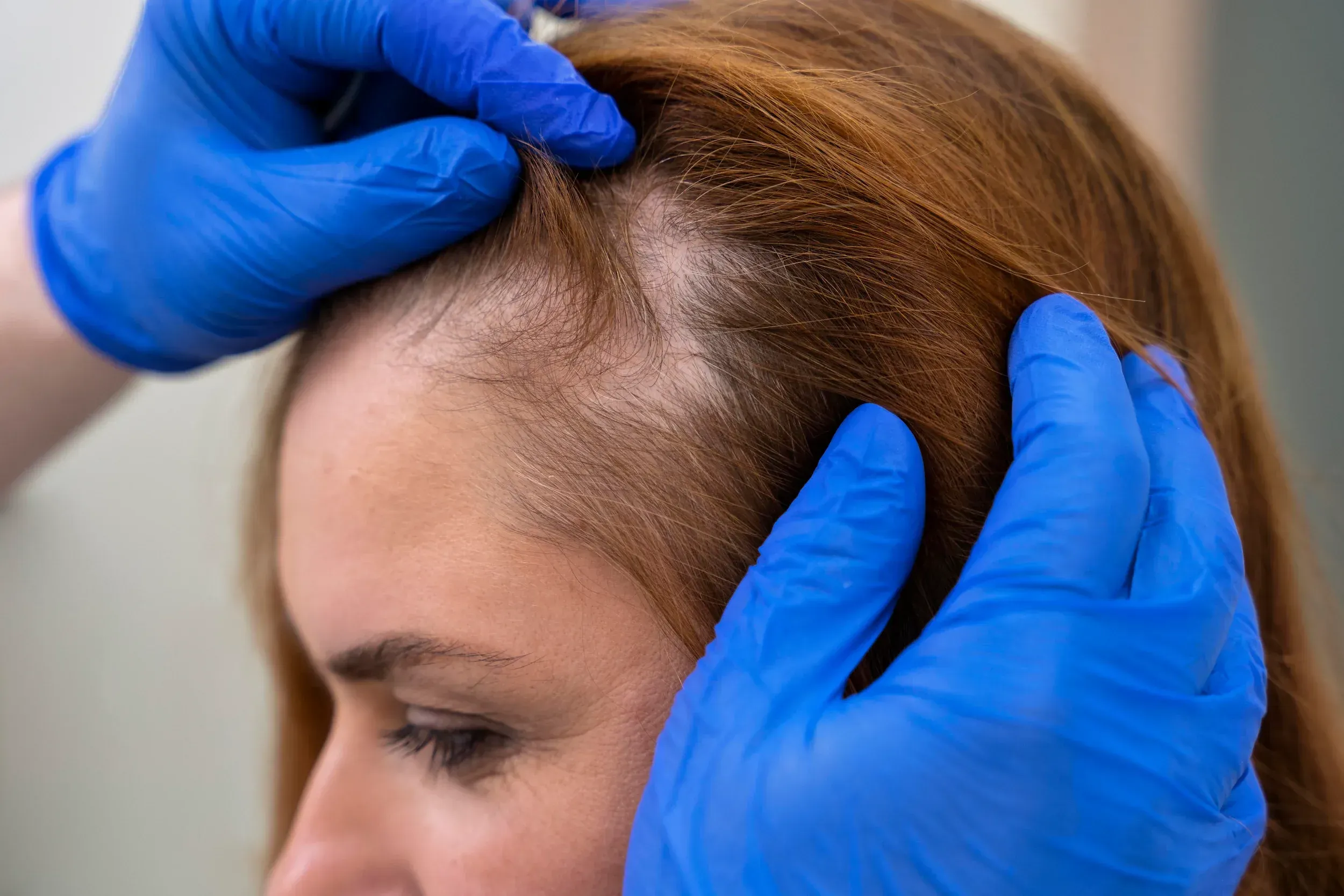
The pattern of hair loss in PCOS typically follows the Ludwig classification for female androgenetic alopecia: diffuse thinning across the crown and top of the scalp, with preservation of the frontal hairline. Some women develop a more male-like Norwood-pattern recession at the temples, particularly those with higher androgen levels.
Reference: Androgenetic alopecia in women with PCOS: clinical and hormonal features, Journal of the European Academy of Dermatology and Venereology
How PCOS Hair Loss Differs from Other Types
| Feature | PCOS Hair Loss | Telogen Effluvium | Alopecia Areata |
|---|---|---|---|
| Mechanism | Androgenic follicular miniaturization | Acute shedding from stress/illness/hormonal change | Autoimmune follicular attack |
| Pattern | Ludwig diffuse thinning, crown/top | Diffuse, all-over shedding | Patchy or band-like loss |
| Timeline | Gradual, progressive over years | Rapid shedding then regrowth | Variable, often episodic |
| Reversible? | Partial with treatment; not fully without | Usually self-resolving within months | Variable; depends on severity |
| Associated symptoms | Acne, irregular periods, hirsutism | Recent stressor, illness, postpartum | Other autoimmune conditions possible |
| First-line treatments | Spironolactone, minoxidil, finasteride | Address underlying trigger; nutritional support | Corticosteroids, JAK inhibitors |
Diagnosing PCOS-Related Hair Loss
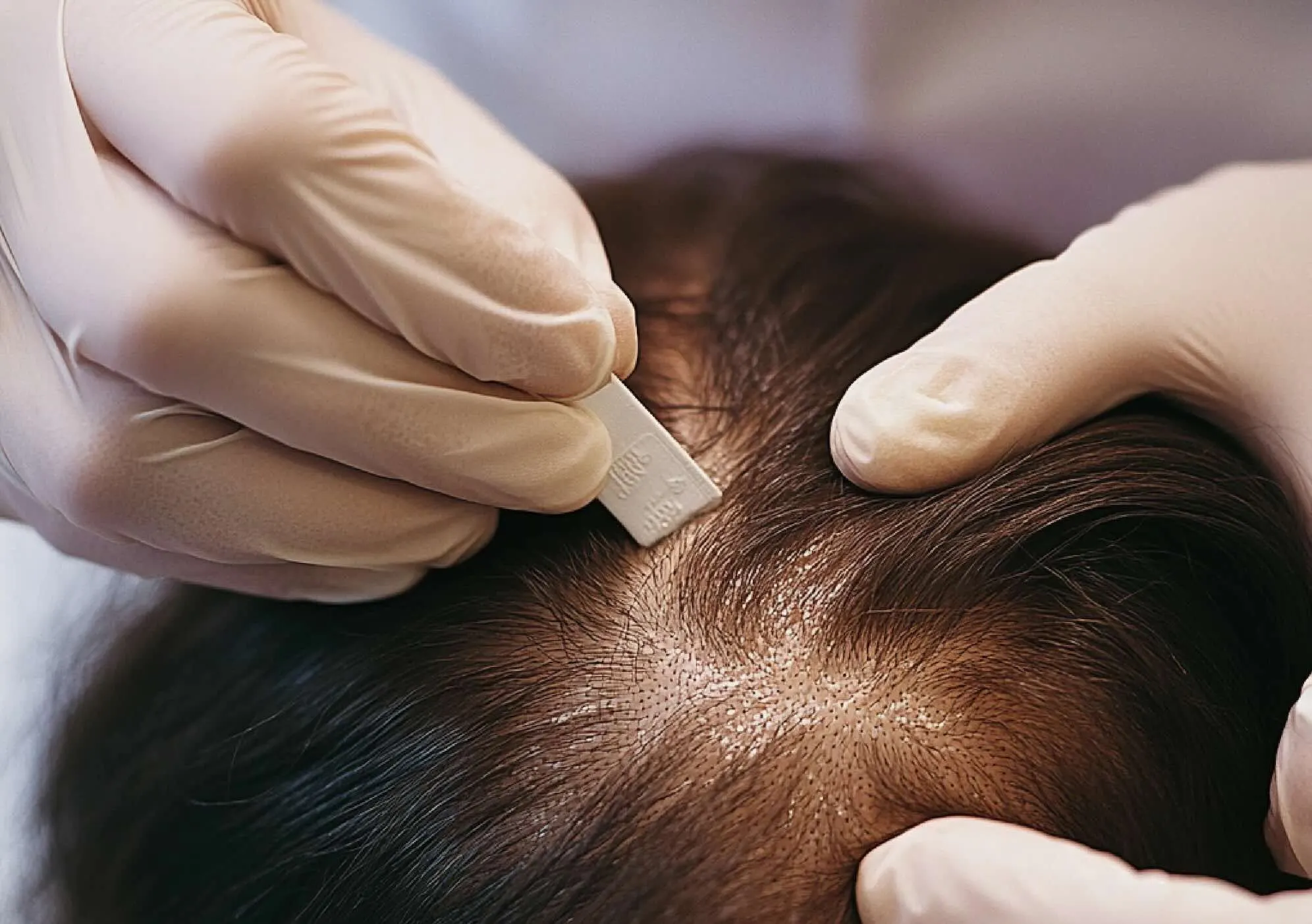
A comprehensive evaluation at DSI Hair for suspected PCOS-related hair loss includes a detailed symptom history, scalp and hair pull test, and a blood panel including free and total testosterone, DHEA-S, androstenedione, sex hormone binding globulin, fasting insulin, and thyroid function tests (since thyroid disorders can coexist and cause similar hair loss patterns).
Some patients have PCOS-related hair loss without a formal PCOS diagnosis, either because their ovarian and menstrual symptoms are subclinical or because the diagnosis has not been made. The pattern of hair loss, combined with relevant lab findings, guides treatment decisions regardless of whether a PCOS diagnosis is formally present.
Treatment Options for PCOS Hair Loss
Spironolactone
Spironolactone is an aldosterone antagonist that also blocks androgen receptors, reducing the effect of DHT on hair follicles. At doses of 100 to 200 mg daily, it is the most widely prescribed treatment for androgenic hair loss in women with PCOS. It requires regular blood pressure monitoring and is contraindicated in pregnancy. Many women see meaningful improvement in shedding and some improvement in density within 6 to 12 months of consistent use.
Oral Minoxidil
Low-dose oral minoxidil (0.5 to 2.5 mg daily for women) has become increasingly important in female androgenetic alopecia, including PCOS-related hair loss. It works through a different mechanism than spironolactone (vasodilation and extension of the anagen growth phase) and is often used alongside it for additive benefit. Response rates are favorable, and many women find oral minoxidil more convenient than twice-daily topical application.
Topical Minoxidil
The 2% topical minoxidil formulation is FDA-approved for female pattern hair loss and is a standard first-line option. It is effective for maintaining existing hair and producing modest density improvements in some patients. The 5% formulation (FDA-approved for men) is sometimes used off-label in women and may produce stronger results but with a higher risk of unwanted facial hair growth.
Finasteride
Finasteride is not FDA-approved for women and is contraindicated in women who are or may become pregnant due to the risk of birth defects in male fetuses. However, finasteride is sometimes prescribed off-label for postmenopausal women with significant PCOS-related androgenetic alopecia where other treatments have been insufficient. The decision requires careful discussion of risks and benefits with your provider.
PRP Hair Restoration
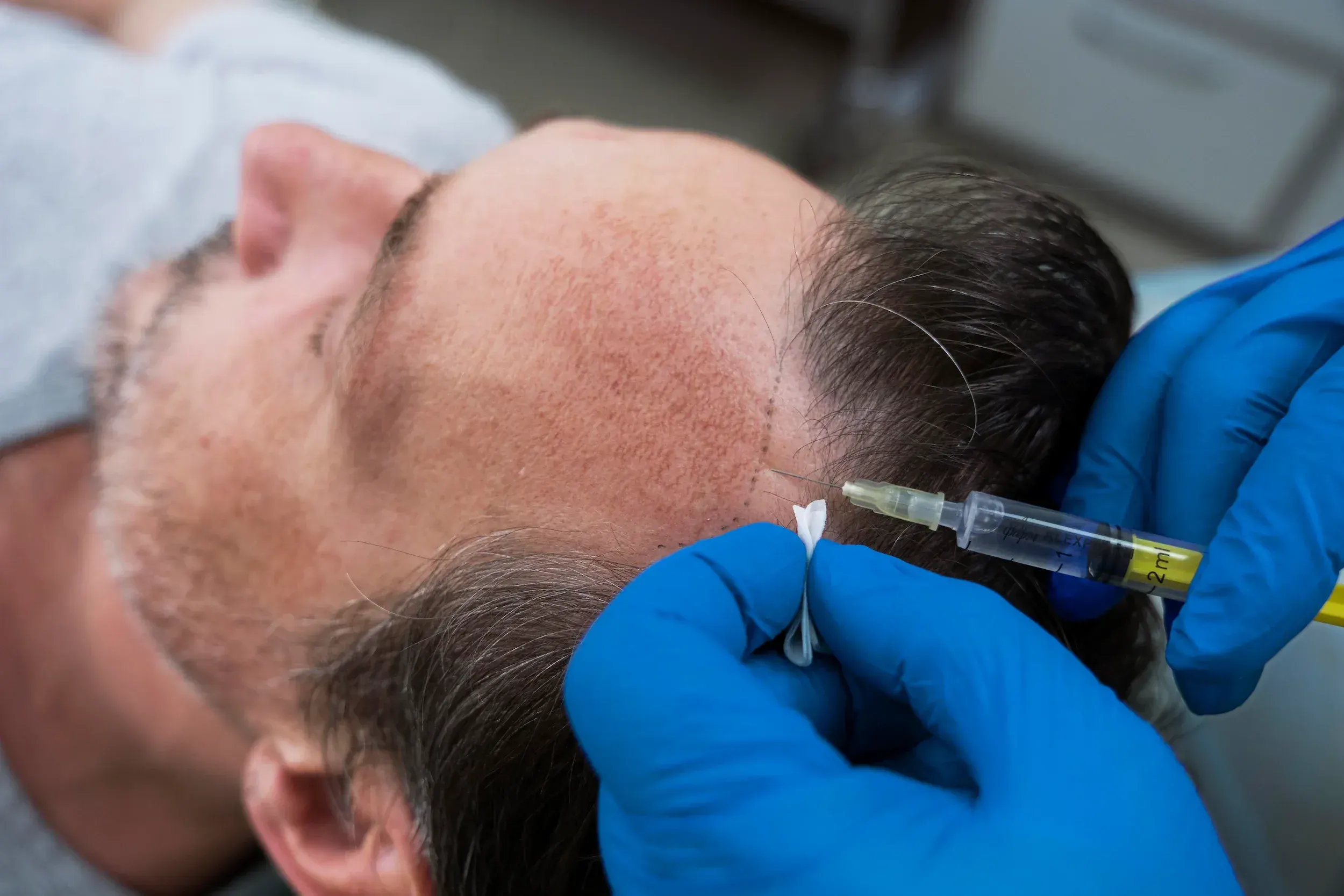
PRP hair restoration delivers concentrated growth factors directly to the scalp, stimulating follicular activity through mechanisms independent of the androgen pathway. PRP does not lower androgens or DHT, but it can improve the quality and density of existing hair in miniaturizing follicles. It is most effective when used alongside hormonal treatment (spironolactone, minoxidil) rather than as a standalone approach for PCOS-related loss.
Hair Transplant
For women with advanced PCOS-related hair loss and stable, non-progressive androgenetic alopecia, hair transplant surgery may be appropriate. Candidacy requires adequate donor hair density and confirmation that the hormonal environment is adequately managed with medical therapy before surgery to prevent continued loss of transplanted and native hairs.
At DSI Hair, we serve patients from Algonquin, Huntley, Barrington, Woodstock, and across northern Illinois, including the greater Chicago area.
Schedule a Consultation at DSI Hair in Algonquin, IL
DSI Hair | Algonquin IL | Multiple Illinois Locations | dsihair.com
Schedule Your Free Consultation
Frequently Asked Questions: PCOS and Hair Loss
Will treating my PCOS stop my hair loss?
Treating the hormonal imbalance driving PCOS, through birth control pills, metformin for insulin resistance, or spironolactone, can slow or halt progressive hair loss by reducing circulating androgens. However, hair follicles that have already miniaturized significantly may not fully recover. This is why early intervention produces better outcomes: treating PCOS-related hair loss before miniaturization is advanced gives you more follicles to work with and more potential for improvement.
Can PCOS hair loss be reversed?
Partial reversal is achievable for many patients, meaning reduced shedding, improved hair quality, and modest density improvement in follicles that are still active. Complete reversal of advanced androgenetic alopecia is not realistic with medical treatment alone. For patients with significant density loss, hair transplant surgery following hormonal stabilization can provide meaningful restoration of coverage in thinned areas.
How long does treatment take to work?
Most hormonal treatments for PCOS-related hair loss require 6 to 12 months of consistent use before meaningful improvement is visible. The hair growth cycle is slow, and treatment works by shifting follicles from the miniaturization trajectory back toward normal, which happens gradually. Many patients see a reduction in shedding within 3 to 4 months before noticing any improvement in density.
Does DSI Hair treat female hair loss from PCOS in Illinois?
Yes. DSI Hair in Algonquin, Illinois treats female hair loss including PCOS-related androgenetic alopecia. Dr. Vic Khanna, MD and Dr. Lauren Boshnick provide comprehensive evaluation and treatment planning for women with hormonally-driven hair loss across our Algonquin, Huntley, Barrington, and Woodstock locations.
Medical Disclaimer: This article is for informational purposes only. Please consult a qualified hair restoration specialist before starting any treatment. Individual results vary.