Can Dandruff Cause Hair Loss? What the Research Shows | DSI Hair
Dandruff can contribute to hair loss, but the relationship is more nuanced than most realize. DSI Hair in Algonquin, IL explains what the research shows.
The relationship between dandruff and hair loss is real but indirect. Here is what the evidence actually says.
By DSI Hair Team | Dermatology Specialists of Illinois Hair | Algonquin, IL
Introduction
Dandruff is one of the most common scalp conditions in the world, affecting approximately 50 percent of adults at some point in their lives. Hair loss affects a significant portion of the same population. The overlap naturally raises the question: does dandruff cause hair loss, or are the two simply common conditions that frequently coexist?
The honest answer is that dandruff can contribute to hair loss under specific circumstances, but it is not a direct cause in the way that, say, a hormonal imbalance or genetic susceptibility is. The relationship is real, mechanistic, and worth understanding, but it is also more nuanced than the internet tends to suggest.
What Dandruff Actually Is
Dandruff, medically known as seborrhea, is characterized by flaking and scaling of the scalp. In its more significant form, it is classified as seborrheic dermatitis, which involves not just flaking but also inflammation, redness, and oiliness of the affected skin.
The primary driver of both dandruff and seborrheic dermatitis is a yeast called Malassezia globosa. This yeast is naturally present on most human scalps, but in some individuals, it proliferates and metabolizes scalp sebum in a way that produces oleic acid, an irritant that triggers an inflammatory response in genetically susceptible skin. The resulting inflammation drives accelerated skin cell turnover, producing the characteristic visible flakes.
Seborrheic dermatitis is distinct from a simple dry scalp, which produces fine, dry flakes without significant inflammation or oiliness. The distinction matters for treatment: dry scalp responds to moisture, while seborrheic dermatitis requires antifungal treatment.
How Dandruff and Seborrheic Dermatitis Can Affect Hair
Dandruff itself, meaning the presence of Malassezia and scalp flaking, does not directly attack or damage hair follicles the way some other conditions do. However, several secondary mechanisms can link persistent dandruff and seborrheic dermatitis to hair thinning over time:
Scalp Inflammation
Seborrheic dermatitis produces chronic, low-grade scalp inflammation. Persistent inflammation around the hair follicle can disrupt the normal hair growth cycle, potentially pushing more follicles into the resting (telogen) phase prematurely and accelerating shedding. This is particularly relevant for patients who already have some degree of androgenetic alopecia, where follicles may be more sensitive to inflammatory signals.
A 2018 study published in Skin Appendage Disorders found that patients with seborrheic dermatitis showed significantly higher rates of telogen hairs on trichoscopy compared to controls, suggesting that scalp inflammation does influence the hair cycle independent of other hair loss causes.
Scratching and Mechanical Trauma
An itchy scalp from seborrheic dermatitis leads to scratching. Repeated, vigorous scratching can physically damage hair shafts, cause breakage near the scalp, and over time contribute to follicular trauma in affected areas. This is not the same as true hair loss (follicular miniaturization or destruction), but repeated trauma can temporarily reduce the appearance of density and increase visible shedding.
Follicular Plugging
Heavy scaling from seborrheic dermatitis can accumulate around follicular openings. While this does not typically cause permanent hair loss in itself, severe follicular plugging may theoretically impede emerging hair shafts and contribute to a compromised scalp environment for optimal hair growth.
Does Treating Dandruff Help with Hair Loss?
For patients whose hair loss or shedding is at least partially driven by scalp inflammation from seborrheic dermatitis, treating the underlying condition can improve the scalp environment and reduce inflammatory shedding. This is not a hair restoration treatment, but it removes a contributing factor.
| Treatment | Target | Mechanism |
|---|---|---|
| Ketoconazole shampoo (1-2%) | Malassezia yeast | Antifungal; reduces yeast population and associated inflammation |
| Zinc pyrithione shampoo | Malassezia and inflammation | Antifungal and antimicrobial; available over the counter |
| Selenium sulfide shampoo | Malassezia | Reduces yeast proliferation; useful for moderate seborrhea |
| Coal tar shampoo | Inflammation and cell turnover | Slows excessive skin cell production; useful for scaling |
| Topical corticosteroids | Acute inflammation | Reduces inflammatory response; used for flares, not long-term |
| Ciclopirox shampoo | Malassezia and bacteria | Broad antifungal; prescription-strength alternative to ketoconazole |
Ketoconazole has attracted additional interest in hair loss research because it appears to have a mild anti-androgenic effect at the follicle level in addition to its antifungal activity. Some studies have observed improved hair counts in androgenetic alopecia patients using ketoconazole shampoo, though it is not FDA-approved as a hair loss treatment and should not be considered a substitute for first-line medical therapy.
When to Be Concerned: Seborrheic Dermatitis vs. Other Scalp Conditions
Several scalp conditions present with symptoms that overlap with seborrheic dermatitis but have different causes and more significant hair loss implications:
- Scalp psoriasis: thicker, silvery plaques rather than greasy scales; can affect follicular units more significantly in severe cases
- Lichen planopilaris: a scarring alopecia that can mimic seborrheic dermatitis early; critical to identify because it destroys follicles permanently
- Tinea capitis: fungal infection of the scalp with patchy hair loss; more common in children but possible in adults; requires systemic antifungal treatment
- Folliculitis decalvans: a form of scarring alopecia associated with bacterial follicular inflammation; can initially resemble severe dandruff
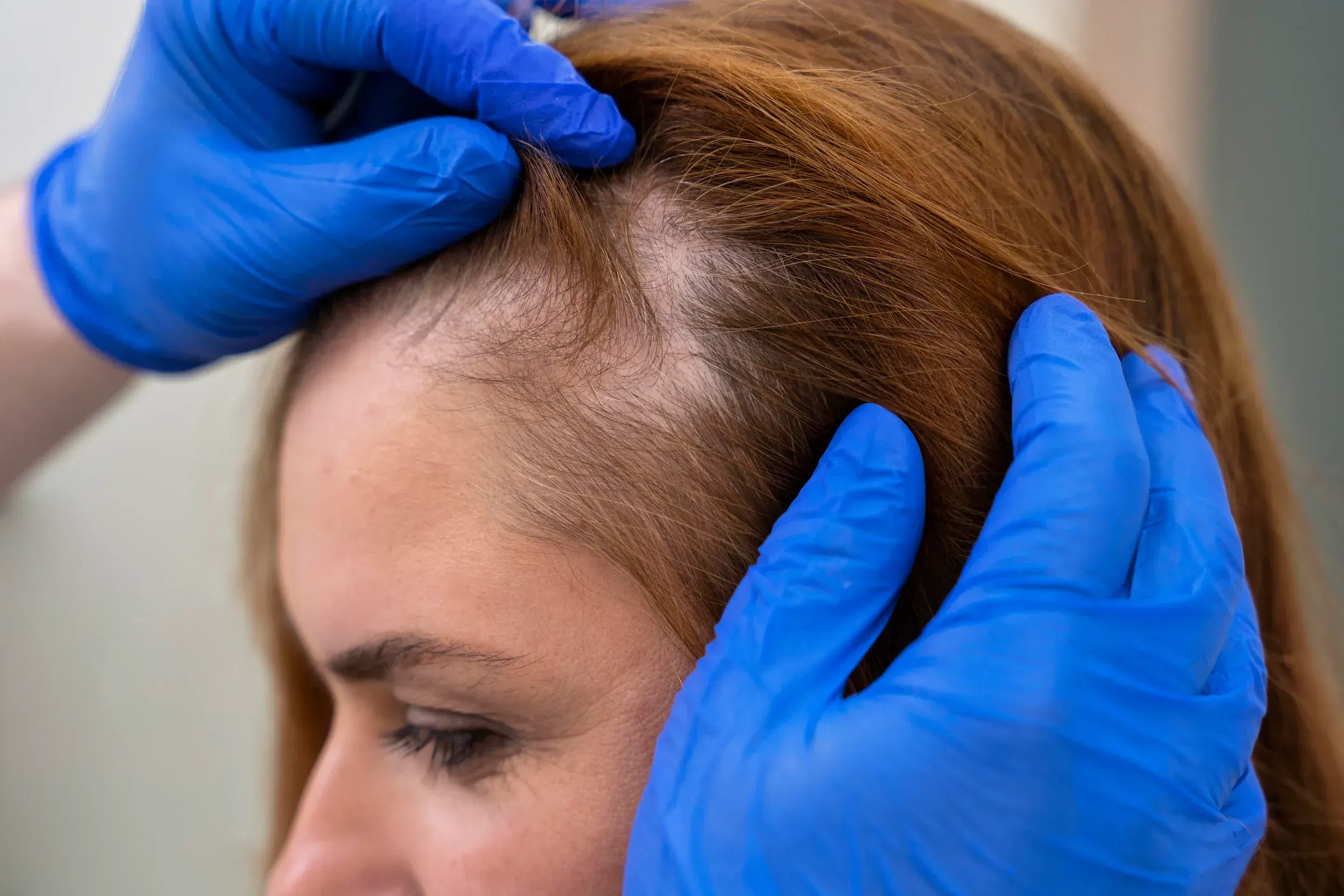
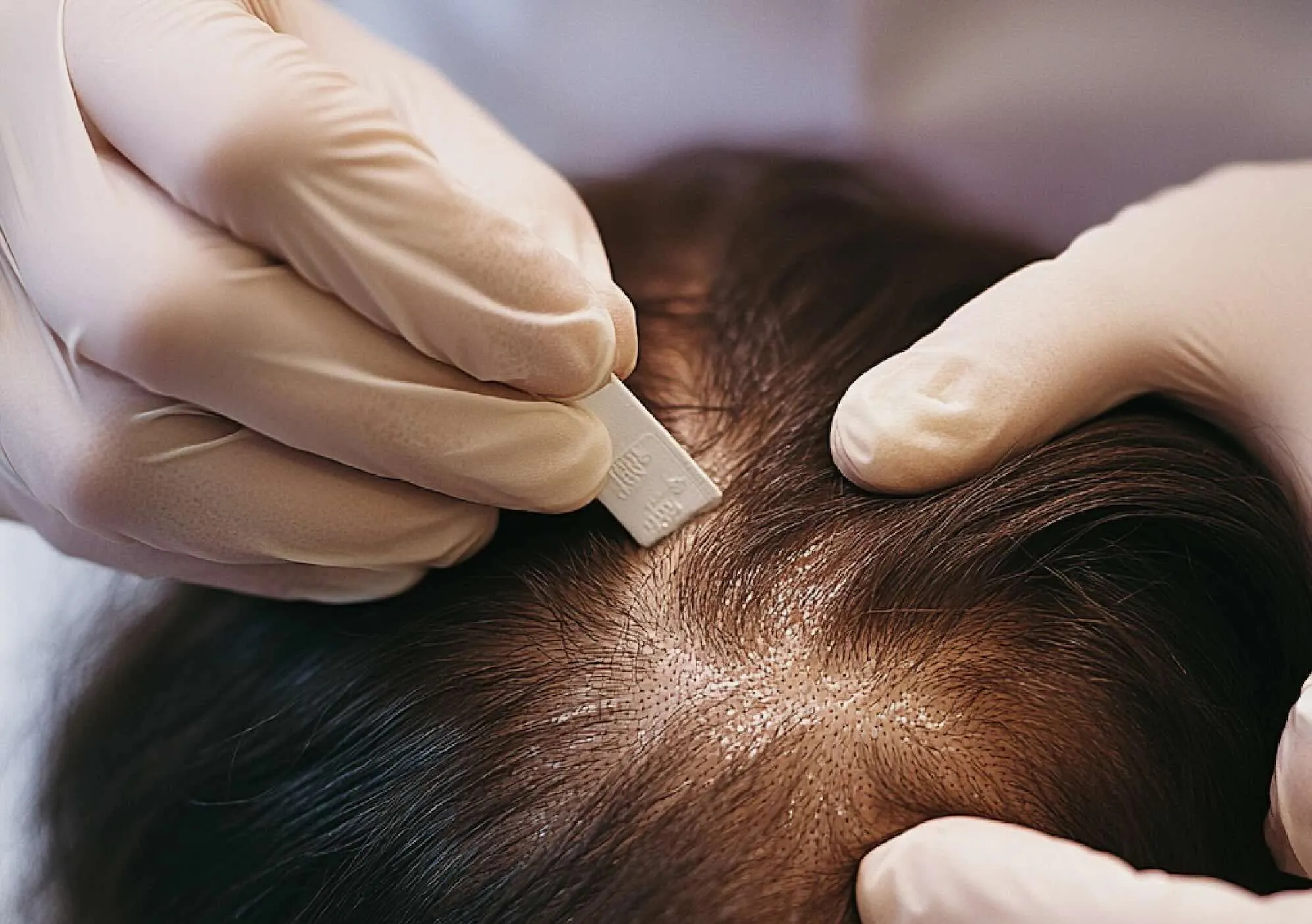
Any patient with significant hair loss alongside scalp symptoms, particularly patchy hair loss, follicular scarring, or symptoms not responding to standard dandruff treatment, should be evaluated by a dermatologist. At DSI Hair, we perform scalp dermoscopy and trichoscopy to evaluate the follicular and scalp environment in detail.
The Bottom Line on Dandruff and Hair Loss
Dandruff alone, in the mild-to-moderate form most people experience, does not cause significant permanent hair loss. However, seborrheic dermatitis with significant inflammation can contribute to increased shedding and may worsen hair loss in patients who are already predisposed to androgenetic alopecia. Treating the scalp condition is appropriate and beneficial, but patients experiencing meaningful hair thinning should also be evaluated for androgenetic alopecia, hormonal causes, and nutritional deficiencies as the more likely primary drivers.
Learn more about our approach to hair loss treatment at DSI Hair and our evaluation of thinning hair concerns.
DSI Hair serves patients throughout Algonquin, Huntley, Barrington, Woodstock, and the greater Chicago area.
Schedule a Consultation at DSI Hair in Algonquin, IL
DSI Hair | Algonquin IL | Multiple Illinois Locations | dsihair.com
Schedule Your Free Consultation
Frequently Asked Questions: Dandruff and Hair Loss
Will treating my dandruff grow my hair back?
If your hair shedding is primarily driven by scalp inflammation from seborrheic dermatitis, reducing that inflammation may improve the scalp environment and decrease inflammatory shedding. However, dandruff treatment will not reverse androgenetic alopecia or other primary causes of hair loss. If you are experiencing meaningful thinning or recession rather than just increased shedding, a comprehensive hair loss evaluation is appropriate.
Can scratching a dandruff scalp cause permanent hair loss?
Occasional scratching does not cause permanent hair loss. Chronic, vigorous scratching over many years can cause physical damage to hair shafts and follicular trauma, but it does not typically destroy follicles permanently the way autoimmune or scarring conditions can. The inflammation associated with seborrheic dermatitis is more relevant to hair loss than the mechanical effect of scratching in most patients.
Is ketoconazole shampoo good for hair loss?
Ketoconazole shampoo treats the seborrheic dermatitis that may be contributing to a compromised scalp environment. Some studies also suggest a mild anti-androgenic effect at the follicle level that may modestly reduce DHT-mediated miniaturization. It is a reasonable adjunct in patients with both dandruff and androgenetic alopecia, but it does not replace evidence-based hair loss treatments like finasteride or minoxidil.
How do I know if my hair loss is from dandruff or something else?
Dandruff-related shedding tends to involve diffuse, all-over loss of shed hairs (telogen hairs with the white bulb visible) rather than progressive thinning in a pattern. Pattern thinning at the crown, hairline recession, or diffuse frontal thinning more strongly suggests androgenetic alopecia. A hair pull test, trichoscopy, and blood work at a DSI Hair consultation can identify the primary cause and guide appropriate treatment.
Does DSI Hair evaluate scalp conditions in Algonquin, IL?
Yes. DSI Hair performs scalp dermoscopy and comprehensive hair loss evaluation at our Algonquin, Huntley, Barrington, and Woodstock, Illinois locations. Dr. Vic Khanna, MD is a board-certified dermatologist with 25+ years of experience in hair restoration.
Medical Disclaimer: This article is for informational purposes only. Please consult a qualified hair restoration specialist before starting any treatment. Individual results vary.