
Does PRP Work for Hair Loss? Evidence, Results, and Who It's Right For | DSI Hair
PRP for hair loss has real clinical evidence behind it, but results depend on who uses it and how it's applied. The DSI Hair team in Algonquin, IL explains what the research shows.
A clear look at what PRP actually does for hair follicles, what the research shows, and when it is the right choice.
By DSI Hair Team | Dermatology Specialists of Illinois Hair | Algonquin, IL
Introduction
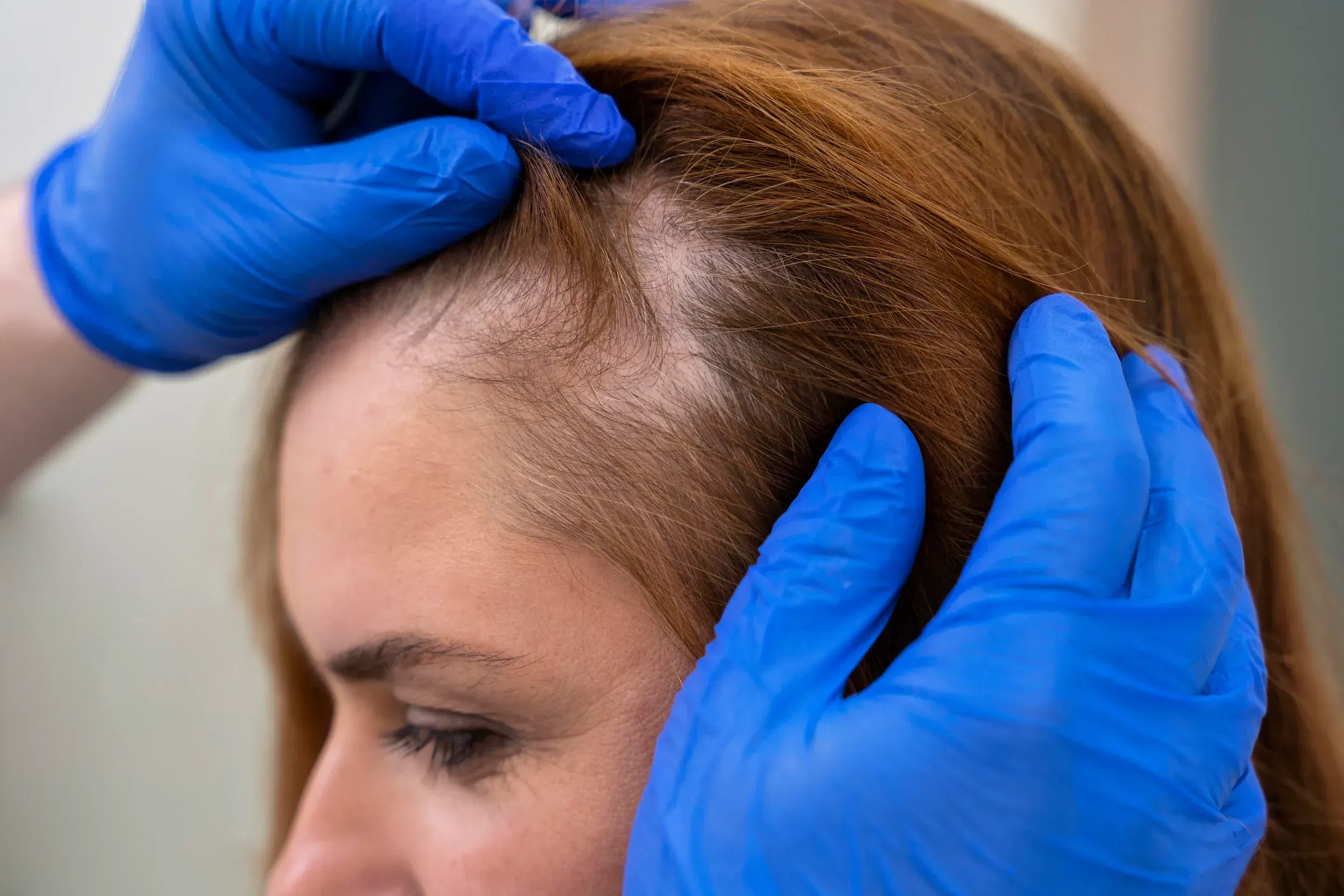
PRP, or platelet-rich plasma, has become one of the most discussed non-surgical hair restoration options available. Unlike supplements or topical products, it is a clinical procedure with a growing body of peer-reviewed evidence supporting its effectiveness. But like any treatment, the results are not universal, and understanding who benefits most, and what realistic outcomes look like, is essential before committing to a treatment series.
How PRP Works for Hair Loss
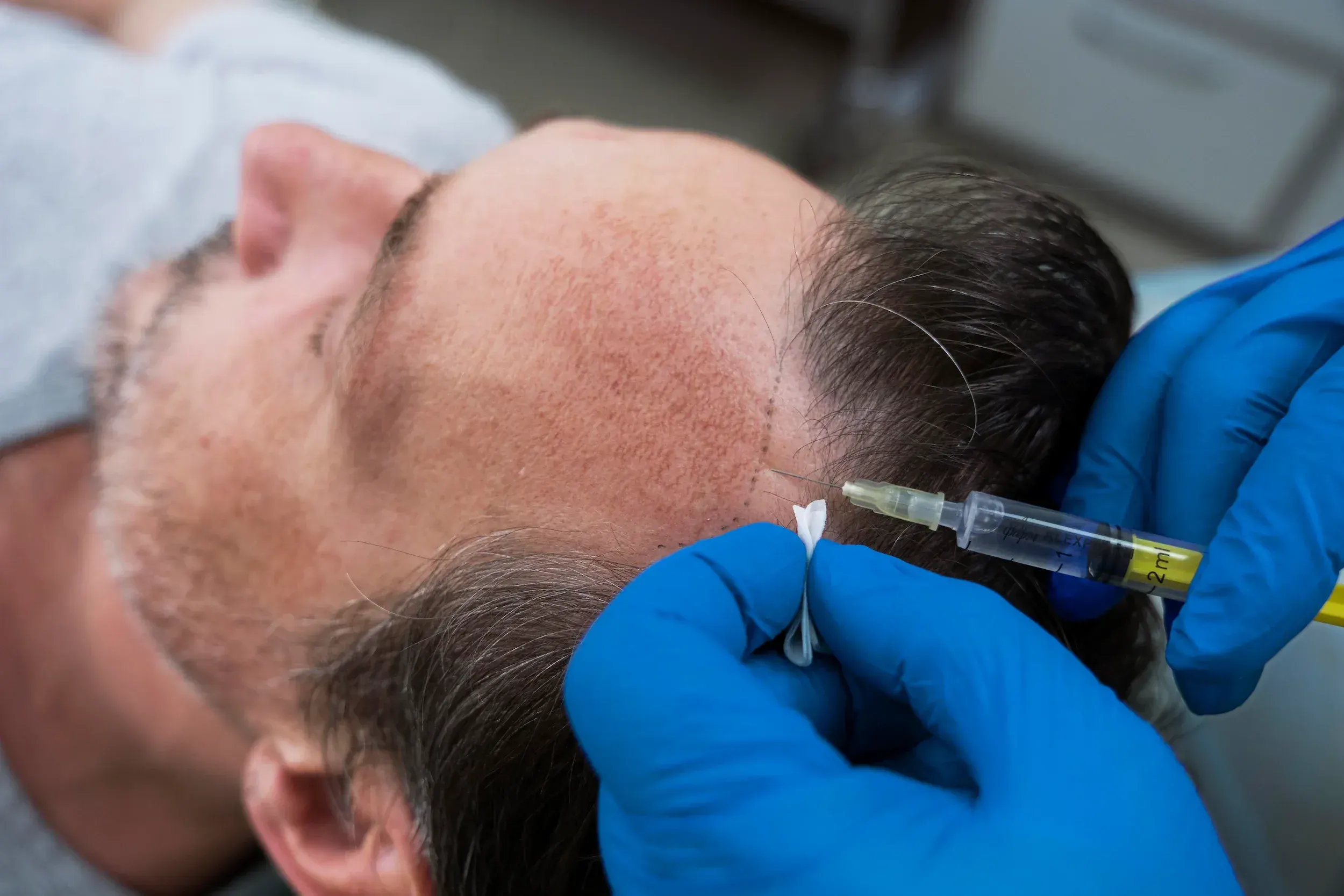
PRP therapy begins with a simple blood draw from the patient's arm, typically 20 to 60 ml depending on the protocol. The blood is then placed in a centrifuge and spun at precisely calibrated speeds to separate the components by density. The result is a platelet-rich plasma fraction that contains platelet concentrations 5 to 10 times higher than baseline whole blood.
Platelets contain a dense payload of growth factors including PDGF, VEGF, TGF-beta, IGF-1, and EGF, all of which play documented roles in cell proliferation, tissue repair, and angiogenesis. When injected into the scalp in areas of hair thinning, these growth factors:
- Stimulate follicular stem cells to re-enter the active growth phase
- Extend the duration of the anagen (growth) phase of the hair cycle
- Increase blood supply to miniaturizing follicles through new capillary formation
- Reduce follicular inflammation that contributes to progressive miniaturization in androgenetic alopecia
Reference: PRP for androgenetic alopecia: mechanism and clinical outcomes, Journal of the American Academy of Dermatology
What the Clinical Evidence Shows
The evidence base for PRP in hair loss has grown substantially since 2010. A 2019 systematic review in Dermatologic Surgery analyzed 19 studies involving 460 patients and found that PRP treatment produced statistically significant increases in hair count, hair thickness, and hair density compared to control groups across the majority of studies.
Key findings from the literature:
- Hair count: most studies show increases of 20 to 40% in hair follicle density in treated areas at 3 to 6 months post-treatment
- Hair thickness: improvements in shaft diameter are consistently reported, reflecting reduced follicular miniaturization
- Androgenetic alopecia response: both male and female pattern hair loss respond to PRP, with studies showing benefit at Norwood stages II through V in men and Ludwig grades I through III in women
- Safety: no serious adverse events have been reported across the reviewed studies; side effects are limited to transient scalp tenderness and occasional temporary scalp redness
PRP is one of the few hair loss interventions with clinical evidence from randomized controlled trials. It is not a cure, but it is a legitimate treatment that produces measurable improvements in follicular activity when applied correctly in appropriate candidates.
Who Benefits Most from PRP
PRP produces the best results in specific patient populations:
- Early to moderate androgenetic alopecia: patients with Norwood II-V (men) or Ludwig I-III (women) who still have active but miniaturizing follicles respond most strongly. PRP cannot restore follicles that have been completely lost
- Patients with some hair miniaturization but not complete baldness in the target area: follicular activity must still be present for PRP to stimulate it
- Patients seeking to maintain results following hair transplant: PRP supports the survival and growth of transplanted grafts when applied during or after the transplant procedure
- Patients on established medical therapy: PRP as an adjunct to finasteride and/or minoxidil consistently shows better outcomes than either treatment alone
PRP is less appropriate for patients with complete scarring alopecia in the target area, severe immunocompromise, platelet disorders, or patients taking anticoagulation therapy that cannot be safely paused.
What to Expect: Timeline and Results
| Timepoint | What Typically Happens |
|---|---|
| During treatment | Scalp injections, 30-45 min session. Mild discomfort managed with topical numbing |
| Days 1-3 | Mild scalp tenderness, occasional temporary redness. Normal |
| Months 1-2 | No visible change typical. Follicular activity is stimulated beneath the surface |
| Month 3 | Early improvements in hair density and texture often become noticeable |
| Months 4-6 | Most significant visible improvement. Hair count and thickness increases measurable |
| After initial series (3 sessions) | Maintenance sessions every 6-12 months to sustain results |
Most patients complete an initial series of 3 sessions spaced 4 to 6 weeks apart before evaluating results. Patience is essential: PRP works by stimulating a biological process that unfolds over months, not days. Evaluating results before 3 to 4 months have passed after the final session is premature.
PRP vs. Other Hair Loss Treatments
| Treatment | Mechanism | Best For | Evidence Level |
|---|---|---|---|
| PRP | Growth factor stimulation of follicles | Early-moderate androgenetic alopecia | Strong RCT evidence |
| Finasteride | DHT reduction via 5-alpha reductase inhibition | Male androgenetic alopecia | FDA-approved, extensive data |
| Minoxidil | Extends anagen phase, increases follicle size | Male and female pattern hair loss | FDA-approved, extensive data |
| PRP + Finasteride | Dual mechanism: hormonal + growth factor | Most androgenetic alopecia cases | Superior to monotherapy |
| ARTAS Hair Transplant | Surgical follicular unit extraction and implantation | Advanced hair loss with stable donor area | Permanent, surgical |
| Laser Cap (Revian) | Low-level light stimulates follicular activity | Mild-moderate hair loss, maintenance | Moderate evidence |
PRP at DSI Hair in Algonquin, IL
At DSI Hair, PRP hair restoration is performed by our clinical team under the supervision of Dr. Vic Khanna, MD. Our protocol uses a double-centrifugation process to achieve consistent, clinically relevant platelet concentrations. We use precise injection patterns mapped to each patient's specific areas of thinning for targeted coverage.
PRP at DSI Hair is available as a standalone treatment or as part of a combination protocol with finasteride, minoxidil, or our Revian laser cap. We serve patients throughout the greater Chicago area, including Algonquin, Huntley, Barrington, and Woodstock, Illinois.
- PRP Hair Restoration at DSI Hair
- Minoxidil at DSI Hair: often combined with PRP for enhanced results
Schedule a PRP Consultation at DSI Hair in Algonquin, IL
DSI Hair | Algonquin IL | Multiple Illinois Locations | dsihair.com
Schedule Your Free Consultation
Frequently Asked Questions: PRP for Hair Loss
How many PRP sessions do I need?
Most patients complete an initial series of 3 sessions spaced 4 to 6 weeks apart. After the initial series, maintenance sessions every 6 to 12 months help sustain the follicular stimulation and prevent the ongoing miniaturization that would otherwise continue without treatment.
Is PRP painful?
PRP injections involve multiple injections across the scalp, which patients often describe as mild to moderate discomfort similar to a scalp tattoo. At DSI Hair, we apply topical numbing cream before the procedure to significantly reduce discomfort. Most patients tolerate the treatment well and return to normal activities the same day.
Can PRP regrow completely lost hair?
PRP stimulates active but miniaturizing follicles. It cannot regrow hair from follicles that have been completely scarred or that have been inactive for many years. This is why early treatment produces the best results. For areas with complete hair loss and no remaining follicular activity, a hair transplant is the appropriate treatment.
Does DSI Hair offer PRP in Algonquin?
Yes. PRP hair restoration is available at DSI Hair in Algonquin, Huntley, Barrington, and Woodstock, Illinois.
Medical Disclaimer: This article is for informational purposes only. Please consult a qualified hair restoration specialist before starting any treatment. Individual results vary.