
Hair Loss After COVID: Causes, Timeline, and What Actually Helps
Millions of people recovering from COVID infection have experienced sudden, diffuse shedding weeks or months after their illness, often just when they thought the worst was behind them.
Medically reviewed by Dr. Vic Khanna, MD, Board-Certified Dermatologist | DSI Hair, Algonquin, IL
Of all the lingering effects of COVID-19, hair loss is one of the most distressing, and one of the least expected. Millions of people recovering from COVID infection have experienced sudden, diffuse shedding weeks or months after their illness, often just when they thought the worst was behind them.
The reassuring news is that COVID hair loss is not the same as permanent hair loss. It follows a distinct and well-understood pattern, it has a predictable timeline, and for most people it resolves on its own. But for others, particularly those with underlying predispositions to hair loss, the shedding can be more prolonged or can accelerate a pre-existing condition that then requires treatment.
At DSI Hair in Algonquin, Illinois, our board-certified dermatology team has seen a significant number of patients presenting with post-COVID hair loss since 2020. Here is what you need to know.
Reference: Post-COVID hair loss: prevalence and associated factors, International Journal of Dermatology (2022)
Why Does COVID Cause Hair Loss?
The primary mechanism behind COVID hair loss is a condition called telogen effluvium. To understand why this happens, it helps to understand the normal hair growth cycle.
Hair follicles cycle through three phases: anagen (active growth, lasting 2 to 6 years), catagen (transition, lasting 2 to 3 weeks), and telogen (resting and shedding, lasting 2 to 3 months). Normally, approximately 10 to 15% of follicles are in telogen at any given time, which accounts for the 50 to 100 hairs shed per day that is considered normal.
When the body experiences a significant physiological stressor, whether that is a high fever, a serious infection, surgery, childbirth, or extreme emotional stress, it can trigger a mass shift of follicles from the growth phase into the resting phase simultaneously. The result is diffuse shedding 2 to 3 months after the triggering event, which is exactly the pattern reported by COVID patients.
Research published in major dermatology journals has found that up to 20 to 30% of COVID patients experience telogen effluvium following infection. Several mechanisms appear to contribute:
- Fever: Even moderate fever can disrupt the hair growth cycle by altering the thermal environment of follicles
- Systemic inflammation: The cytokine storm associated with COVID infection creates a pro-inflammatory state that disrupts normal follicle cycling
- Metabolic and nutritional depletion: Serious illness depletes nutrients including zinc, iron, and vitamin D that are critical for hair follicle function
- Psychological stress: The anxiety, uncertainty, and disruption associated with a COVID diagnosis and recovery adds a psychological stressor on top of the physiological one
- Direct viral effects: Some research suggests ACE2 receptors present in hair follicles may allow direct viral interaction, though telogen effluvium remains the dominant mechanism
Reference: COVID-19 and telogen effluvium: mechanisms and clinical review, Journal of Dermatological Treatment (2022)
What Does COVID Hair Loss Look Like?
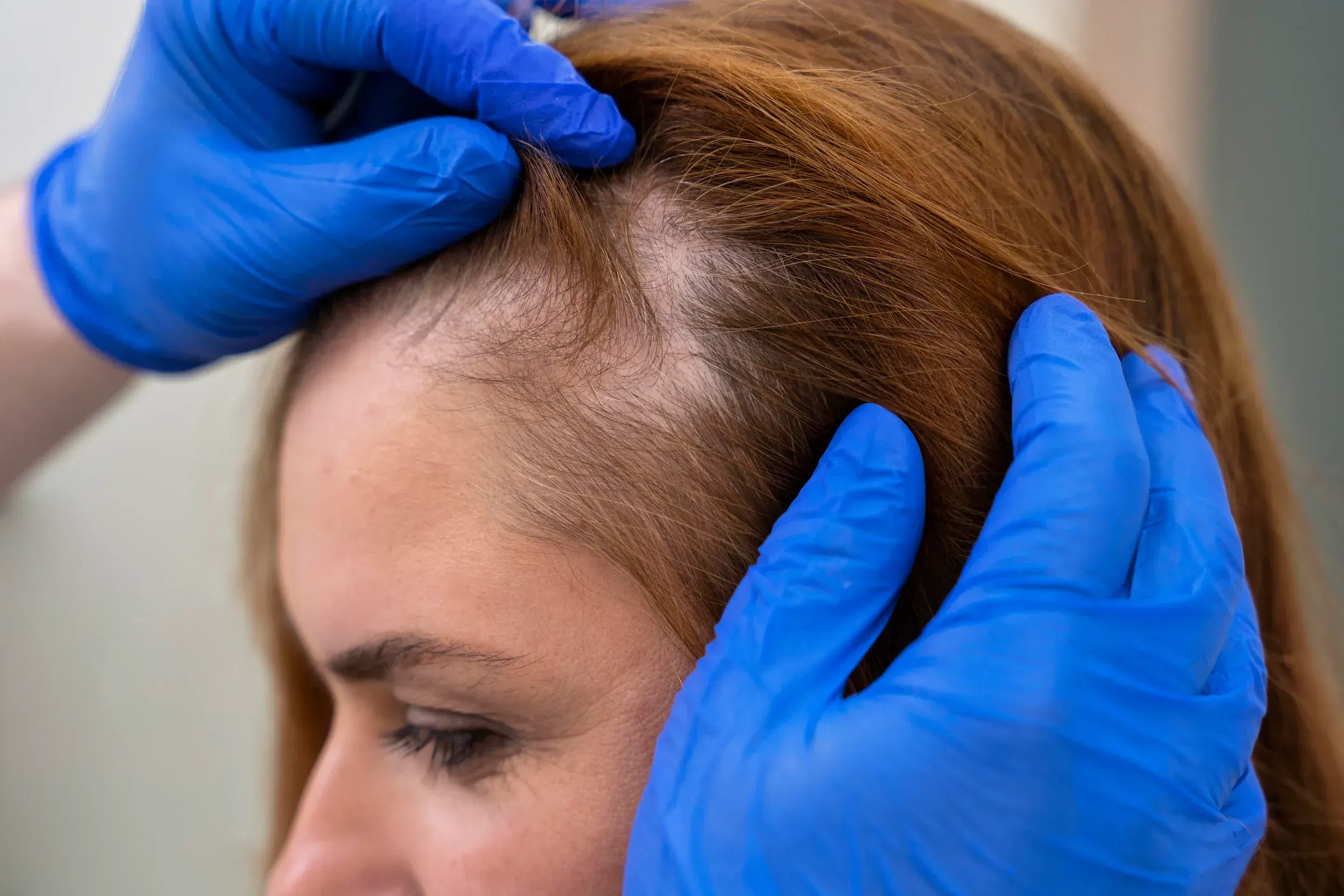
COVID hair loss presents as diffuse shedding across the entire scalp rather than a receding hairline or bald patches. Patients typically notice:
- Large amounts of hair on the pillow, in the shower drain, or on hairbrushes
- Visible overall thinning rather than a localized bald spot
- Hair that feels less dense when pulled into a ponytail
- Shedding that seems disproportionate to what feels normal
This pattern is distinct from androgenetic alopecia (pattern baldness), which follows a predictable template of recession or crown thinning, and from alopecia areata, which presents as circular bald patches. Recognizing the difference matters because the treatment approach and prognosis differ significantly.
The most important thing to understand about COVID hair loss: you are shedding hairs that were already in the telogen (resting) phase. The follicles themselves are not damaged. This is why the shedding is temporary for most people.
When Does COVID Hair Loss Start and How Long Does It Last?
The timing follows a predictable pattern based on the biology of telogen effluvium:
2 to 3 Months After Infection
This is when most patients first notice shedding. The lag reflects the 2 to 3 month telogen phase between the follicle entering rest and the hair physically shedding. Many patients are alarmed because they feel fully recovered from COVID by this point, making the hair loss feel disconnected from the illness.
Months 3 to 6: Peak Shedding
Shedding typically peaks around months 3 to 4 and then begins to taper. For most patients, the worst of the shedding is over within 6 months of onset.
Months 6 to 12: Regrowth
As shedding subsides, new growth begins to emerge. Patients often notice short, fine baby hairs along the hairline and scalp. Full recovery of baseline density typically takes 9 to 12 months from the onset of shedding, though this varies based on the severity of the initial trigger and individual factors.
Beyond 12 Months: When to Seek Evaluation
If shedding continues beyond 6 months without tapering, or if density has not meaningfully improved by 12 months, this warrants a clinical evaluation. In some patients, COVID infection can trigger or accelerate underlying androgenetic alopecia, particularly in individuals with a genetic predisposition. In these cases, the telogen effluvium resolves but ongoing pattern hair loss continues.
Does COVID Hair Loss Affect Women More Than Men?
Yes. Multiple studies have found that women are more frequently affected by post-COVID telogen effluvium than men, with some research citing rates up to twice as high. This may reflect several factors:
- Women have longer hair growth cycles, making the transition from anagen to telogen more noticeable
- Hormonal factors following infection may amplify the follicular stress response in women
- Women are also more commonly affected by the nutritional depletion associated with serious illness
Women with a history of postpartum hair loss are at particularly elevated risk for significant COVID hair loss, as they have a demonstrated predisposition to stress-triggered telogen effluvium.
Treatment Options for COVID Hair Loss
For many patients, no treatment is required beyond patience, nutritional support, and stress management. The shedding resolves as the follicles return to their growth cycle. However, several interventions can support recovery and are recommended for patients with more significant or prolonged shedding.
1. Nutritional Optimization
Correcting deficiencies in nutrients that COVID infection commonly depletes is the first line of support. Key targets include:
- Iron and ferritin: iron deficiency is one of the most common drivers of prolonged telogen effluvium. A serum ferritin level should be checked and optimized to above 40 ng/mL
- Vitamin D: COVID infection is associated with vitamin D depletion, and deficiency independently impairs hair follicle cycling
- Zinc: a critical cofactor for hair follicle cell division and protein synthesis
- Protein: adequate dietary protein provides the amino acids needed for keratin production
2. Minoxidil
Topical or oral minoxidil can shorten the shedding phase and support regrowth by extending the anagen phase and increasing blood flow to follicles. It is appropriate for patients whose shedding is prolonged or who want to accelerate recovery.
3. PRP Hair Restoration
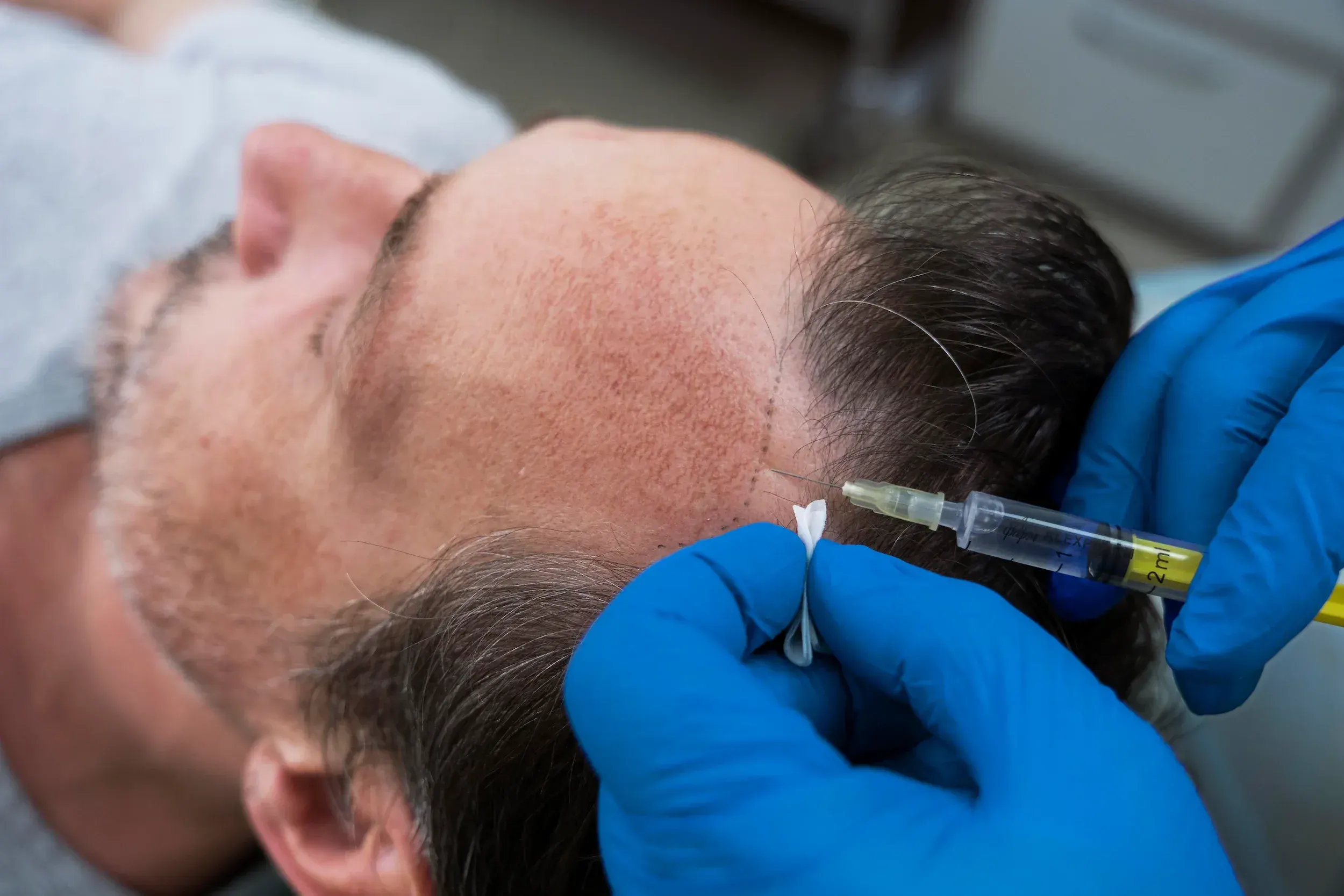
For patients with significant or persistent COVID hair loss, PRP hair restoration (platelet-rich plasma) delivers a concentrated dose of growth factors directly into the scalp to stimulate follicle recovery and accelerate regrowth. PRP is particularly well-suited for post-COVID hair loss because it targets the follicle environment directly, providing the biological signals needed to shift follicles back into active growth.
4. Laser Cap Therapy
The Revian Red Laser Cap delivers low-level laser therapy (LLLT) to the scalp, stimulating follicle activity through photobiomodulation. It is non-invasive, FDA-cleared, and can be used at home. For patients with telogen effluvium, it provides a consistent daily stimulus to support the transition back to active growth.
When Should You See a Dermatologist for COVID Hair Loss?
Most post-COVID telogen effluvium resolves without clinical intervention. However, you should book a consultation if:
- Shedding has continued beyond 6 months without tapering
- You notice a patterned recession or crown thinning in addition to diffuse shedding, which may indicate concurrent androgenetic alopecia
- Density has not meaningfully recovered after 12 months
- Shedding is severe enough to cause visible scalp show-through in areas beyond normal variation
At DSI Hair in Algonquin, Illinois, our board-certified dermatologists can evaluate your specific pattern, order appropriate labs to identify nutritional deficiencies, and design a treatment protocol based on clinical evidence. We serve patients throughout the greater Chicago area including Algonquin, Huntley, Barrington, and Woodstock, IL.
Concerned About Hair Loss After COVID?
Schedule a consultation with DSI Hair's board-certified dermatology team in Algonquin, IL. We will evaluate your hair loss pattern, identify any contributing factors, and build a personalized recovery plan.
Book a Consultation at DSI Hair
Frequently Asked Questions: COVID Hair Loss
Is hair loss from COVID permanent?
For the vast majority of patients, COVID hair loss is temporary. Telogen effluvium causes shedding of hairs that were already in the resting phase; the follicles themselves are not damaged. Most patients see complete recovery within 9 to 12 months. In a minority of patients, COVID infection can trigger or accelerate underlying androgenetic alopecia, in which case the telogen effluvium resolves but the pattern hair loss continues and may require treatment.
How long does COVID hair loss last?
The shedding phase of post-COVID telogen effluvium typically begins 2 to 3 months after infection, peaks around months 3 to 4, and tapers by month 6. Full density recovery generally takes 9 to 12 months from the start of shedding. If you are beyond 6 months of active shedding without improvement, a clinical evaluation is warranted.
Can COVID hair loss happen after vaccination?
Yes, in some cases. A small number of patients have reported telogen effluvium following COVID vaccination, particularly after experiencing significant systemic side effects like high fever or severe fatigue. The mechanism is the same: the physiological stress of the immune response can trigger follicles to shift into telogen. The timeline and recovery pattern are similar to post-infection telogen effluvium.
What treatments help COVID hair loss?
Nutritional support (iron, vitamin D, zinc, protein) is the foundation. Minoxidil can shorten the shedding phase and accelerate regrowth. PRP therapy provides direct follicle stimulation for more significant or persistent cases. Laser cap therapy supports recovery with daily photobiomodulation. Your DSI Hair provider can recommend the appropriate protocol based on your specific pattern and severity.
Does DSI Hair treat COVID hair loss in Illinois?
Yes. DSI Hair's board-certified dermatology team in Algonquin, IL regularly evaluates and treats patients experiencing post-COVID hair loss. We serve patients throughout the northwest Chicago suburbs including Algonquin, Huntley, Barrington, and Woodstock.
Medical Disclaimer: This article is for informational purposes only and does not constitute medical advice. Individual results vary. Please consult with a qualified healthcare provider before beginning any treatment.