
Thyroid Hair Loss: How Hypothyroidism and Hyperthyroidism Affect Your Hair
Thyroid disorders are among the most common and most underdiagnosed causes of hair loss, affecting an estimated 20 million Americans, the majority of whom are women.
Medically reviewed by Dr. Vic Khanna, MD, Board-Certified Dermatologist | DSI Hair, Algonquin, IL
When patients present with diffuse hair thinning, one of the first questions a board-certified dermatologist asks is: have you had your thyroid checked? Thyroid disorders are among the most common and most underdiagnosed causes of hair loss, affecting an estimated 20 million Americans, the majority of whom are women.
The relationship between thyroid function and hair health is direct and biological. Thyroid hormones regulate virtually every aspect of the hair growth cycle, from follicle development and protein synthesis to the rate of cellular division in the hair matrix. When thyroid function is impaired, whether through underactivity or overactivity, hair follicles are among the first tissues to reflect the disruption.
At DSI Hair in Algonquin, Illinois, Dr. Vic Khanna and his board-certified team regularly identify and address thyroid-related hair loss as part of a comprehensive diagnostic approach. Here is what you need to know.
Reference: Thyroid disorders and hair loss: a clinical review, Dermatology and Therapy (2020)
How Thyroid Hormones Affect Hair Growth
Thyroid hormones, primarily thyroxine (T4) and triiodothyronine (T3), are systemic regulators of metabolic function. In hair follicles, these hormones:
- Regulate the duration of the anagen (active growth) phase, which determines how long hair continues to grow before entering the resting phase
- Control the rate of cell division in the hair matrix, the highly proliferative region at the base of the follicle where hair is produced
- Influence keratin production, the structural protein that makes up the hair shaft
- Modulate the follicle's sensitivity to androgens like DHT, which can amplify hair loss susceptibility
- Regulate the follicle's nutrient uptake and energy metabolism
Because hair follicles are among the most metabolically active tissues in the body, requiring rapid cell division every 24 to 72 hours, they are particularly sensitive to disruptions in thyroid hormone availability. Both too little thyroid hormone (hypothyroidism) and too much (hyperthyroidism) can produce significant hair changes, though through different mechanisms.
Hypothyroidism and Hair Loss
Hypothyroidism, the most common thyroid disorder, occurs when the thyroid gland does not produce sufficient T4 and T3 to meet the body's metabolic needs. Hashimoto's thyroiditis, an autoimmune condition, is the most common cause of hypothyroidism in developed countries.
In the context of hair, hypothyroidism produces a constellation of changes:
Diffuse Scalp Hair Thinning
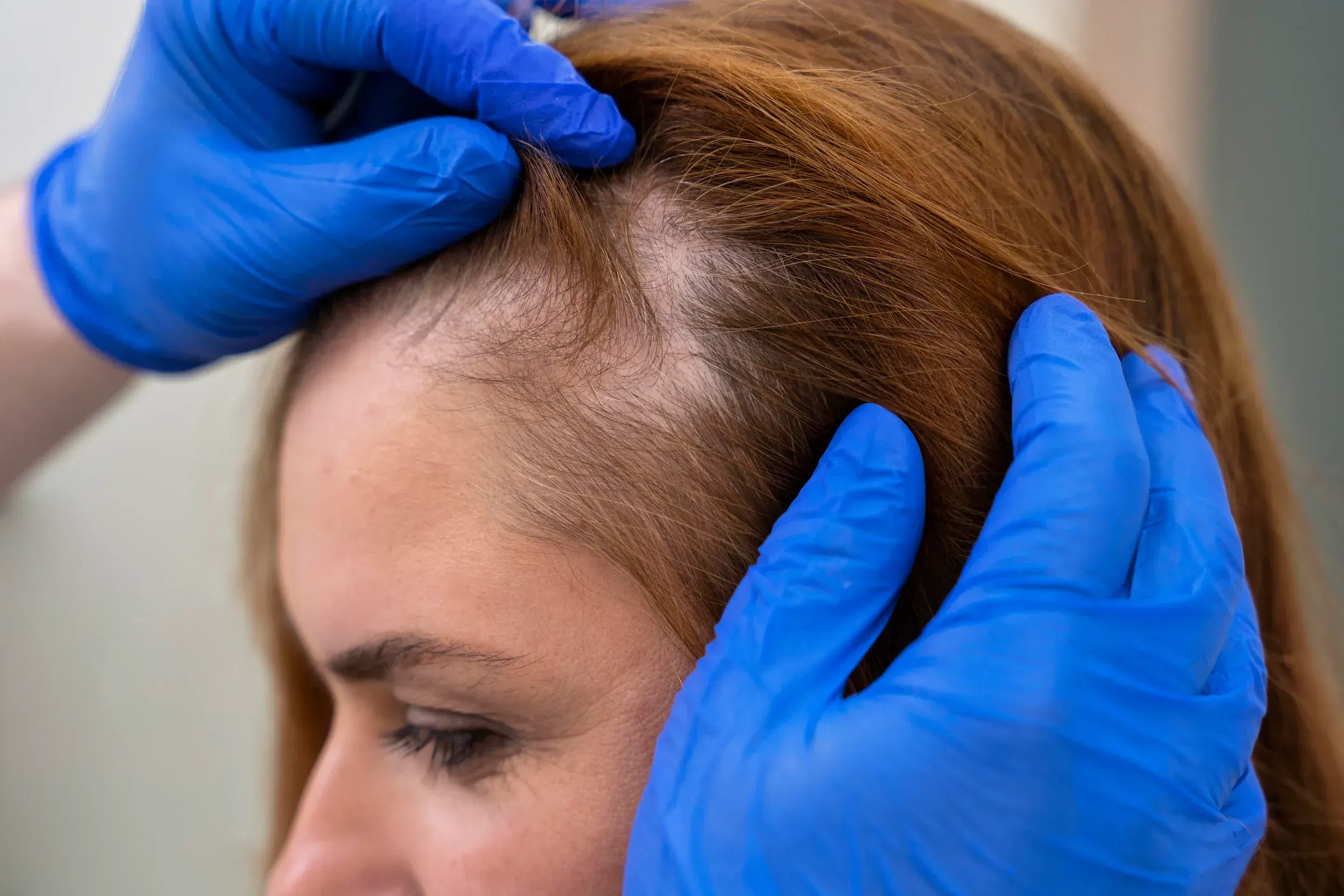
The most common and most distressing hair change in hypothyroidism is diffuse thinning across the entire scalp. Because thyroid hormones regulate anagen duration, low thyroid levels can prematurely shift follicles from growth into the resting phase, producing diffuse shedding similar to telogen effluvium.
Coarse, Brittle Hair Texture
Beyond shedding, the hair that remains often changes in quality. Hypothyroid hair is frequently described as dry, coarse, brittle, and dull, reflecting impaired keratin synthesis and reduced sebum production in the scalp.
Lateral Eyebrow Loss
One of the most distinctive signs of hypothyroidism is thinning of the outer third of the eyebrows. While not universal, this finding is considered a clinical hallmark and is worth noting if you are evaluating thyroid-related hair changes.
Slowed Hair Growth Rate
Patients with hypothyroidism often notice that hair grows more slowly, does not reach the same length as before, and requires less frequent trimming, reflecting a shortened anagen phase.
Hyperthyroidism and Hair Loss
Hyperthyroidism, in which the thyroid produces excess hormones, causes a different but equally significant pattern of hair changes. Graves' disease is the most common cause of hyperthyroidism.
In hyperthyroidism, the accelerated metabolic rate disrupts normal follicle cycling by speeding up the transition from growth to rest. Hair changes include:
- Diffuse shedding: Similar to hypothyroidism but often finer in character
- Soft, fine hair texture: Hyperthyroid hair tends to become very fine and silky, losing volume and structure
- Increased hair fragility: The hair breaks more easily at the shaft level
- Faster growth but premature shedding: Anagen may be shortened, causing hair to grow but shed before reaching full length
An important point: both hypothyroidism and hyperthyroidism can cause hair loss that is nearly indistinguishable on clinical examination. Lab work is essential for accurate diagnosis and for distinguishing thyroid-related hair loss from androgenetic alopecia or other causes.
Does Thyroid Hair Loss Resolve When Thyroid Is Treated?
In many cases, yes, but the timing is important to understand. When thyroid dysfunction is diagnosed and treated with thyroid hormone replacement (for hypothyroidism) or antithyroid medications and radioiodine (for hyperthyroidism), hair loss frequently begins to improve as thyroid levels normalize.
However, the recovery is not immediate. Hair follicles that were prematurely shifted into telogen do not resume growth overnight. Most patients experience:
- Continued shedding for 1 to 3 months after thyroid levels normalize, as the follicles complete their telogen phase
- Initial regrowth becoming visible at 3 to 6 months after thyroid stabilization
- Full density recovery taking 6 to 18 months in cases without concurrent androgenetic alopecia
A significant caveat: if a patient has an underlying genetic predisposition to androgenetic alopecia, thyroid dysfunction can unmask or accelerate it. In these cases, treating the thyroid controls one contributing factor but the pattern hair loss requires its own treatment.
Thyroid Medication and Hair Loss
A common concern among patients is whether their thyroid medication itself is causing hair loss. This is a genuinely nuanced question. Levothyroxine, the most commonly prescribed thyroid hormone replacement, can sometimes cause transient shedding in the first 1 to 2 months of therapy as the body adjusts to normalizing thyroid levels. This is temporary and distinct from the ongoing hair loss caused by undertreated hypothyroidism.
In rare cases, levothyroxine may cause hair loss if the dose is not optimal, particularly if it drives the patient mildly hyperthyroid. This underscores the importance of regular thyroid function monitoring during treatment.
Reference: Levothyroxine and hair loss: clinical review and patient management, Thyroid (2021)
How DSI Hair Evaluates and Treats Thyroid-Related Hair Loss
At DSI Hair in Algonquin, IL, evaluating the cause of hair loss is the essential first step before recommending any treatment. Our board-certified dermatologists take a comprehensive approach that includes:
- A detailed hair loss history: onset, pattern, rate of progression, and associated symptoms
- Assessment of thyroid function markers: TSH, free T4, free T3, and thyroid antibodies when indicated
- Evaluation for nutritional deficiencies including ferritin, vitamin D, and zinc that often co-occur with thyroid disorders
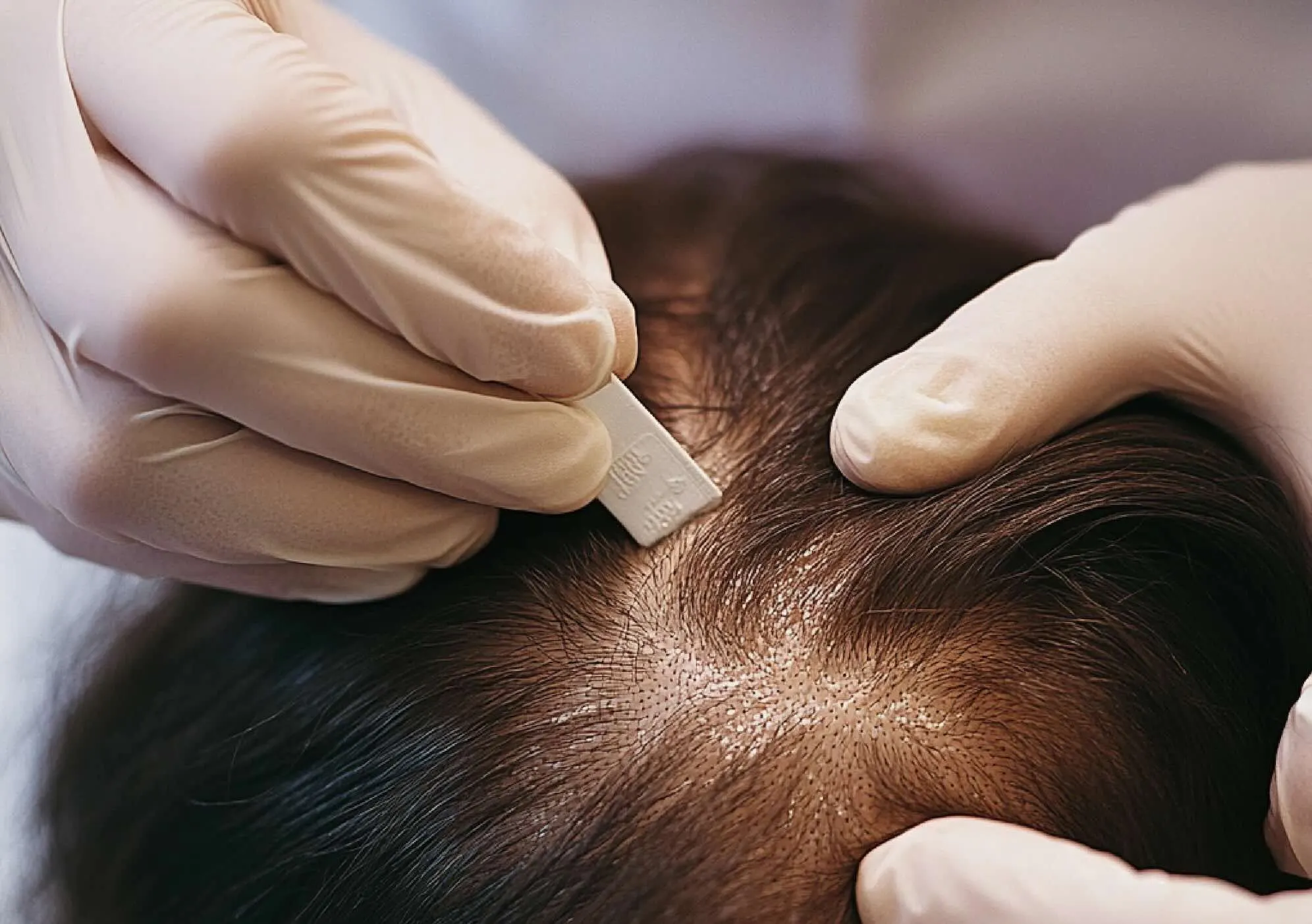
- Trichoscopy and clinical examination to distinguish thyroid-related diffuse thinning from androgenetic alopecia or other causes
Based on this evaluation, treatment may include coordination with the patient's endocrinologist or primary care provider for thyroid management, alongside hair-specific interventions:
- Minoxidil: supports regrowth by extending the anagen phase, appropriate for both diffuse thyroid-related shedding and concurrent androgenetic alopecia
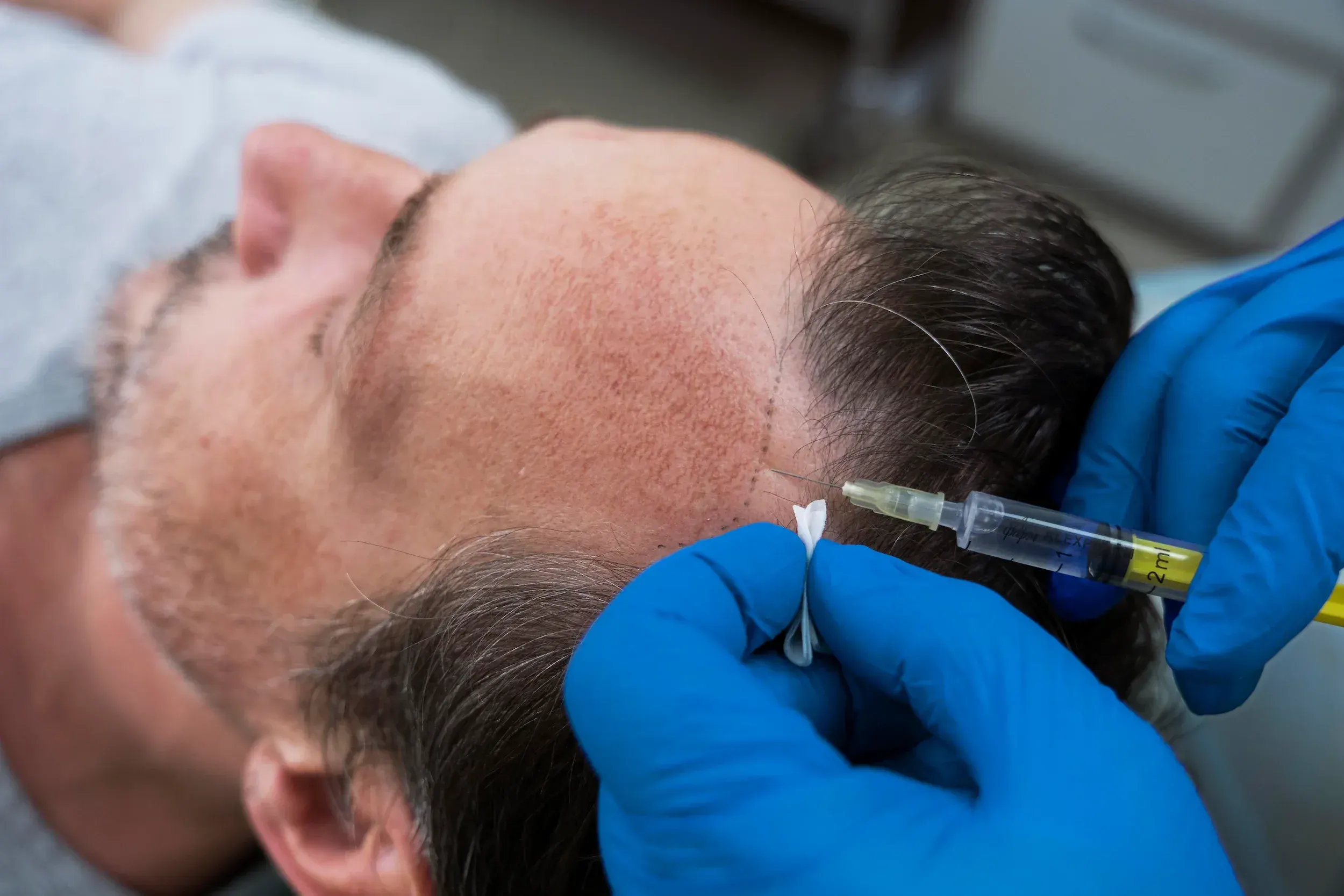
- PRP hair restoration: provides direct growth factor stimulation to follicles recovering from thyroid-related disruption, particularly useful when regrowth is slower than expected
- Laser cap therapy: daily photobiomodulation to support follicle recovery and density restoration
- Nutritional guidance: addressing co-occurring deficiencies in iron, vitamin D, and zinc that amplify thyroid-related hair loss
We see patients throughout the northwest Chicago suburbs from our Algonquin, Huntley, Barrington, and Woodstock, IL locations.
Is Your Thyroid Affecting Your Hair?
Schedule a consultation with DSI Hair's board-certified dermatology team in Algonquin, IL. We will evaluate your hair loss pattern, review your thyroid history and labs, and build a personalized treatment plan.
Book a Consultation at DSI Hair
Frequently Asked Questions: Thyroid Hair Loss
Does hypothyroidism always cause hair loss?
Not always, but hair loss and hair texture changes are among the most common symptoms of hypothyroidism, affecting an estimated 50 to 60% of patients with significant thyroid underactivity. The severity tends to correlate with the degree and duration of thyroid dysfunction. Subclinical hypothyroidism, where TSH is mildly elevated but T4 remains in the normal range, may cause more subtle hair changes that are easy to attribute to other causes.
Can thyroid hair loss be reversed?
Yes, for most patients. When thyroid dysfunction is appropriately treated and hormone levels are normalized, hair loss associated with thyroid disease typically improves. Full recovery takes 6 to 18 months in most cases. Patients who also have androgenetic alopecia may continue to experience pattern hair loss even after thyroid stabilization, as treating the thyroid controls one driver but not the genetic component.
What thyroid tests should I request for hair loss?
At minimum, TSH (thyroid-stimulating hormone) and free T4 provide a reasonable screen for thyroid dysfunction. In patients with suspected autoimmune thyroid disease, anti-TPO antibodies and anti-thyroglobulin antibodies add important diagnostic information. If results are borderline or symptoms are strong, free T3 can provide additional context. A board-certified dermatologist or endocrinologist can guide appropriate testing based on your clinical picture.
How long does it take for hair to grow back after thyroid treatment?
Most patients begin to notice reduced shedding within 3 to 6 months of thyroid normalization. Visible regrowth typically becomes apparent at 4 to 6 months, with meaningful density recovery occurring over 9 to 18 months. Patients who supplement thyroid treatment with minoxidil, PRP, or laser cap therapy may experience faster and more complete recovery.
Does DSI Hair treat thyroid-related hair loss in Illinois?
Yes. DSI Hair's board-certified dermatology team evaluates and treats thyroid-related hair loss at our Illinois locations in Algonquin, Huntley, Barrington, and Woodstock. Our comprehensive diagnostic approach identifies thyroid dysfunction as a contributing factor and coordinates appropriate treatment alongside hair-specific interventions.
Medical Disclaimer: This article is for informational purposes only and does not constitute medical advice. Individual results vary. Please consult with a qualified healthcare provider before beginning any treatment.