
Understanding FUE Hair Devices: Techniques, Benefits, and Cost
Compare top FUE hair transplant devices including ARTAS, NeoGraft, SmartGraft, and SAFE System. Learn about the procedure, recovery, costs, and why ARTAS leads the field.
Introduction
Follicular unit extraction (FUE) has revolutionized hair transplantation, offering patients a minimally invasive alternative to the traditional strip method. But not all FUE procedures are created equal. The device used to harvest and place follicular units can significantly impact your results, recovery, and overall experience.
At DSI Hair, we use the ARTAS robotic system because we believe it offers the highest precision and most consistent results available. In this guide, we compare the major FUE devices on the market, explain how the procedure works, and help you understand what to expect.
What Is FUE?
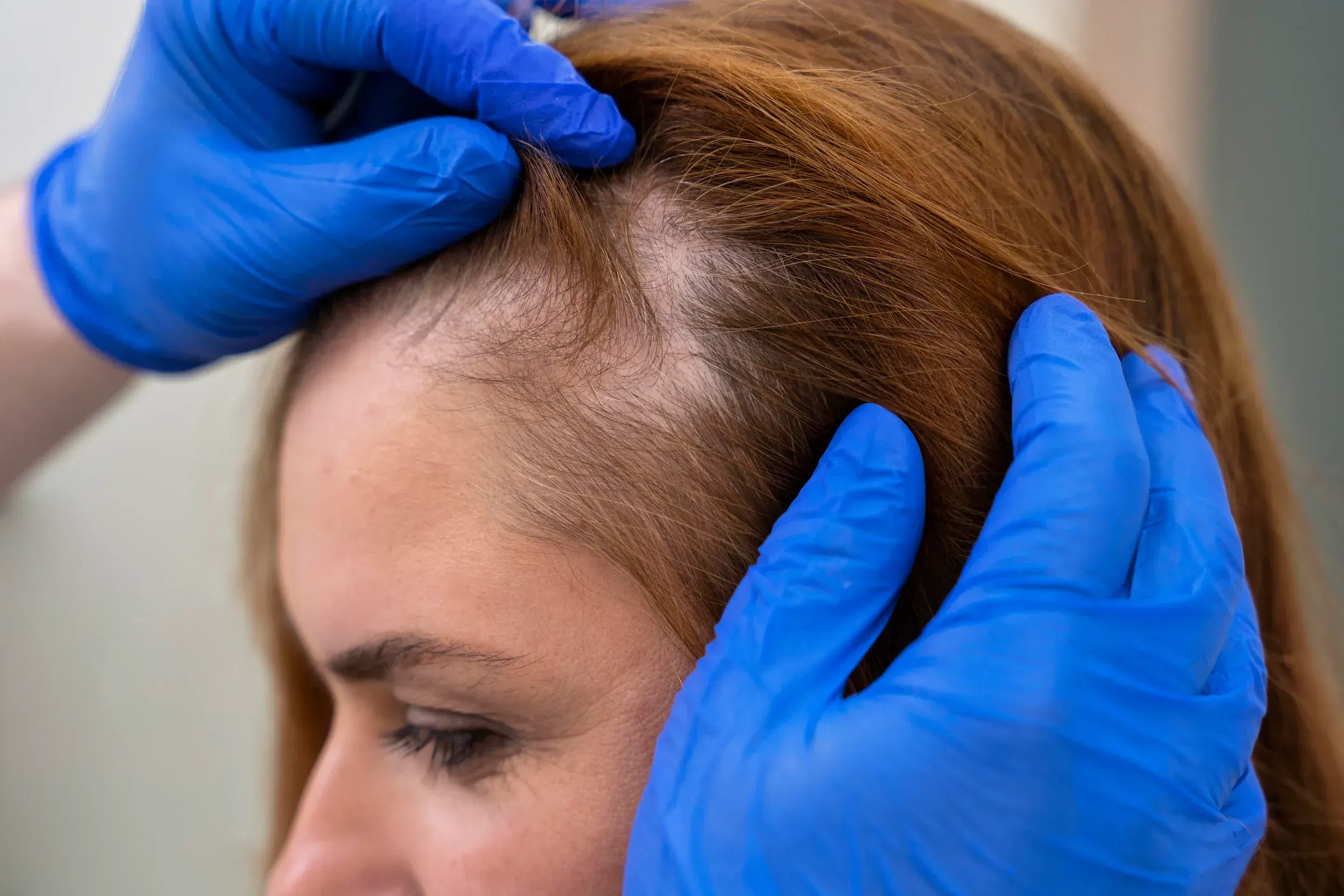
Follicular unit extraction is a hair transplant technique that harvests individual follicular units (groups of one to four hairs) directly from the donor area, typically the back and sides of the scalp.
How FUE Differs from FUT
FUE (Follicular Unit Extraction):
- Individual follicular units are extracted one by one through tiny circular incisions (0.7-1.0mm)
- No linear scar
- Faster recovery
- Can harvest from a wider donor area
- Suitable for patients who want to wear short hairstyles
FUT (Follicular Unit Transplantation / Strip Method):
- A strip of skin is removed from the donor area
- Follicular units are dissected under microscopy
- Leaves a linear scar
- Longer recovery with more discomfort
- Can yield a large number of grafts in a single session
FUE has largely replaced FUT as the preferred technique due to its reduced scarring and faster recovery, though FUT still has a role in certain cases requiring very high graft counts.
Overview of FUE Devices
ARTAS Robotic System
The ARTAS is the only FDA-cleared robotic hair transplant system:
- Technology: AI-guided robotic arm with advanced imaging and algorithms
- Precision: Uses machine vision to identify optimal follicular units based on angle, orientation, and density
- Consistency: Maintains identical precision from the first graft to the last, eliminating human fatigue
- Speed: Can harvest over 1,000 grafts per hour with consistent quality
- Transection rate: Among the lowest in the industry due to robotic precision
- Planning: Creates 3D digital models for pre-surgical planning and recipient site design
- Key advantage: The combination of AI selection, robotic precision, and digital planning produces the most consistent, natural-looking results available
NeoGraft
NeoGraft is a semi-automated pneumatic FUE device:
- Technology: Uses pneumatic pressure (suction) to assist in follicle extraction
- Operation: The surgeon controls the device, but pneumatic assistance makes extraction faster than fully manual FUE
- Precision: Relies heavily on the operator's skill. The device assists but does not guide
- Availability: Widely available at many clinics
- Key consideration: Results are highly dependent on the surgeon's experience and technique. The device is a tool, not an intelligent system
SmartGraft
SmartGraft is another FUE device designed to streamline the extraction process:
- Technology: Uses a controlled suction mechanism for extraction and storage
- Graft storage: Includes an integrated system to keep harvested grafts at optimal temperature and humidity
- Operation: Surgeon-operated with mechanical assistance
- Key consideration: Similar to NeoGraft, the quality of results depends primarily on the surgeon's skill rather than the device's intelligence
SAFE System (Surgically Advanced Follicular Extraction)
The SAFE System is a manual FUE approach with specialized instrumentation:
- Technology: Uses a blunt, rotating punch that separates the follicle from surrounding tissue
- Design philosophy: The blunt dissection technique is designed to reduce transection rates
- Operation: Fully manual, relying entirely on surgeon skill
- Key consideration: Can produce excellent results in experienced hands but lacks the consistency and planning capabilities of robotic systems
The ARTAS Advantage
Why we chose ARTAS at DSI Hair:
AI-Powered Intelligence
ARTAS does not just assist the surgeon; it actively makes intelligent decisions:
- Analyzes the donor area to identify the best follicular units for harvesting
- Avoids over-harvesting from any single area, preserving donor density
- Calculates optimal extraction patterns to maintain a natural appearance in the donor zone
- Adapts in real-time to variations in scalp curvature and tissue characteristics
Unmatched Consistency
Human surgeons, no matter how skilled, experience fatigue during procedures lasting many hours:
- ARTAS maintains identical precision throughout the entire procedure
- Extraction depth, angle, and spacing remain consistent from start to finish
- This consistency translates to higher graft survival rates and better overall results
Digital Planning
The ARTAS system includes sophisticated planning capabilities:
- 3D scalp mapping for pre-surgical planning
- Visualization of expected results before the procedure begins
- Precise recipient site creation at natural angles and density
- Documentation and tracking of every graft
Proven Track Record
- Over 30,000 ARTAS procedures performed worldwide
- Extensive clinical studies supporting safety and effectiveness
- Consistently high patient satisfaction rates
- FDA clearance provides an additional layer of assurance
Ideal Candidates for FUE
FUE hair transplantation is suitable for a range of patients:
- Men with male pattern baldness: Norwood stages III-VI with adequate donor hair
- Women with female pattern hair loss: Selected cases with stable loss and adequate donor density
- Previous FUT patients: Who want to address their linear scar or need additional grafts
- Young patients: With a stabilized hair loss pattern (typically 25+)
- Those wanting short hairstyles: FUE's minimal scarring allows for closely cropped cuts
- Eyebrow and beard transplants: FUE's precision makes it ideal for facial hair restoration
Not ideal candidates:
- Active, progressive hair loss that has not been stabilized
- Insufficient donor hair density
- Unrealistic expectations about coverage or density
- Certain medical conditions that impair healing
- Very young patients whose hair loss pattern is not yet established
The FUE Procedure Step by Step
Consultation and Planning
- Comprehensive evaluation of your hair loss pattern, donor area, and goals
- Discussion of graft count needed and expected outcomes
- Pre-operative photography and measurements
- With ARTAS, 3D digital planning creates a detailed surgical blueprint
Day of Surgery
Preparation:
- The donor area (typically the back and sides of the scalp) is trimmed
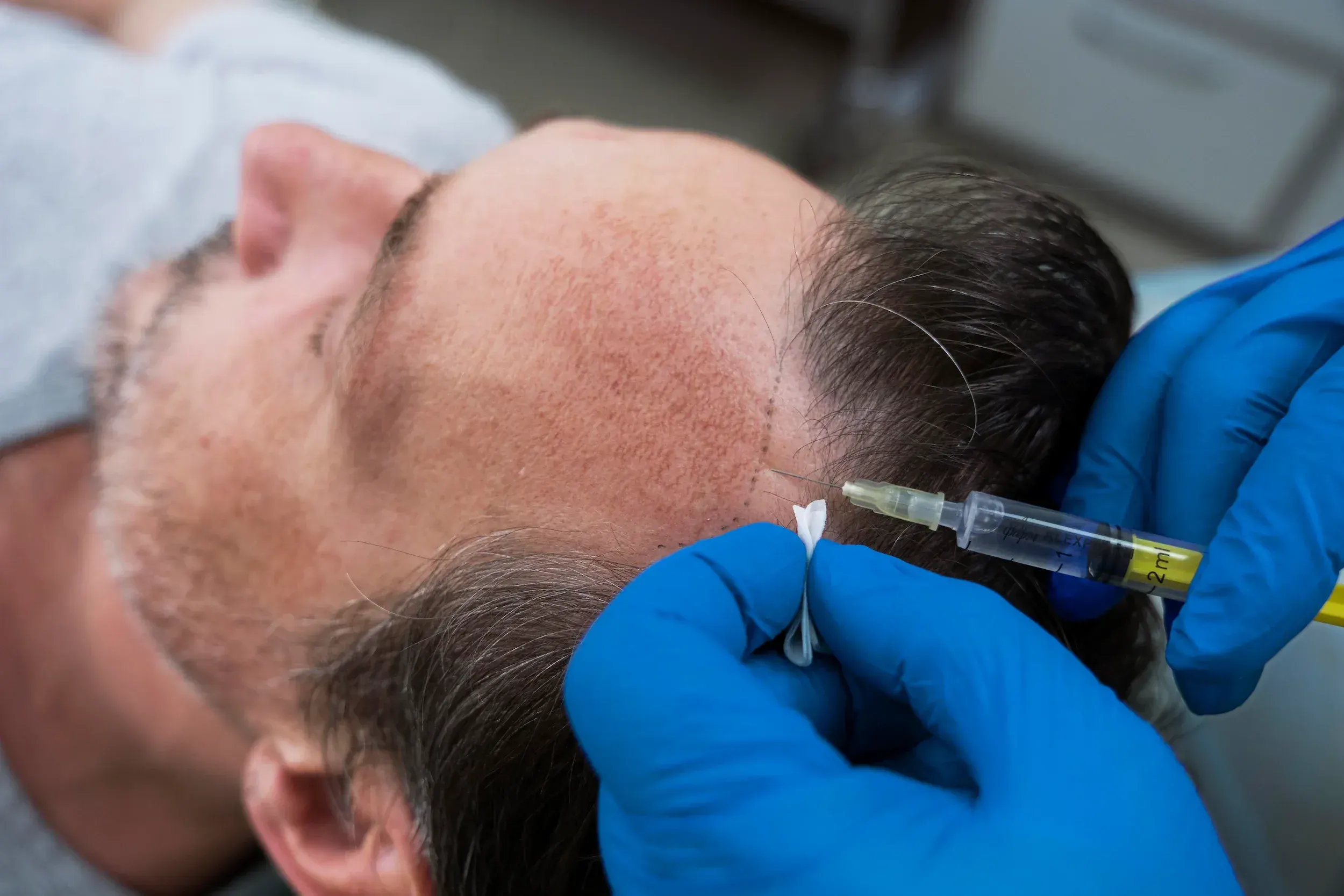
- Local anesthesia is administered (you remain awake and comfortable)
- The scalp is cleaned and prepped
Extraction:
- Individual follicular units are extracted from the donor area
- With ARTAS, the robot performs extractions guided by AI analysis
- Harvested grafts are carefully inspected and stored in a specialized holding solution
- This phase typically takes two to four hours depending on graft count
Recipient Site Creation:
- Tiny incisions (slits) are made in the recipient area at precise angles and densities
- The pattern follows natural hair growth direction for seamless results
- Site creation is critical to the final aesthetic outcome
Graft Placement:
- Harvested follicular units are carefully placed into the recipient sites
- Placement requires meticulous attention to angle, depth, and orientation
- This phase may take two to four hours depending on graft count
Total procedure time: Four to eight hours for typical cases
Risks and Side Effects
FUE is generally very safe, but all surgical procedures carry some risk:
- Swelling: Mild forehead swelling is common in the first few days and resolves spontaneously
- Numbness: Temporary numbness in the donor or recipient area, usually resolving within weeks
- Infection: Rare with proper sterile technique and post-operative care
- Scarring: Tiny dot scars in the donor area that are virtually invisible
- Poor graft survival: Minimized with robotic precision and proper graft handling
- Shock loss: Temporary shedding of existing hair near the transplant area, which typically regrows
- Unnatural results: Greatly reduced with experienced surgeons and ARTAS digital planning
Recovery Timeline
- Day 1-3: Rest at home. Mild discomfort managed with prescribed medications. Avoid touching the transplanted area
- Day 3-5: Gentle washing begins per instructions. Swelling peaks and begins to subside
- Week 1: Return to desk work and light activities. Avoid strenuous exercise
- Week 2: Most visible signs of surgery have resolved. Small crusts at graft sites fall off
- Week 3-4: Transplanted hairs shed (this is normal and expected). Resume all normal activities
- Month 3-4: New hair begins growing from transplanted follicles
- Month 6-9: Significant growth visible. Hair continues to thicken
- Month 12-18: Full results achieved. Hair continues to improve in quality and density
FUE vs FUT: Making the Choice
| Factor | FUE (ARTAS) | FUT (Strip) |
|---|---|---|
| Scarring | Tiny dots (virtually invisible) | Linear scar |
| Recovery | 5-7 days for most activities | 10-14 days |
| Pain | Minimal | Moderate |
| Graft quality | Excellent with robotic precision | Excellent under microscopy |
| Maximum grafts/session | 3,000-5,000+ | 4,000-5,000+ |
| Short hairstyles | Yes | Scar may be visible |
| Repeat procedures | Easy | Limited by scar tissue |
| Donor area impact | Diffuse, minimal | Concentrated, linear |
Complementary Treatments
FUE results are enhanced when combined with other therapies:
PRP Therapy
- Pre-transplant PRP can prepare the scalp environment for optimal graft survival
- Post-transplant PRP accelerates healing and promotes faster growth of transplanted follicles
- Ongoing PRP treatments help maintain non-transplanted native hair
Low-Level Laser Therapy (LLLT)
- Revian Red caps stimulate cellular energy in both transplanted and native follicles
- Can be started after the initial healing period (usually two to four weeks post-procedure)
- Supports long-term maintenance of results
Medications
- Minoxidil and finasteride help preserve native hair that was not transplanted
- Combining medication with transplantation provides the most comprehensive results
- Medications address the ongoing process of miniaturization in non-transplanted areas
Cost in Illinois
Hair transplant costs in the greater Chicago and Illinois area vary based on several factors:
- Per-graft pricing: Typically $3-$8 per graft for quality FUE procedures
- ARTAS robotic procedures: Generally at the upper end of the range, reflecting the advanced technology
- Total procedure cost: Depends primarily on the number of grafts needed
- 1,000 grafts: $5,000-$8,000
- 2,000 grafts: $10,000-$16,000
- 3,000 grafts: $15,000-$24,000
- 4,000+ grafts: $20,000+
- DSI Hair offers flexible financing options to make treatment accessible
- Your personalized consultation will provide an accurate estimate based on your specific needs
Frequently Asked Questions
How long do FUE results last? FUE results are permanent. Transplanted follicles are genetically resistant to DHT and will continue to grow in their new location for life.
Is FUE painful? The procedure is performed under local anesthesia, so you should not feel pain during surgery. Post-operative discomfort is typically mild and well-managed with prescribed medications.
Can FUE be repeated? Yes. FUE can be repeated as long as there is adequate donor hair. The absence of a linear scar makes subsequent procedures straightforward.
What is the success rate of FUE? With experienced surgeons and quality devices like ARTAS, graft survival rates typically exceed 90-95%.
Will people know I had a transplant? With modern FUE techniques, especially ARTAS, results are virtually undetectable. The key is natural hairline design and precise graft placement.
Conclusion
FUE hair transplantation has transformed the field of hair restoration, and the choice of device plays a significant role in your results. While several FUE devices are available, the ARTAS robotic system stands apart with its AI-guided precision, consistency, and digital planning capabilities.
At DSI Hair, we combine ARTAS robotic technology with expert surgical planning and comprehensive complementary treatments to deliver the most natural, long-lasting results possible. Whether you are considering your first transplant or looking to enhance previous results, our team is here to guide you.
Schedule your consultation at DSI Hair today and discover how ARTAS robotic FUE can restore your hair and your confidence.