Can Pregnancy Cause Hair Loss? When It Is Normal and When to Check Iron and Thyroid
Pregnancy often thickens hair, but shedding can signal low iron or thyroid issues. Learn what is normal. DSI Hair, Algonquin, IL. Book a consultation.
By the DSI Hair Team | Dermatology Specialists of Illinois Hair | Algonquin, IL
What pregnancy normally does to hair, what shedding can mean, and what is safe to do.
Most women expect pregnancy to thicken their hair, and it often does. Shedding during pregnancy is less common, and when it happens it is worth a closer look, because it can point to something treatable such as low iron or a thyroid change. Hair loss after birth is a separate, much more common story that we cover in a different guide.
At DSI Hair in Algonquin, Illinois, our dermatologists see women with every kind of hair concern. Here is what is normal during pregnancy, what is not, and how to handle each situation safely.
What Pregnancy Normally Does to Your Hair
Rising estrogen during pregnancy tends to keep hairs in their growth phase longer, so fewer hairs shed and hair often looks fuller. That fuller hair is the hair you will shed after birth, when estrogen falls. The American Academy of Dermatology describes this postpartum shedding as normal, temporary, and caused by falling estrogen levels.
Because of this, noticeable shedding during pregnancy is not the usual pattern. It is not automatically a problem, but it is a reason to ask why.
Why Hair Loss Can Happen During Pregnancy
Dermatology reviews describe telogen effluvium, a diffuse shedding of hair, as a response to triggers such as hormonal changes, illness, physical or emotional stress, and nutritional problems. In pregnancy, possible contributors include:
- Low iron. Iron needs rise during pregnancy, and iron deficiency is a recognized trigger for hair shedding.
- Thyroid changes. An underactive or overactive thyroid can cause diffuse hair loss.
- Poor intake. Nausea, appetite changes, or restricted eating can leave you short on protein and other nutrients that hair needs.
- Stress or illness. A significant illness or stressful event can push hairs into the resting phase, with shedding showing up weeks to months later.
- Tight hairstyles. Constant pulling can cause breakage and thinning at the hairline.
- Underlying pattern hair loss. Some women have thinning that becomes more noticeable around pregnancy.
What Is Normal and What to Check
| What you notice | What it may mean | What to do |
|---|---|---|
| Thicker, fuller hair | A normal effect of pregnancy hormones. | Nothing to do. |
| Diffuse shedding across the whole scalp | Possible telogen effluvium after a trigger. | Mention it at your prenatal visit and ask whether blood tests are appropriate. |
| Shedding with tiredness, paleness, or shortness of breath | Possible low iron. | Ask your OB about iron and ferritin testing. Do not start iron on your own. |
| Shedding with heat or cold intolerance, weight change, palpitations, or mood changes | Possible thyroid change. | Ask your OB about a thyroid evaluation. |
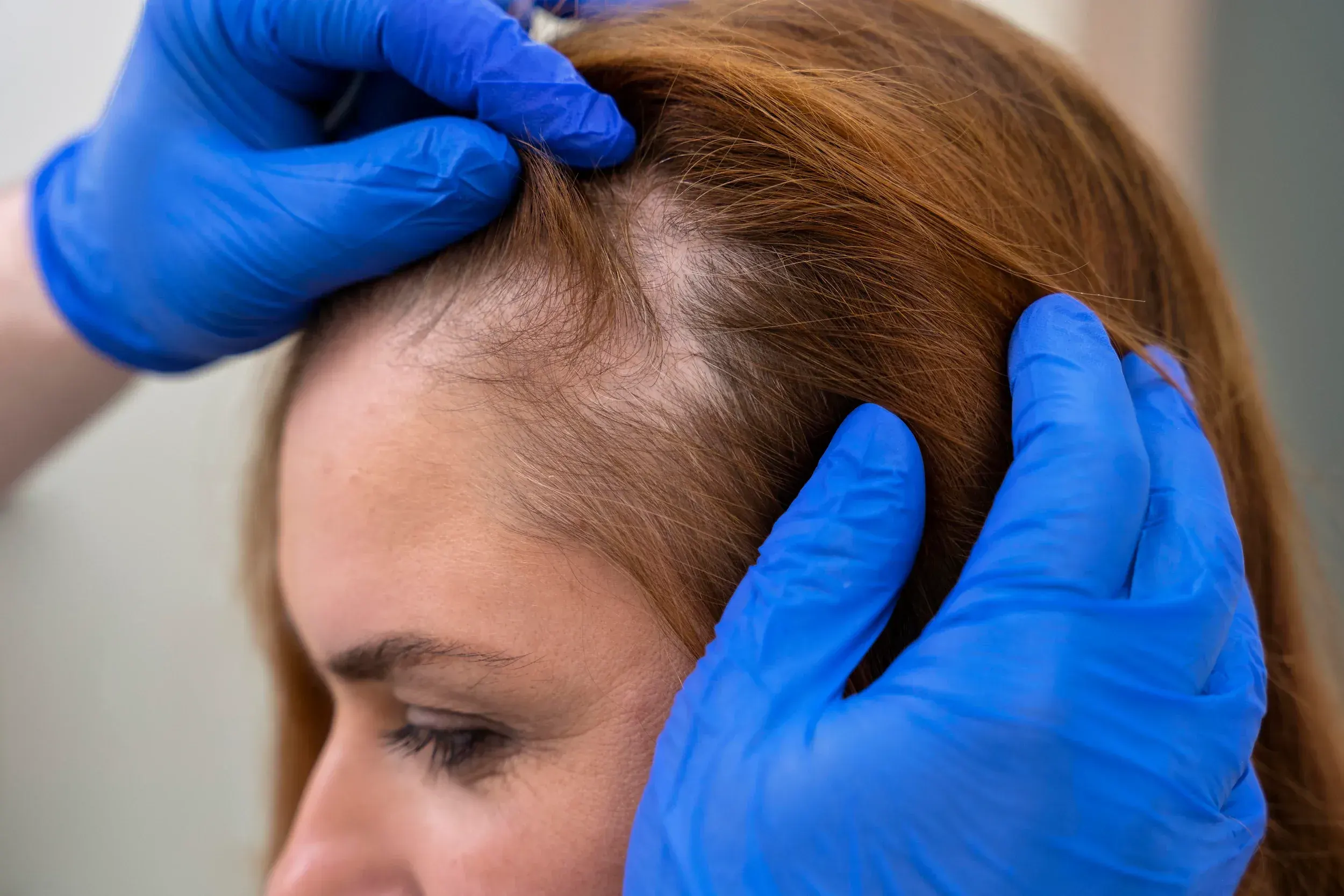
| Smooth bald patches | Not a normal pregnancy change. | See a dermatologist. |
| Widening part or thinning at the crown | Possible pattern hair loss. | See a dermatologist for diagnosis. |
| Itchy, scaly, or painful scalp | A scalp condition. | See a dermatologist. |
Your obstetric provider orders pregnancy-related blood work, and a dermatologist can help interpret the hair side of the picture. If your shedding has a clear cause, treating the cause is usually what brings hair back.
What Is Safe to Do During Pregnancy
- Eat enough protein and a balanced diet, and take the prenatal vitamins your OB recommends.
- Do not start high-dose supplements, including iron or biotin, without checking with your OB.
- Be gentle with your hair. Avoid tight styles and rough brushing.
- Work on sleep and stress where you can. Both affect hair cycles.
- Check with your OB before using any hair loss medicine, including minoxidil and spironolactone. They are generally avoided or put on hold during pregnancy unless your doctors agree.
Finasteride is contraindicated in pregnancy. The FDA label warns of risk to a male fetus, and pregnant women should not handle crushed or broken tablets.
You can read the warning in the DailyMed finasteride label and on the Mayo Clinic finasteride page. If your partner takes finasteride, ask your doctor about safe handling.
After the Baby: What to Expect
Shedding after birth is common and temporary. The AAD notes that it usually peaks about four months after delivery and that most women regain normal hair growth by their child's first birthday. See our full guide to postpartum hair loss for timing and what helps.
When to See a Dermatologist
- Your hair has not regained normal fullness a year after giving birth. The AAD advises seeing a dermatologist in that case, because something else may be causing the loss.
- You have patchy hair loss or smooth bald spots.
- Your scalp is itchy, scaly, painful, or red.
- Your shedding comes with fatigue, weight changes, or other symptoms.
- You want to know whether you have pattern hair loss that pregnancy made more noticeable.
Related Guides From DSI Hair
If you want to go deeper, read our guides to iron deficiency hair loss and ferritin, thyroid hair loss, shedding versus hair loss, stress and hair loss, and nutrition for hair growth. Our page on women's hair loss explains how we diagnose and treat it. We serve patients throughout the greater Chicago area, including Algonquin, Huntley, Barrington, and Woodstock, Illinois.
Schedule Your Free Consultation at DSI Hair
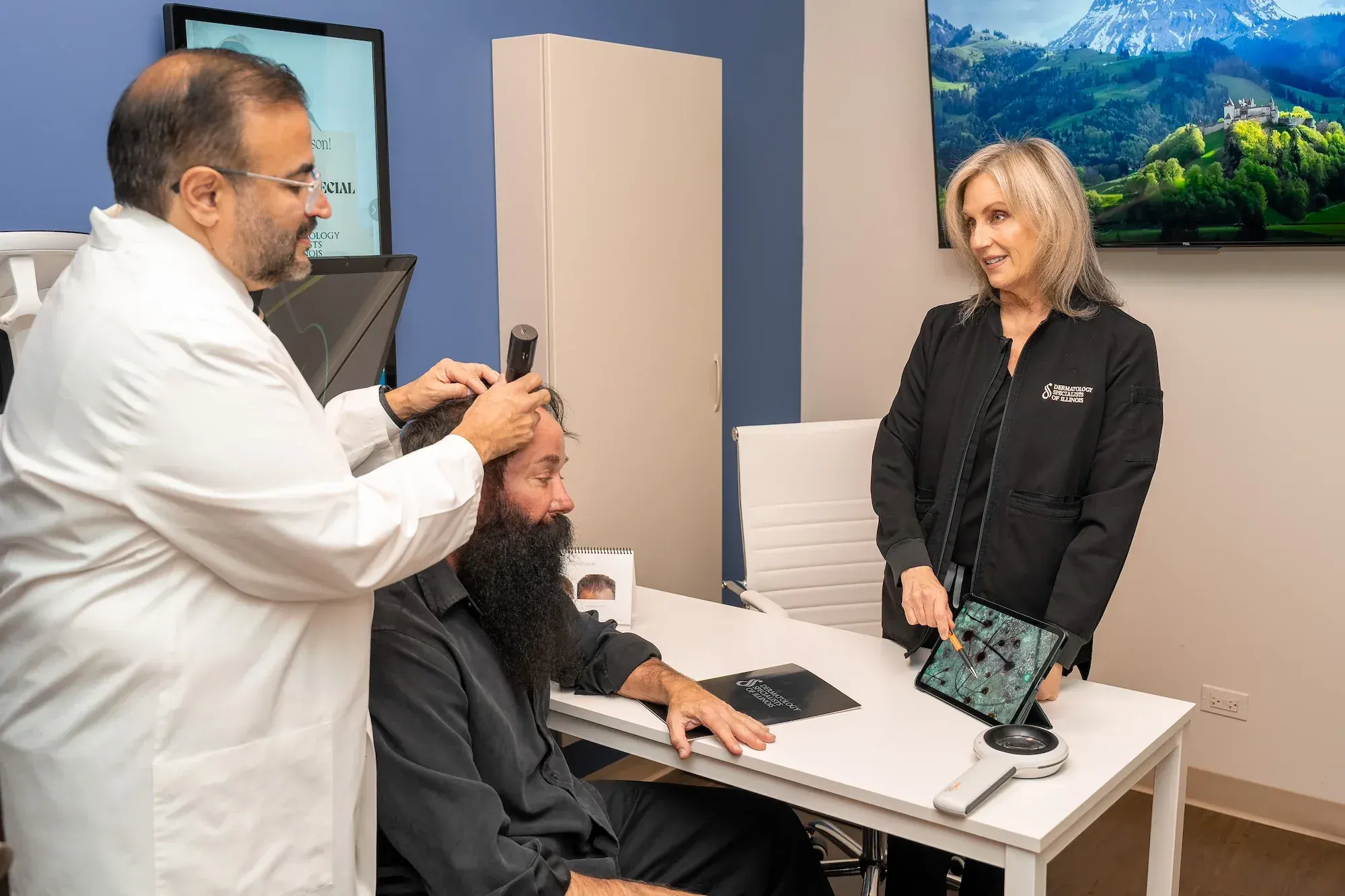
A dermatologist can examine your scalp, look for the cause of your hair changes, and coordinate with your obstetric provider when needed.
DSI Hair | 2430 Esplanade Drive, Suite B, Algonquin, IL 60102 | New patients: (844) 307-7546
Frequently Asked Questions: Hair Loss During Pregnancy
Is it normal to lose hair in the first trimester?
Fuller hair is more typical in pregnancy, but some women notice shedding. If shedding is noticeable, mention it at your prenatal visit so your provider can consider causes such as low iron or a thyroid change.
Can low iron cause hair loss during pregnancy?
Yes. Iron deficiency is a recognized trigger for hair shedding, and iron needs increase in pregnancy. Ask your OB about testing, and do not start iron supplements without guidance.
Can I use minoxidil while pregnant?
Check with your OB first. Hair loss medicines are generally avoided or postponed during pregnancy unless your doctors agree that the benefit outweighs the risk.
Will my hair grow back?
In most cases, yes. Shedding from a temporary trigger usually recovers once the trigger is treated or resolves. Postpartum shedding is temporary, and most women regain normal growth by their child's first birthday.
Does DSI Hair treat women's hair loss in Algonquin, IL?
Yes. DSI Hair diagnoses and treats hair loss in women at our Algonquin, Huntley, Barrington, and Woodstock locations. Women's Hair Loss at DSI Hair
Medical Disclaimer: This article is for informational purposes only. Please consult a qualified hair restoration specialist before starting any treatment. Individual results vary.